

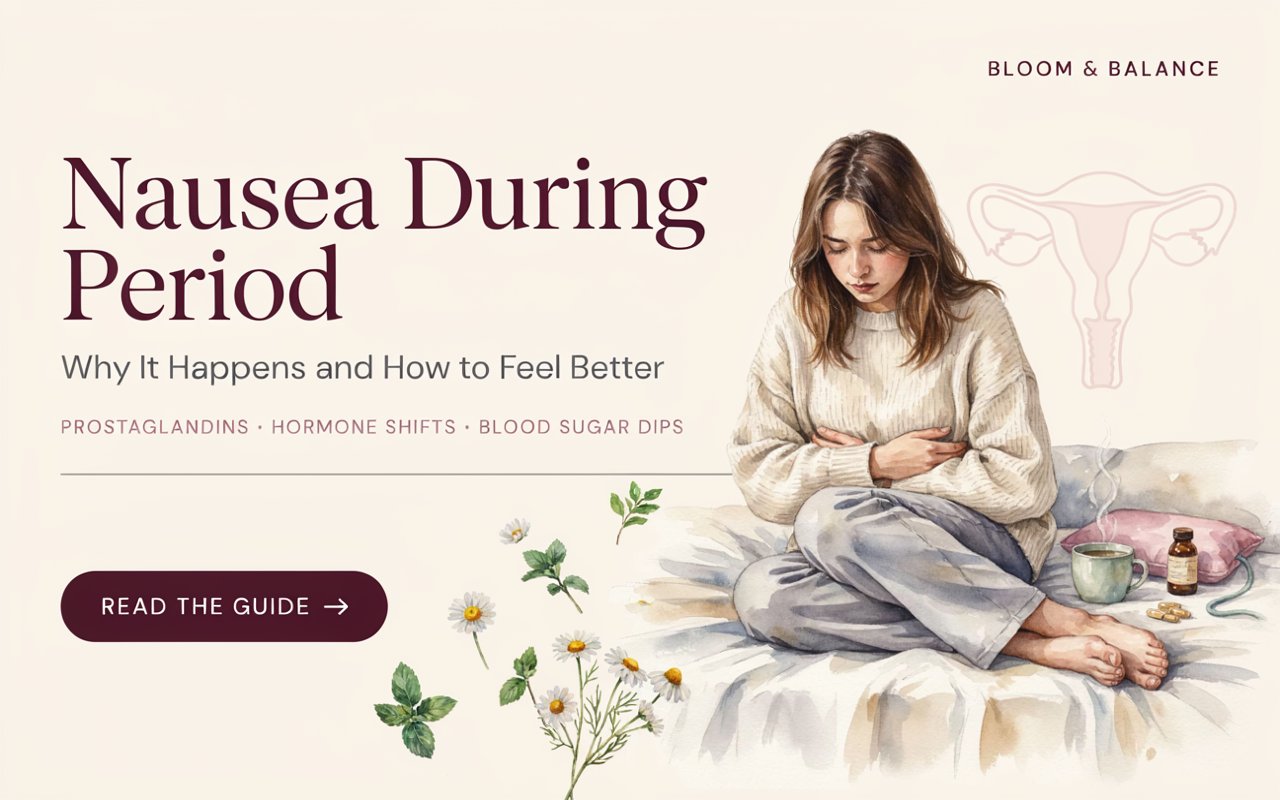
Feeling sick to your stomach during your period can be frustrating, especially when it comes with cramps, bloating, diarrhea, or fatigue. Although nausea gets less attention than menstrual cramps, it can still be a common symptom that occurs during the menstrual cycle.
Nausea during period is often linked to prostaglandins, hormone changes, and the digestive effects that can occur around menstruation. Prostaglandins help the uterus contract and shed its lining, but they can also affect the digestive tract, contributing to nausea, loose stools, and diarrhea.
The good news is that period-related nausea is often temporary. In this guide, you’ll learn why it happens, how it can relate to stomach pain and diarrhea, what you can do at home, and when symptoms deserve medical attention.
What Causes Nausea During Period?
Several changes around menstruation can contribute to an upset stomach. For many people, nausea appears around the first day of bleeding and improves as the period progresses.
Prostaglandins and menstrual cramps
One of the main reasons nausea can occur during menstruation is the rise in prostaglandins. These hormone-like substances help the uterus contract so it can release its lining.
When prostaglandin activity is higher, uterine contractions may become stronger. Those same chemicals can also affect the digestive system, which may contribute to nausea, diarrhea, and other stomach symptoms.
This is one reason some people experience nausea together with menstrual cramps and discomfort. Period cramps, nausea, and digestive changes can sometimes appear together rather than as completely separate symptoms.
Hormonal changes
Hormones naturally fluctuate throughout the menstrual cycle. Changes in estrogen and progesterone around the start of a period can contribute to symptoms such as fatigue, headaches, appetite changes, bloating, and digestive discomfort.
Some people are simply more sensitive to these changes than others, which may explain why one person experiences significant nausea while another notices very little.
Can You Have Nausea Before Your Period?
Yes. Nausea before menses can occur before bleeding starts, particularly when it happens alongside other premenstrual symptoms.
Premenstrual symptoms can include bloating, pelvic discomfort, headaches, fatigue, appetite changes, constipation, or diarrhea. These symptoms may begin days before a period, although the timing varies from person to person.
If nausea regularly appears during the same part of your cycle and improves once your period ends, keeping a symptom diary may help you recognize a pattern.
However, nausea before a period does not automatically mean PMS. Pregnancy, digestive illness, medication side effects, migraine, and other conditions can also cause nausea. If pregnancy is possible and your period is late or unusual, consider taking a pregnancy test or speaking with a healthcare professional.
Why Do I Have Stomach Ache During My Period?
A stomach ache during period days may actually be related to uterine cramping. pls improve and make it unique line The pain can be felt in the lower abdomen and may spread toward the back or thighs.
For some people, cramps are mild. For others, they can be strong enough to interfere with work, school, exercise, or sleep.
Why are my cramps so bad?
If you often wonder, “Why are my cramps so painful?” one possible reason is increased prostaglandin activity, which can trigger stronger uterine contractions. However, severe or worsening menstrual pain should not simply be dismissed as normal.
Underlying conditions such as endometriosis, adenomyosis, fibroids, and pelvic inflammatory disease may contribute to severe or persistent period pain.
If your pain has recently become much worse, consistently prevents normal activities, or does not improve with usual measures, talk with a healthcare professional.
Why Does Diarrhea Happen on Your Period?
Diarrhea on period days is fairly common. Prostaglandins released around menstruation can affect the intestines as well as the uterus. This can increase bowel activity and lead to softer or more frequent stools.
You may notice:
- More frequent bowel movements
- Loose or watery stools
- Abdominal cramps
- Bloating
- An urgent need to use the bathroom
- Nausea
Digestive symptoms can be more noticeable if you already have a condition that affects your digestive system.
If diarrhea is severe, lasts beyond your period, keeps returning at other times of the month, or occurs with fever, severe pain, or blood in the stool, it should be medically evaluated.
How to Feel Better When You Have Period Nausea
There isn’t one solution that works for everyone, but several simple measures may make nausea and related symptoms easier to manage.
1. Eat smaller meals
Large meals can feel difficult when you’re nauseated. Instead, opt for light, smaller meals spaced throughout the day to make eating easier on your stomach. Choose simple foods that you personally tolerate well, such as toast, rice, bananas, oatmeal, soup, or crackers.
Avoiding very heavy, greasy meals may also help if they tend to make your stomach feel worse.
2. Stay hydrated
Nausea and diarrhea can both make it harder to maintain normal fluid intake. Sip water regularly rather than waiting until you’re very thirsty.
If diarrhea is significant, replacing lost fluids and electrolytes becomes especially important.
3. Try gentle heat
A heating pad or warm water bottle placed over the lower abdomen can help ease menstrual cramping. A warm bath or shower may also provide relief.
Reducing cramps may indirectly make nausea feel easier to tolerate when the two symptoms occur together.
4. Consider gentle movement
Light activity such as walking, stretching, yoga, or another comfortable form of exercise may help some people manage period discomfort.
You don’t need to force yourself through an intense workout. On days when symptoms are strong, gentle movement may be more realistic.
5. Be careful with pain medication
Nonsteroidal anti-inflammatory drugs (NSAIDs), such as ibuprofen, can reduce prostaglandin production and may help with menstrual cramps.
However, NSAIDs are not appropriate for everyone. People with certain stomach, kidney, liver, heart, or other medical conditions may need to avoid them. Follow the product directions and ask a healthcare professional or pharmacist if you’re unsure whether a particular medicine is safe for you.
When Should You See a Doctor About Period Nausea?
Occasional mild nausea around your period may not be concerning. But persistent, severe, or unusual symptoms deserve attention.
Consider speaking with a healthcare professional if:
- Nausea or vomiting is severe or repeatedly disrupts your daily life.
- Your period pain is severe or getting worse.
- Pain prevents you from going to work, school, or doing normal activities.
- Your periods suddenly become much heavier or irregular.
- You have pain during sex or when urinating or having a bowel movement.
- You have persistent diarrhea or major changes in your bowel habits.
- You have unexplained weight loss or loss of appetite.
Seek urgent medical care for severe or rapidly worsening abdominal or pelvic pain, fainting, heavy vaginal bleeding, or other serious symptoms.
It’s also important not to assume that every episode of nausea is caused by menstruation. A stomach infection, food poisoning, migraine, medication side effect, pregnancy, or another health condition can cause similar symptoms.
Frequently Asked Questions
Is nausea during period normal?
Mild nausea can occur during menstruation. Prostaglandins and menstrual-related hormonal changes can affect both the uterus and digestive system. However, severe, persistent, or recurring nausea should be discussed with a healthcare professional.
How do I stop nausea during my period?
Try small, simple meals, regular fluids, rest, and gentle heat for associated cramps. If nausea is severe or happens every cycle, discuss treatment options with a healthcare professional rather than relying only on home remedies.
Can period cramps cause nausea and diarrhea?
Yes. Menstrual cramps, nausea, and diarrhea can occur together because prostaglandins involved in uterine contractions can also affect the digestive tract.
Is nausea before my period a sign of pregnancy?
It can be, but nausea before a period has many possible causes. If pregnancy is possible and your period is late or unusual, a pregnancy test can help clarify the situation.
When are period cramps considered too severe?
Cramps deserve medical attention when they are severe, getting worse, or interfering with normal daily activities. Very painful periods can sometimes be associated with conditions such as endometriosis, adenomyosis, fibroids, or pelvic inflammatory disease.
Final Thoughts
Nausea during period can happen because the hormonal and chemical changes involved in menstruation can affect both the uterus and digestive system. For many people, nausea occurs alongside cramps, bloating, or diarrhea and improves within a few days.
Simple measures such as staying hydrated, eating smaller meals, using gentle heat, and getting adequate rest may help. But you don’t have to accept severe period symptoms as something you simply have to live with.