

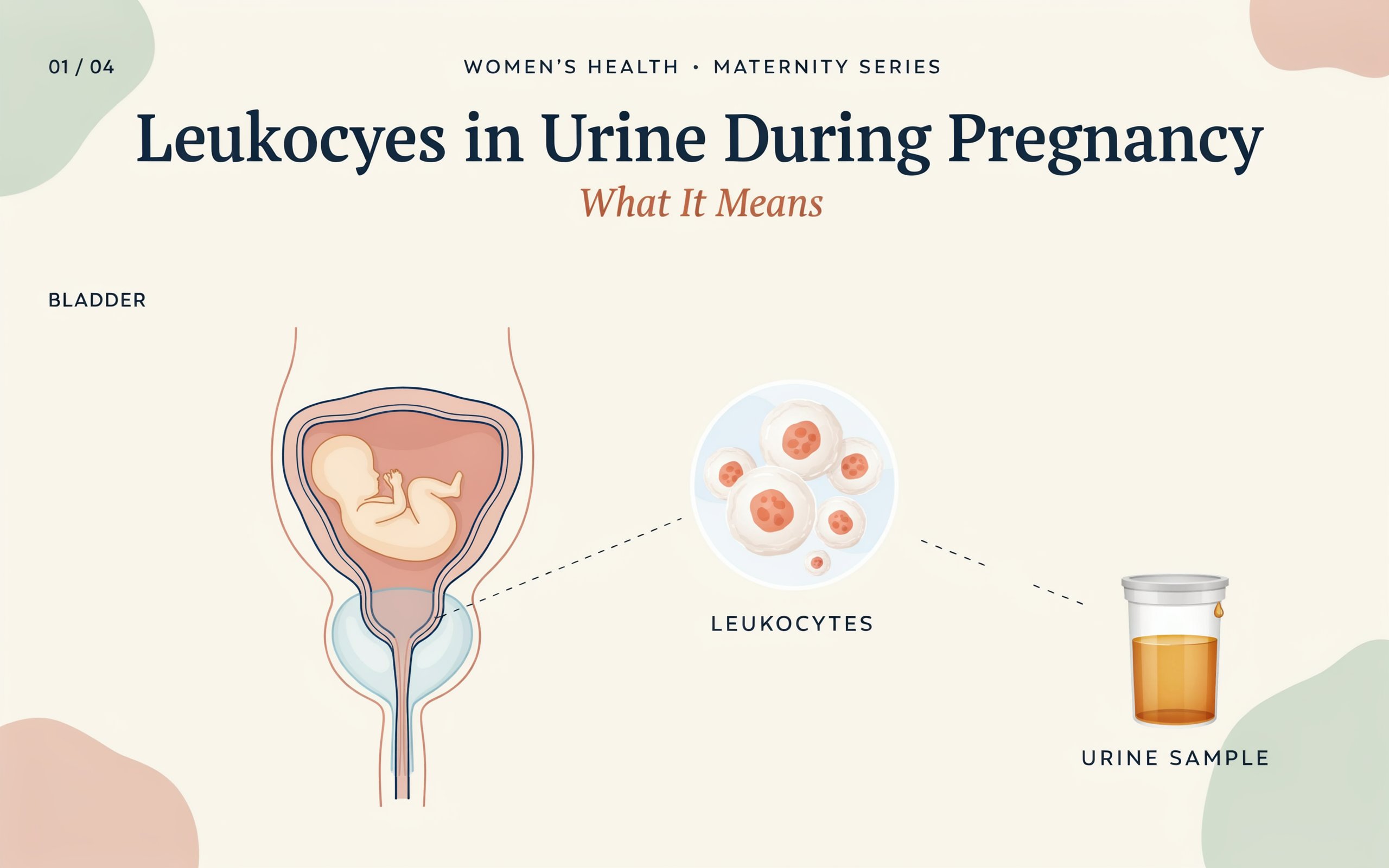
You get your routine prenatal urine test back, and one line stands out: “leukocytes: positive.” Even if you feel perfectly fine, a result like that can make your heart skip. What are leukocytes? Does it mean an infection? Is your baby at risk?
Take a breath. Leukocytes in urine during pregnancy are common, and in most cases, the cause is something that can be identified and treated. But this isn’t a result to ignore either. In this guide, we’ll explain what leukocytes are, what can cause them to show up in a pregnant woman’s urine, how doctors follow up, and what you should do next.
What Are Leukocytes?
Leukocytes are your white blood cells, the body’s defenders that step in whenever there’s an infection or inflammation. A small number can appear in urine normally, but a higher number often suggests that something is irritating or inflaming the urinary tract.
On a urine dipstick test, labs often check for leukocyte esterase, an enzyme released by white blood cells. A positive result means white blood cells may be present, and it’s usually reported as trace, small, moderate, or large. Different labs use different cutoffs, so your own doctor is the best person to interpret your result.
Why Are Urine Tests Done in Pregnancy?
Pregnancy changes the urinary system. Hormones relax the muscles of the urinary tract, the growing uterus presses on the bladder, and urine can sit longer, which makes infections easier to develop. Because some infections cause no symptoms, routine urine testing is a standard part of prenatal care.
What Do Leukocytes in Urine Mean During Pregnancy?
Finding leukocytes is a signal, not a diagnosis. Common explanations include:
1. Urinary Tract Infection (UTI)
This is the most common cause. Bacteria in the bladder or urethra trigger an immune response, and white blood cells appear in the urine. A UTI may cause burning with urination, urgency, frequent urination, cloudy or strong-smelling urine, and lower abdominal discomfort. If urine smell is something you’ve noticed, our guide on the smell of urine when pregnant explains normal changes versus warning signs.
2. Asymptomatic Bacteriuria
Sometimes there are bacteria and white blood cells in the urine but no symptoms at all. This is called asymptomatic bacteriuria, and it occurs in a small percentage of pregnant women. It’s important to follow up on, because in pregnancy it can sometimes lead to a kidney infection if not treated.
3. Kidney Infection (Pyelonephritis)
If a UTI travels upward, it can infect the kidneys. This is more serious and may cause fever, chills, back or side pain, nausea, and vomiting. It needs prompt medical care.
4. Contamination of the Sample
Vaginal discharge, which increases during pregnancy, can mix with a urine sample and cause leukocytes to show up even when the urinary tract itself is fine. This is one of the most common reasons for a “false alarm.” Doctors may ask you to repeat the test with a proper clean-catch technique.
5. Vaginal Infections or Inflammation
Yeast infections, bacterial vaginosis, and some other infections can cause leukocytes in the sample.
6. Kidney Stones
Stones can irritate the urinary tract and lead to white blood cells, sometimes with blood in the urine and sharp pain.
7. Other Inflammation
Some medical conditions and irritation of the urinary tract can also raise white blood cell levels. Medical News Today notes that leukocytes in urine don’t always mean a UTI and can also reflect other causes of inflammation.
Symptoms to Watch For
Contact your doctor if you notice:
- Burning or pain when urinating
- A frequent or urgent need to urinate that’s different from your usual pregnancy pattern
- Cloudy, dark, bloody, or foul-smelling urine
- Lower abdominal or pelvic pain
- Pain in the back or side
- Fever or chills
- Nausea or vomiting
Some urinary symptoms, like frequency and urgency, are common in pregnancy anyway, which is why a test is more reliable than guessing. If you’re having cramping alongside urinary symptoms, our article on bladder spasms may help you understand what’s going on.
What Happens After a Positive Leukocyte Result?
Your doctor will usually take one or more of these steps:
- Review your symptoms and medical history
- Repeat the test with a clean-catch sample if contamination is possible
- Order a urine culture, which identifies bacteria and shows which antibiotics will work
- Check for other causes if bacteria aren’t found
- Start treatment if an infection is confirmed
The Manipal Hospitals guide to leukocytes in urine during pregnancy also stresses that monitoring urine is a standard part of antenatal care and that results should be followed up rather than ignored.
How Is It Treated?
Treatment depends on the cause:
- Bacterial UTI or asymptomatic bacteriuria: doctors prescribe antibiotics that are considered safe in pregnancy. The choice depends on your culture results, how far along you are, and your medical history
- Contamination: usually no treatment is needed once a repeat test is normal
- Vaginal infection: treated with the appropriate medication for that infection
- Kidney infection: often needs urgent care, sometimes with hospital treatment
- Stones or other causes: managed according to the specific condition
Don’t take leftover antibiotics or treat yourself. Not every antibiotic is safe in pregnancy, and the wrong choice or dose can be harmful. Finish the full course your doctor prescribes, even if you start feeling better.
Why Follow-Up Matters
Untreated urinary infections in pregnancy can lead to kidney infection and have been linked with complications such as preterm labor and low birth weight. The good news is that when infections are caught and treated promptly, the outlook is usually very good. That’s exactly why routine testing exists.
Supportive Habits While You’re Being Treated
These steps support your treatment but don’t replace it:
- Drink plenty of fluids throughout the day
- Urinate regularly and don’t hold it in for long periods
- Empty your bladder after sex
- Wipe from front to back
- Wear breathable cotton underwear and avoid tight clothing
- Avoid scented soaps, douches, and sprays in the genital area
- Take a clean-catch sample properly: wash your hands, clean the area, start urinating, and then collect a midstream sample
When to Seek Urgent Care
Call your doctor right away or go to the emergency room if you have:
- Fever, chills, or shaking
- Severe back or side pain
- Vomiting that prevents you from keeping fluids down
- Blood in your urine with significant pain
- Contractions, fluid leaking, or reduced baby movement along with urinary symptoms
Frequently Asked Questions
Are leukocytes in urine normal during pregnancy?
A small number can appear, but a positive result needs follow-up because it may signal a UTI, asymptomatic bacteriuria, or contamination from vaginal discharge.
Can leukocytes in urine mean a UTI even without symptoms?
Yes. Asymptomatic bacteriuria causes no symptoms but can still lead to complications in pregnancy if untreated, so doctors usually investigate it.
Can I get a false positive for leukocytes during pregnancy?
It can happen. Vaginal discharge can mix with the sample and skew the result. Your doctor may ask you to repeat the test or send a culture.
Could leukocytes in my urine harm my baby?
The leukocytes themselves aren’t dangerous, but an untreated infection behind them can be. Prompt treatment greatly reduces the risk.
Can I treat leukocytes in urine at home?
Fluids and good hygiene support your recovery, but if an infection is confirmed, you need medical treatment. Don’t use leftover or unprescribed antibiotics.
What’s the difference between leukocytes and nitrites in a urine test?
Leukocytes suggest inflammation or immune activity, while nitrites suggest certain bacteria are present. You can have one without the other, so a urine culture is often used to confirm.
Final Thoughts
Seeing “leukocytes positive” on a prenatal urine test can feel alarming, but it simply means your body may be responding to something in the urinary tract, often a UTI that can be treated safely. Sometimes it’s just a contaminated sample. Either way, the key is to talk to your doctor, complete any recommended follow-up testing, and take only the treatment your care provider prescribes. Catching and treating these infections early protects both you and your baby.
Have you been through a positive urine test during pregnancy? Share your experience in the comments, and pass this along to an expecting mom who might be worried about her results.
This article is meant for general information only and can’t replace professional medical advice. If you have an abnormal urine test or urinary symptoms during pregnancy, please contact your doctor promptly.