

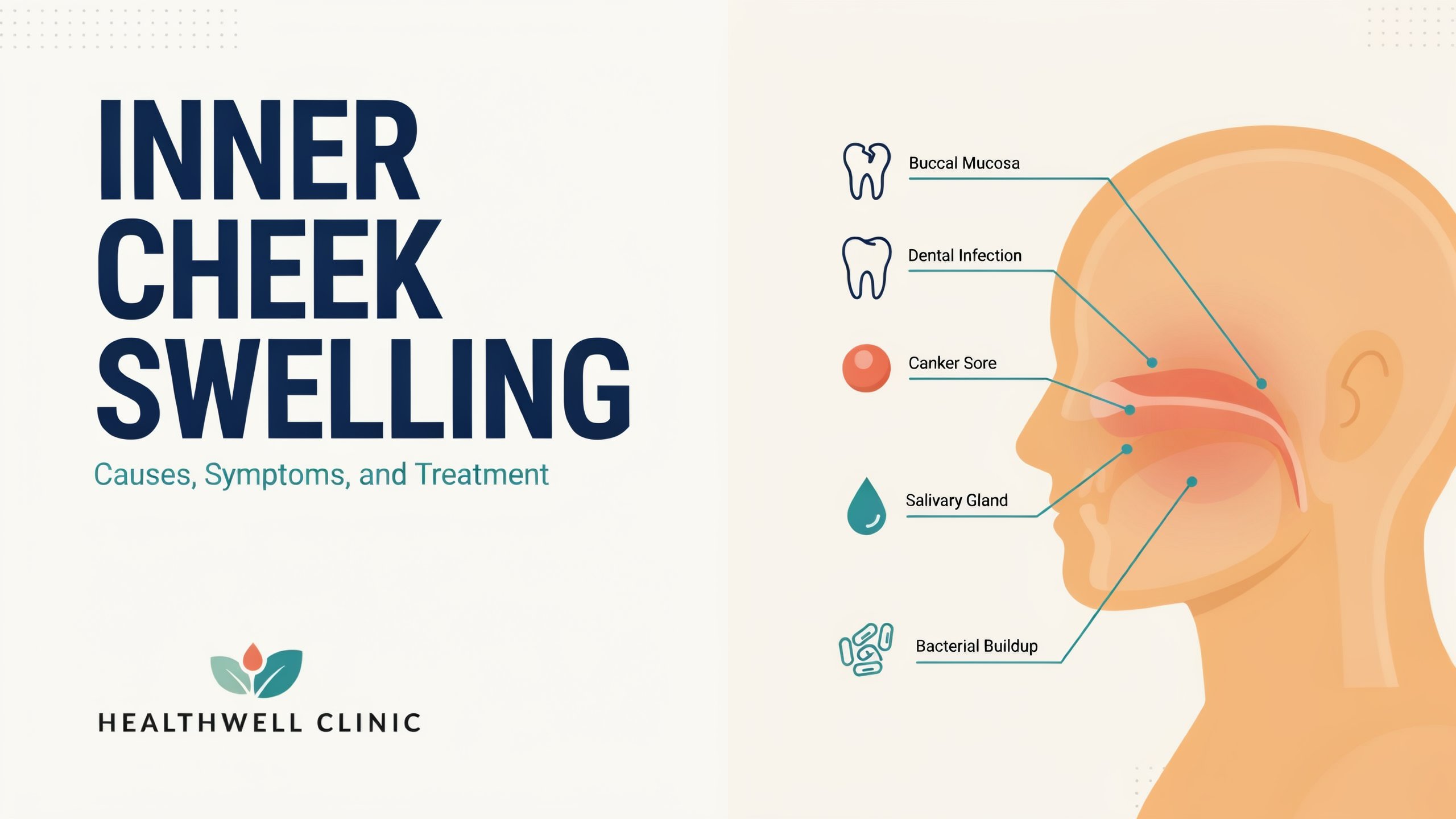
Noticing inner cheek swelling can be uncomfortable, especially when it makes eating, chewing, or talking feel different. Sometimes the swelling is caused by something minor, such as accidentally biting the inside of your cheek. In other cases, it may be related to a mouth ulcer, dental infection, salivary gland problem, or another condition that needs attention.
The good news is that many causes of swelling inside the cheek are temporary and improve with appropriate care. However, persistent or rapidly worsening swelling should not be ignored.
In this article, you’ll learn what can cause a swollen cheek inside the mouth, which symptoms may occur with it, what you can do at home, and when it’s time to see a dentist or healthcare professional.
What Is Inner Cheek Swelling?
Inner cheek swelling refers to puffiness, inflammation, a lump, or thickened tissue along the inside lining of the cheek. The swelling can appear on either side of the mouth or affect both cheeks at the same time.
The swelling can sometimes be painless, while other people may notice tenderness, redness, a sore, or discomfort while chewing.
The inside of your cheeks contains oral mucosa, blood vessels, nerves, and tissues that help protect the mouth. Different problems affecting these tissues can lead to swelling.
Common Causes of Inner Cheek Swelling
There are several possible reasons for swelling inside the cheek. The cause often becomes easier to identify when you consider other symptoms occurring at the same time.
1. Accidentally biting your cheek
One of the simplest causes of a swollen inner cheek is accidentally biting it while eating or talking.
The injury can irritate the tissue and cause temporary inflammation. Continued irritation from chewing, sharp teeth, braces, or dental appliances may keep the area swollen until it has time to heal.
Try to avoid repeatedly touching or biting the affected area while it recovers.
2. Mouth ulcers
A mouth ulcer can develop on the inner cheek and cause localized swelling, soreness, or a small painful spot.
Mouth ulcers may appear after minor injury, cheek biting, irritation from dental appliances, or other triggers. They can also occur alongside certain illnesses or hormonal changes.
You may notice a small white, yellow, or gray area surrounded by redness.
If the ulcer is painful, eating spicy, salty, or acidic foods may make the discomfort worse.
3. Dental infection or tooth abscess
A tooth infection can sometimes cause swelling that extends into the cheek.
A dental abscess is a pocket of infection that can cause tooth pain, swelling, sensitivity, fever, or difficulty opening the mouth. In certain cases, the swelling may extend beyond the affected area and involve the jaw or surrounding cheek tissue.
If you have inner cheek swelling along with severe toothache, fever, pus, or facial swelling, contact a dentist promptly.
4. Salivary gland problems
Your salivary glands produce saliva and help keep your mouth moist. A blocked or infected salivary gland can cause painful swelling around the cheek or jaw.
Sialadenitis, an infection of a salivary gland, may cause cheek or jaw tenderness, fever, dry mouth, pain while chewing, and reduced saliva.
Some salivary gland problems are associated with a blockage caused by a salivary stone.
5. Irritation from braces or dental work
Braces, retainers, dentures, sharp fillings, or recently repaired teeth can sometimes rub against the inner cheek.
Repeated friction may irritate the tissue and lead to soreness or swelling. If a dental appliance continues to cause an injury, a dentist can check whether it needs adjustment.
6. Allergic reactions
An allergic reaction can cause sudden swelling of the lips, mouth, tongue, or other parts of the face.
Angioedema is one type of swelling that can occur after exposure to certain foods, medicines, or other triggers.
Sudden swelling involving the mouth or throat can be serious, particularly if it affects breathing or swallowing.
What Symptoms Can Occur With a Swollen Inner Cheek?
The symptoms can vary depending on what’s causing the swelling.
You may notice:
- Tenderness or pain
- Redness
- A small lump or bump
- A mouth ulcer
- Toothache
- Pain when chewing
- Difficulty opening your mouth
- Bad taste in the mouth
- Dry mouth
- Fever
- Pus or unusual discharge
- Swelling of the jaw or face
For example, a salivary gland infection may cause cheek or jaw swelling together with fever and dry mouth, while a mouth ulcer may cause a small painful sore on the inner cheek.
How Can You Reduce Inner Cheek Swelling?
Treatment depends on the underlying cause, but mild irritation can sometimes be managed with simple measures.
Keep the area clean
Continue brushing and flossing gently to maintain good oral hygiene. Avoid aggressively brushing directly over a painful or swollen area.
Rinse with salt water
A gentle salt-water rinse may help keep the mouth clean and soothe minor irritation.
Avoid using very hot water, and do not swallow the rinse.
Avoid irritating foods
If your cheek is sore or swollen, temporarily limit foods that may aggravate the area, such as very spicy, salty, acidic, or extremely hot foods.
Soft foods may be easier to eat while the tissue heals.
Use a cold compress
If the swelling is related to minor injury, a cold compress applied to the outside of the cheek may help reduce discomfort and swelling.
Do not place ice directly against your skin.
Avoid further irritation
Try not to bite, scratch, or repeatedly touch the swollen area. If braces, dentures, or another dental appliance are rubbing against your cheek, arrange a dental check rather than continuing to tolerate the irritation.
When Is It Time to See a Dentist or Healthcare Professional?
A small amount of swelling caused by minor irritation may improve as the tissue heals. However, persistent, painful, or worsening inner cheek swelling should be evaluated by a healthcare professional or dentist.
Make an appointment if:
- The swelling does not improve.
- It keeps coming back.
- You have significant tooth pain.
- You develop fever.
- There is pus or unusual discharge.
- You have difficulty chewing.
- You have trouble opening your mouth.
- The swelling spreads to your face or jaw.
- A mouth sore does not heal or continues to change.
A dentist can examine your teeth, gums, and inner cheek to determine whether the problem is dental, inflammatory, infectious, or related to another cause.
Is Inner Cheek Swelling Ever an Emergency?
Yes. Some types of mouth and facial swelling require urgent medical attention.
Get emergency help if swelling suddenly affects your lips, tongue, mouth, or throat and you have difficulty breathing or swallowing. Severe allergic reactions can cause dangerous airway swelling.
You should also seek urgent care if you have rapidly increasing facial or mouth swelling, particularly when it occurs with severe pain, fever, or difficulty opening your mouth. Dental infections can sometimes spread into surrounding tissues.
Frequently Asked Questions
What causes inner cheek swelling?
Common causes include accidentally biting the cheek, mouth ulcers, irritation from braces or dental appliances, dental infections, salivary gland problems, and allergic reactions. The right treatment depends on the underlying cause.
How long does a swollen cheek inside the mouth last?
The duration varies. Minor irritation or a small mouth ulcer may improve as the tissue heals, while infections or salivary gland problems may require professional treatment. If swelling persists or gets worse, see a dentist or healthcare professional.
Can a tooth problem cause swelling inside the cheek?
Yes. A dental infection or tooth abscess can cause swelling around the tooth and may extend into the cheek or jaw. Severe tooth pain, fever, pus, or facial swelling should be evaluated promptly.
Should I worry about a lump inside my cheek?
Not every lump is serious. It may result from irritation, a mouth ulcer, or another benign cause. However, a lump that persists, grows, repeatedly returns, or is associated with other concerning symptoms should be checked by a dentist or doctor.
When is cheek swelling an emergency?
Sudden swelling of the mouth, lips, tongue, or throat accompanied by difficulty breathing or swallowing requires emergency medical attention because it can be a sign of a serious allergic reaction.
Final Thoughts
Inner cheek swelling can have many causes, ranging from minor cheek injuries and mouth ulcers to dental infections, salivary gland problems, and allergic reactions.
Pay attention to how the swelling develops and whether you have other symptoms such as tooth pain, fever, a mouth sore, or difficulty chewing. Mild irritation may settle with gentle oral care, but persistent or worsening swelling should be checked by a dentist or healthcare professional.