

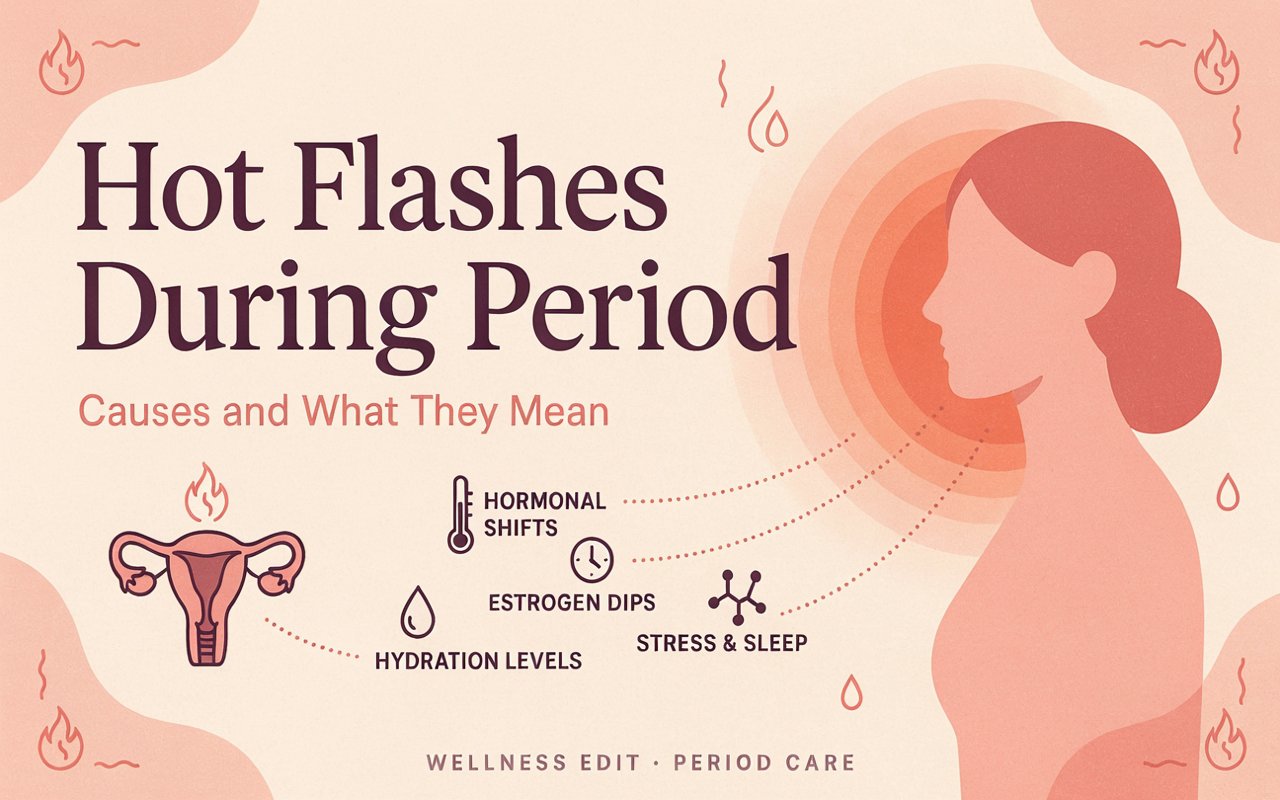
Most people associate hot flashes with menopause — that sudden wave of heat that seems to come out of nowhere, usually well into your 40s or 50s. So it can be genuinely confusing when you’re in your 20s or 30s and suddenly feel that same rush of heat right around your period. If this sounds familiar, you’re not imagining it, and you’re definitely not alone.
Hot flashes during your period are a real, hormonally-driven phenomenon that can happen at any age. In this guide, we’ll explain why they occur, how they’re different from menopausal hot flashes, and what you can do to feel more comfortable when they strike.
What Causes Hot Flashes During Your Period?
1. The Estrogen Drop
Right before and during your period, estrogen levels drop sharply. Estrogen plays a role in regulating your body’s internal temperature control system, located in the hypothalamus. When estrogen dips quickly, this temperature-regulating center can misfire, triggering a sudden sensation of heat — essentially a mini version of what happens during menopause, but tied to your monthly cycle instead.
2. Progesterone Fluctuations
Progesterone also shifts significantly throughout your cycle, and like estrogen, changing levels can affect blood vessel dilation, contributing to that sudden warm, flushed feeling.
3. Prostaglandins
These hormone-like compounds, responsible for triggering uterine contractions during your period, can also cause blood vessels to widen, which may contribute to a temporary feeling of heat or flushing.
4. Perimenopause
If you’re in your late 30s to 40s, hormonal fluctuations tied to perimenopause (the transition phase before menopause) can intensify period-related hot flashes, sometimes making them more frequent or noticeable than they were in your 20s.
5. Stress and Anxiety
Elevated stress levels can amplify hormonal symptoms overall, including hot flashes, since stress hormones interact with the same regulatory systems affected by estrogen and progesterone shifts.
What Causes Hot Flashes During Your Period?
- Timing: Period-related hot flashes are cyclical, showing up around the same phase of your cycle each month, while menopausal hot flashes can happen at any time as estrogen declines long-term
- Duration: Period hot flashes are usually temporary, lasting only a few days around your period, whereas menopausal hot flashes can persist for months or years
- Underlying cause: Period hot flashes stem from short-term hormonal shifts within a single cycle, while menopausal hot flashes result from the ovaries gradually and permanently reducing estrogen production
If you’re noticing hot flashes becoming more frequent, intense, or no longer clearly tied to your cycle, it may be worth discussing perimenopause with your doctor, especially if you’re in your late 30s or 40s.
Managing Hot Flashes During Your Period
1. Dress in Layers
Lightweight, breathable layers make it easier to cool down quickly when a hot flash strikes, without having to fully change clothes.
2. Stay Hydrated
Drinking water consistently throughout the day can help regulate body temperature and may reduce the intensity of hot flashes.
3. Limit Triggers
Caffeine, alcohol, and spicy foods can all intensify hot flashes for some people. Cutting back on these, especially right before and during your period, may help.
4. Manage Stress
Since stress can amplify hormonal symptoms, incorporating stress-reducing habits like deep breathing, light exercise, or mindfulness may help reduce the frequency or intensity of hot flashes.
5. Keep Your Environment Cool
Using a fan, keeping your bedroom cooler at night, or having a cold drink on hand can help you manage sudden heat sensations more comfortably.
6. Track Your Symptoms
Noting when hot flashes occur in relation to your cycle can help you and your doctor identify patterns and rule out other causes if needed.
If you’re also experiencing dizziness alongside hormonal symptoms during your period, our guide on dizziness while on your period covers similar hormone-related causes and remedies.
When to See a Doctor
Occasional, mild hot flashes tied clearly to your period are usually not a cause for concern. That said, it’s worth checking in with a doctor if you notice:
- Hot flashes becoming more frequent or severe over time
- Hot flashes occurring outside your typical cycle pattern
- Accompanying symptoms like irregular periods, night sweats, or mood changes, which could indicate perimenopause
- Hot flashes paired with a rapid heartbeat, significant anxiety, or other symptoms unrelated to your cycle
A doctor can check hormone levels and help determine whether your symptoms are related to your regular cycle, an approaching perimenopause transition, or another underlying cause. According to, tracking the timing and pattern of hot flashes relative to your period is one of the most useful pieces of information to bring to that conversation.
Frequently Asked Questions
Are hot flashes before your period something to expect?
Yes, it’s fairly common and usually linked to the sharp drop in estrogen that occurs right before menstruation begins.
Can hot flashes during your period be a sign of perimenopause?
They can be, especially if you’re in your late 30s or 40s and noticing other changes like irregular cycles. However, hot flashes tied clearly to your period can also occur at any reproductive age due to normal hormonal shifts.
How long do period-related hot flashes usually last?
They’re typically brief, lasting a few days around your period, unlike menopausal hot flashes, which can persist over a longer period of time.
Do hot flashes during your period mean something is wrong?
Not usually. In most cases, they’re a normal response to the hormonal shifts that happen every cycle. Persistent or worsening symptoms are worth mentioning to a doctor, but occasional hot flashes are generally not concerning.
Can birth control affect hot flashes during your period?
Yes. Hormonal birth control can either reduce or, in some cases, contribute to hot flashes, depending on how it affects your natural hormone fluctuations. If you notice a change after starting or switching birth control, it’s worth mentioning to your doctor.
Final Thoughts
Hot flashes during your period can feel confusing, especially since most people associate them only with menopause. In reality, they’re usually a normal response to the natural drop in estrogen and progesterone that happens every cycle. Simple steps like dressing in layers, staying hydrated, and managing stress can help you feel more comfortable when they occur. If they become more frequent, intense, or start appearing alongside other unusual symptoms, it’s worth checking in with your doctor to rule out perimenopause or other underlying causes.