

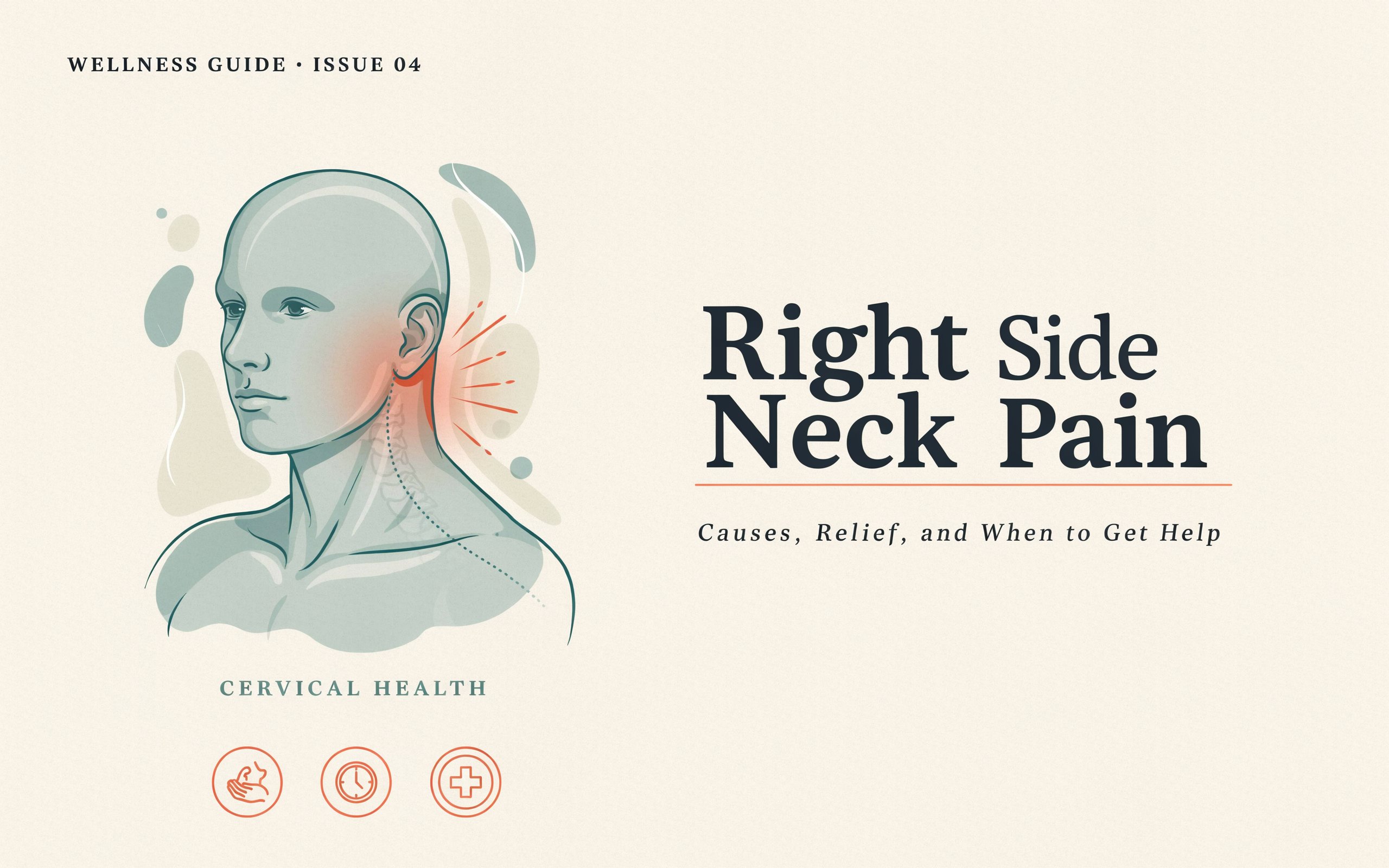
Waking up with right side neck pain can make everyday movements uncomfortable. Turning your head, looking down at your phone, or even getting dressed may become difficult when your neck feels stiff or sore.
Sometimes the cause is simple, such as sleeping in an awkward position or sitting at a desk for too long. In other cases, neck pain can be linked to muscle strain, nerve irritation, an injury, or changes in the cervical spine.
Most mild neck pain improves with time and basic care. However, certain symptoms can indicate a more serious problem and should be checked by a healthcare professional.
What Does Right Side Neck Pain Feel Like?
Right side neck pain describes discomfort that is mainly felt along the right side of your neck. It may remain in one spot or spread toward the shoulder, upper back, arm, or hand.
Depending on the cause, you may experience:
- Aching or soreness
- Neck stiffness
- Pain when turning your head
- Muscle tightness
- Sharp or shooting pain
- Headaches
- Tingling or numbness
- Weakness in the arm or hand
The symptoms can vary considerably from one person to another because neck pain can have many different causes.
What Can Cause Pain on the Right Side of the Neck?
There are several possible explanations for pain that develops on one side of the neck. Your sleeping position, daily activities, posture, injuries, and other health conditions can all play a role.
1. Sleeping in an Awkward Position
Sleeping with your head turned too far to one side can place extra tension on the muscles and joints around your neck.
You might wake up with stiffness, soreness, or difficulty turning your head. Using a pillow that keeps your head and neck comfortably aligned may help prevent this type of discomfort.
2. Poor Posture
Spending hours looking down at a phone or leaning toward a computer screen can place additional stress on the neck.
Over time, staying in the same position may leave the muscles feeling tight, tired, or painful. Taking regular movement breaks and adjusting your screen height can help reduce unnecessary strain.
3. Muscle Strain
Overworking the neck muscles during exercise, lifting, repetitive tasks, or prolonged sitting can leave one side feeling sore or tight.
Stress can also contribute because people often tense their neck and shoulder muscles without realizing it.
Internal link opportunity: If you have a MHHubs article about posture, upper-back pain, or muscle stretches, this is a natural place to add the internal link.
4. Pinched or Irritated Nerve
A nerve exiting the cervical spine can become irritated or compressed when surrounding tissues put pressure on it. This is often described as cervical radiculopathy.
When a nerve is involved, discomfort may move beyond the neck and travel into the shoulder, arm, or hand. Tingling, numbness, or muscle weakness can also occur.
If these symptoms are persistent or getting worse, it’s important to have them evaluated rather than relying only on home treatment.
5. Neck Injury or Whiplash
A sudden impact or forceful movement can injure the muscles, ligaments, joints, discs, or other structures in the neck.
Whiplash is one example. It commonly occurs after a car accident, but similar neck injuries can also happen during sports, falls, or other situations involving a sudden back-and-forth movement of the head.
If your neck pain began after an accident or significant impact, getting medical advice is especially important.
6. Age-Related Changes in the Neck
The structures of the cervical spine naturally change as we get older. Wear-and-tear changes can affect the discs and joints and may lead to a condition called cervical spondylosis.
This may cause neck aching, stiffness, headaches, or discomfort that extends toward the shoulders or arms. In some cases, changes in the spine can also irritate nearby nerves.
Why Does the Right Side of My Neck Hurt?
If you’re asking, “Why does the right side of my neck hurt?”, the answer depends on how the pain started, what makes it worse, and whether you have other symptoms.
For instance, waking up with one-sided stiffness may point toward an awkward sleeping position or muscle strain. Pain that begins after prolonged phone or computer use may be related to posture and muscle fatigue.
However, discomfort that spreads into the arm and comes with numbness, tingling, or weakness can indicate irritation or compression of a nerve.
Because similar symptoms can have different causes, persistent or severe neck pain should be assessed by a healthcare professional.
How to Relieve Right Side Neck Pain at Home
If your neck discomfort is mild and hasn’t followed a serious injury, a few simple measures may help ease symptoms.
Apply Heat or Cold
A warm shower, heating pad, or warm towel may help relax tight muscles. Cold therapy can also be useful, particularly after a recent minor injury.
Always wrap hot or cold packs in a towel to protect your skin.
Keep Your Neck Gently Moving
Gentle movement can help prevent your neck from becoming excessively stiff. Try slow, comfortable movements rather than forcing your neck into a painful position.
If a particular movement makes the pain noticeably worse, stop doing it and give your neck a chance to recover.
Improve Your Posture
If you work at a computer or spend a lot of time on your phone, try to avoid keeping your head bent forward for long periods.
Position your screen at a comfortable height and change your position regularly. Prolonged poor posture can contribute to neck strain.
Take Movement Breaks
Rather than staying in the same position for hours, get up regularly and gently move your neck and shoulders.
Short, frequent breaks can reduce the amount of time your muscles spend under continuous tension.
Check Your Sleeping Position
Try to keep your head and neck comfortably aligned with your body while sleeping.
Avoid positions that leave your head turned sharply to one side for a prolonged period. A supportive pillow may also help maintain a more comfortable neck position.
Try Gentle Upper-Body Stretching
If your neck discomfort is connected with general upper-body tightness, gentle stretching may be useful. Our MHHubs guide on Lat Muscle Stretches: Best Moves for a Tight Back covers simple stretches for the lats and surrounding upper-body muscles.
Don’t force a stretch or continue an exercise that causes sharp pain
Consider Over-the-Counter Pain Relief
Some people use medicines such as paracetamol or ibuprofen for short-term neck pain. These medications aren’t suitable for everyone, so follow the product instructions carefully.
If you’re unsure whether a pain reliever is appropriate for you, speak with a pharmacist or healthcare professional before taking it.
When Is It Time to See a Doctor?
Mild neck pain often improves within a short period, but symptoms that persist or become worse should be evaluated.
Consider contacting a healthcare professional if:
- Your neck pain continues for several weeks.
- The pain keeps coming back.
- Your symptoms interfere with everyday activities.
- You develop persistent numbness or tingling.
- Your arm or hand feels weak.
- Pain travels from your neck into your arm.
- Your symptoms started after an accident or injury.
- The pain is becoming increasingly severe.
Persistent neck pain and neurological symptoms such as weakness, numbness, or tingling may require further evaluation.
When Can Right Side Neck Pain Be an Emergency?
Most cases of neck pain are not emergencies, but some symptoms require immediate medical attention.
Seek urgent medical care if severe neck pain develops suddenly, becomes rapidly worse, or occurs with significant weakness, numbness, difficulty walking, or coordination problems.
A stiff or painful neck accompanied by symptoms such as a severe headache, fever, vomiting, confusion, or unusual sensitivity to light also needs urgent medical evaluation because serious infections can sometimes cause these symptoms.
If your neck pain follows a major accident or injury, don’t attempt to treat a potentially serious injury with home exercises alone.
Can Stress Cause Right Side Neck Pain?
Yes, stress can contribute to neck discomfort.
When you’re under stress, you may unconsciously tighten the muscles around your neck and shoulders. If that tension continues for long periods, it can contribute to soreness and stiffness.
Regular movement, relaxation techniques, adequate sleep, and taking breaks from screens may help reduce muscle tension.
Frequently Asked Questions
Why does the right side of my neck hurt?
Common causes include muscle strain, poor posture, an awkward sleeping position, stress, nerve irritation, injuries, and age-related changes in the cervical spine. Cleveland Clinic: Neck Pain
How can I relieve right side neck pain at home?
For mild pain, try gentle movement, heat or cold therapy, better posture, regular breaks, and a comfortable sleeping position. Over-the-counter pain relief may also help when appropriate.
Can sleeping wrong cause right side neck pain?
Yes. Keeping your head or neck in an uncomfortable position during sleep can place extra strain on the muscles and may leave one side of your neck stiff or sore.
Can a pinched nerve cause right side neck pain?
Yes. Cervical nerve compression can cause neck pain that extends into the shoulder, arm, or hand. Numbness, tingling, or weakness may also occur.
When should I worry about neck pain?
Seek medical attention if neck pain is severe, getting worse, follows an injury, or occurs with weakness, numbness, coordination problems, difficulty walking, or other concerning symptoms.
Final Thoughts
Right side neck pain can develop for many reasons, including muscle strain, posture problems, sleeping position, nerve irritation, injuries, and age-related changes. Mild cases often improve with gentle movement, better posture, appropriate heat or cold therapy, and adequate rest.