

Finding out you have an ovarian cyst can bring up a wave of questions, and if you’re hoping to conceive, one worry often rises above the rest: will this affect my ability to get pregnant? It’s a genuinely stressful thing to sit with, especially when so much information online swings between reassuring and alarming without much nuance in between.
Here’s the more complete picture: most ovarian cysts are harmless and don’t affect fertility at all. But certain types can play a role, and understanding the difference can help ease unnecessary worry while still taking the right ones seriously. In this guide, we’ll walk through what the research says, which cysts matter for fertility, and what steps make sense if you’re trying to conceive.
What Is an Ovarian Cyst?
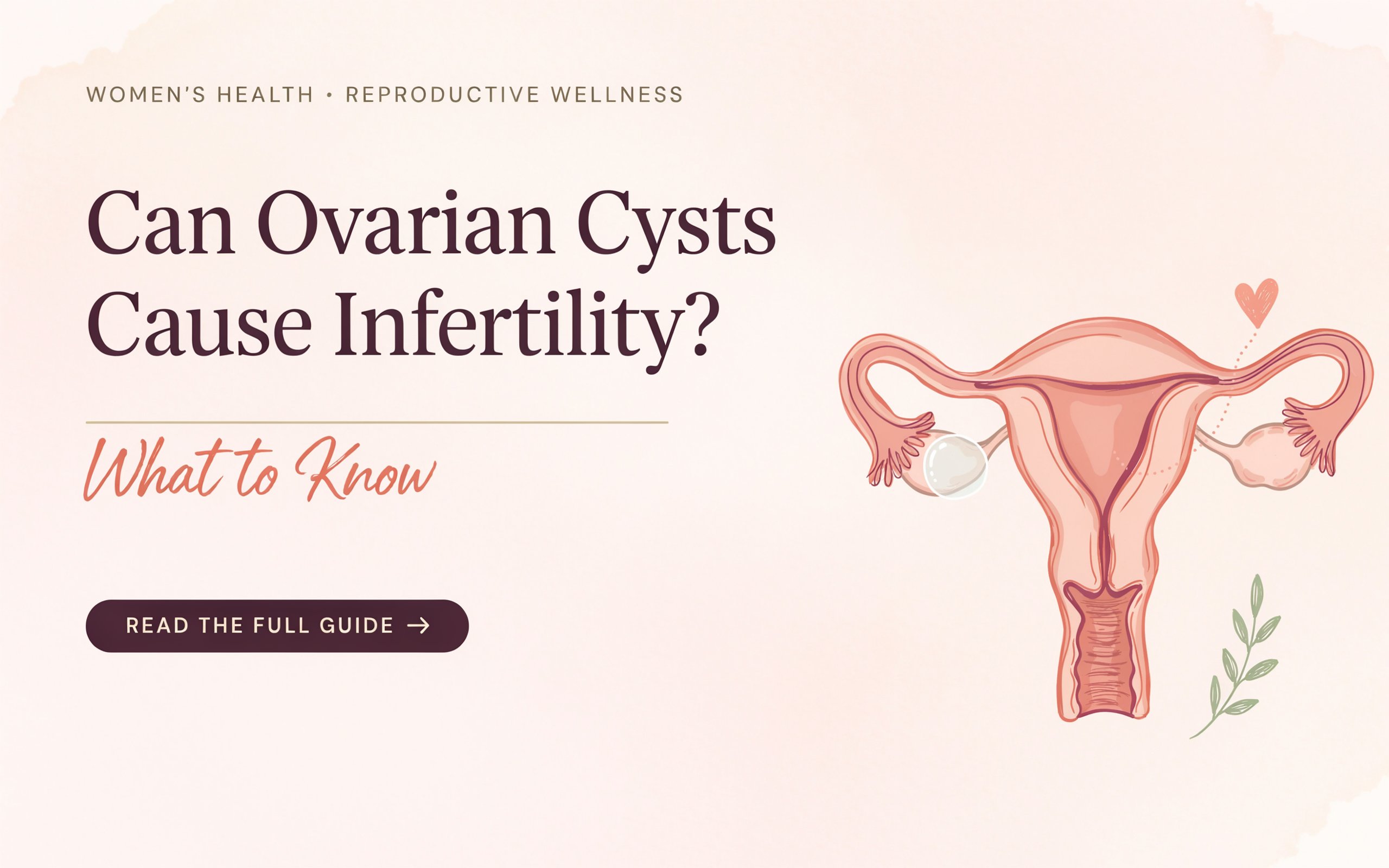
An ovarian cyst is a fluid-filled sac that forms on or inside an ovary. Most develop as a normal part of the menstrual cycle and are called functional cysts, which typically resolve on their own within a few weeks to a couple of months without causing any lasting issues, including with fertility.
Other, less common types of cysts can be more persistent or linked to underlying conditions, and these are the ones more likely to have a connection to fertility concerns.
Do Most Ovarian Cysts Affect Fertility?
No. The vast majority of ovarian cysts, particularly functional cysts related to normal ovulation, do not affect fertility and typically resolve without any treatment. Many women develop these cysts at some point without ever knowing, and they have no bearing on their ability to conceive.
The cysts more commonly associated with fertility challenges are specific types, discussed below, rather than ovarian cysts as a whole category.
Types of Cysts That Can Affect Fertility
1. Endometriomas
These cysts form when endometriosis tissue grows on the ovary, creating a cyst filled with old blood, sometimes called a “chocolate cyst.” Endometriomas are one of the more well-established links between ovarian cysts and fertility difficulties, since the underlying endometriosis itself can affect egg quality, ovarian reserve, and the pelvic environment needed for conception.
2. Polycystic Ovary Syndrome (PCOS)
PCOS isn’t technically a single cyst but a hormonal condition that causes multiple small cysts to form on the ovaries. It’s one of the most common causes of infertility, primarily because it disrupts regular ovulation rather than because of the cysts themselves. Managing the underlying hormonal imbalance is usually the key to improving fertility in PCOS.
3. Large or Complex Cysts
Cysts that grow very large, or that have a complex structure (such as containing solid components or multiple chambers), can sometimes affect fertility by physically disrupting ovarian tissue or, in rare cases, requiring surgical removal that affects ovarian reserve.
4. Dermoid Cysts (in certain cases)
These cysts, which can contain tissue like hair or skin, are usually benign and don’t typically affect fertility on their own, but larger ones may require surgical removal, which carries a small risk of affecting surrounding ovarian tissue.
How Ovarian Cysts Can Impact Fertility
When fertility is affected, it’s usually through one of these mechanisms:
- Disrupted ovulation, particularly with PCOS-related cysts
- Physical blockage or distortion of the fallopian tubes or ovary, more common with larger or complex cysts
- A drop in ovarian reserve, which can happen after surgery to remove endometriomas or larger cysts
- An altered pelvic environment, particularly with endometriosis-related cysts, which can affect egg quality and implantation
Trying to Conceive With an Ovarian Cyst? Here’s What to Do
- Get a proper diagnosis. An ultrasound can help determine whether a cyst is functional, likely to resolve on its own, or a type that needs closer monitoring
- Ask about watchful waiting. Many doctors simply monitor a cyst over a cycle or two first, since a lot of them clear up on their own
- Discuss your specific cyst type with a doctor or fertility specialist, since treatment and fertility implications vary significantly between cyst types
- Track your ovulation and cycle patterns, which can help identify whether a cyst is affecting regular ovulation
- Don’t assume the worst. A cyst diagnosis alone doesn’t mean infertility — many women with a history of ovarian cysts go on to conceive without difficulty
If you’re also noticing irregular cycles alongside a cyst diagnosis, our guide on getting your period twice in one month covers other hormonal causes of cycle irregularity that are worth discussing with your doctor.
When to See a Doctor
While many cysts resolve without concern, you should see a doctor if you experience:
- Persistent pelvic pain, especially one-sided
- Cysts that don’t resolve after a couple of menstrual cycles
- Irregular or absent periods alongside a cyst diagnosis
- Difficulty conceiving after 6–12 months of trying (sooner if you’re over 35)
- Sudden, severe pelvic pain, which could indicate a cyst rupture or ovarian torsion, both of which require urgent medical attention
According to the American College of Obstetricians and Gynecologists, most ovarian cysts are benign and resolve without treatment, but persistent or symptomatic cysts should be evaluated to rule out conditions that could affect long-term reproductive health.
Frequently Asked Questions
Do all ovarian cysts need to be removed to protect fertility?
No. Most functional cysts resolve on their own without any treatment. Removal is typically only considered for persistent, large, or complex cysts, or when a specific condition like endometriosis is involved.
Can you get pregnant naturally with an ovarian cyst?
In most cases, yes. Many women with ovarian cysts, especially functional ones, conceive without any issue. It’s the specific underlying cause, like PCOS or endometriosis, that more directly affects fertility.
Does removing an ovarian cyst improve fertility?
It can, particularly for endometriomas or cysts causing ovulation disruption, but surgery also carries a small risk of reducing ovarian reserve, so it’s a decision best made with a fertility specialist based on your specific situation.
How do I know if my cyst is affecting my fertility?
A doctor can assess this through ultrasound imaging, hormone testing, and tracking your ovulation pattern. Persistent irregular cycles or difficulty conceiving alongside a known cyst are worth discussing directly with a fertility specialist.
Is PCOS the same as having an ovarian cyst?
Not exactly. PCOS is a hormonal condition that causes multiple small cysts to form, but the fertility challenges associated with it come primarily from disrupted ovulation, not the cysts themselves.
Final Thoughts
If you’ve been worrying about whether an ovarian cyst might stand between you and the pregnancy you’re hoping for, take a breath — in the majority of cases, it simply doesn’t. Most cysts are functional, harmless, and resolve on their own. The exceptions, like endometriomas, PCOS, or large complex cysts, are worth taking seriously and discussing with a doctor, but they don’t automatically mean infertility either. Getting a clear diagnosis and understanding exactly what type of cyst you’re dealing with is the most useful next step, both for your peace of mind and your path forward.