

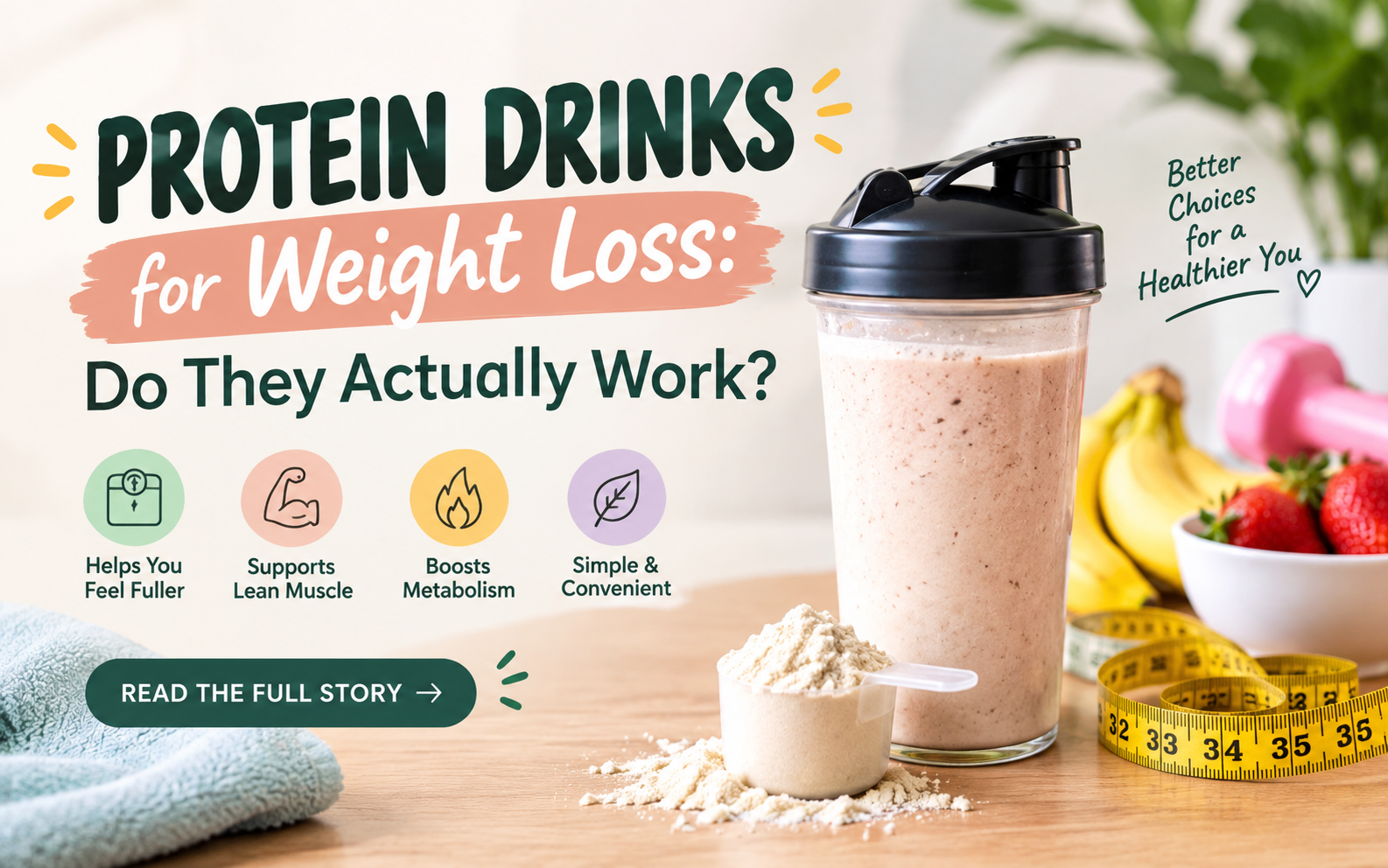
Walk down any supplement aisle or scroll through fitness content online, and you’ll run into protein drinks promising everything from faster fat loss to a flatter stomach. It’s easy to wonder whether they’re genuinely useful or just another trend riding on the protein craze. The honest answer sits somewhere in between: protein drinks can be a helpful tool for weight loss, but they’re not magic, and how you use them matters more than the drink itself.
In this guide, we’ll break down how protein actually supports weight loss, when protein drinks make sense, and what to look for if you decide to add them to your routine.
How Protein Supports Weight Loss
1. It Keeps You Fuller for Longer
Protein is more satiating than carbohydrates or fat, meaning it helps you feel full on fewer calories. That naturally cuts back on snacking and overall calorie intake as the day goes on.
2. It Preserves Muscle During Weight Loss
In a calorie deficit, your body doesn’t just burn fat for energy — it can break down muscle too. Adequate protein intake helps preserve lean muscle mass, which matters for maintaining strength and keeping your metabolism from slowing down as much during weight loss.
3. It Has a Higher Thermic Effect
Your body burns more calories digesting protein compared to fats or carbohydrates, a phenomenon known as the thermic effect of food. While this effect is modest, it does contribute slightly to overall calorie expenditure.
4. It Can Simplify Portion Control
A protein drink offers a quick, pre-portioned way to hit your protein target without needing to plan or cook a full meal, which can be genuinely useful on busy days when convenience otherwise leads to less healthy choices. Pairing this with other energy-supporting food habits can help keep both your energy and your goals on track.
So, Do Protein Drinks Actually Move the Needle on Weight Loss?
Protein drinks themselves don’t cause weight loss — calorie balance does. What they can do is make it easier to stay in a calorie deficit by keeping you fuller, supporting muscle retention, and replacing higher-calorie, less satisfying snack or meal options.
In other words, a protein drink used to replace a 600-calorie fast food meal with a 200-calorie shake supports weight loss because of the calorie difference and improved satiety, not because protein itself has some magical fat-burning power.
The Best Times to Drink a Protein Shake for Weight Loss
- As a meal replacement, when time is limited and the alternative would be a less balanced option
- As a post-workout recovery drink, to support muscle repair alongside a calorie-controlled diet
- As a snack, when you need something filling that won’t derail your daily calorie goals
- Between meals, if you find yourself reaching for high-calorie snacks due to hunger
It’s worth noting that using a protein drink as an addition to your regular meals, rather than a replacement, can work against weight loss goals by simply adding extra calories.
How to Choose a Protein Drink Worth Buying
- Reasonable calorie count, typically in the 150–250 calorie range if using it as a meal or snack replacement
- At least 20–25 grams of protein per serving to make a meaningful contribution to satiety and muscle preservation
- Low added sugar, since many commercial protein drinks include unnecessary sugar that adds calories without added benefit
- Minimal artificial fillers, opting for simpler ingredient lists where possible
Protein Drinks vs. Meal Replacement Shakes
While the terms are sometimes used interchangeably, there’s a distinction worth understanding:
- Protein drinks are primarily focused on protein content, often lower in overall calories, and typically used as a supplement to a meal plan
- Meal replacement shakes are formulated to be more nutritionally complete, including a broader balance of carbohydrates, fats, vitamins, and minerals meant to substitute an entire meal
Depending on your goals, one may suit your routine better than the other — protein drinks tend to work well as snacks or post-workout additions, while true meal replacements are designed for full meal substitution.
Homemade Protein Shake Ideas
If you’d rather avoid commercial products, homemade protein shakes give you more control over ingredients and sugar content:
- Basic blend: protein powder, unsweetened almond milk, a handful of spinach, and half a banana
- Berry blend: protein powder, water or milk, mixed frozen berries, and a spoonful of chia seeds
- Coffee protein shake: protein powder, brewed and cooled coffee, milk of choice, and a dash of cinnamon
Homemade versions also make it easier to control calorie count precisely, which can be useful if you’re tracking intake closely.
Important Reminders
- Protein drinks are a tool, not a solution on their own. Sustainable weight loss still comes down to overall calorie balance, food quality, and consistency over time.
- Whole foods still deserve the biggest spot on your plate. Protein drinks work best as a supplement to a generally balanced eating pattern, not a replacement for it.
- Individual needs vary. Protein requirements differ based on activity level, body size, and goals, so a one-size-fits-all approach isn’t ideal for everyone.
Frequently Asked Questions
Will protein shakes alone make the weight come off?
Not on their own. Protein shakes can support weight loss by improving satiety and helping preserve muscle, but actual weight loss still depends on maintaining an overall calorie deficit.
What’s a reasonable number of protein shakes to have in a day?
Most people benefit from one to two protein drinks daily, used to replace a meal or snack, rather than added on top of regular eating, which could add unnecessary calories.
Do protein shakes beat real food when it comes to weight loss?
Not necessarily better, but they can be a convenient, portion-controlled option when time or planning is limited. Whole foods generally offer more nutritional variety and should remain the foundation of your diet.
Is there really an optimal time to drink a protein shake?
There’s no single “best” time — post-workout, as a meal replacement, or as a between-meal snack can all work, depending on what fits your daily routine and calorie goals.
Are homemade protein shakes better than store-bought ones?
They can be, mainly because you control the ingredients and can avoid added sugars or fillers often found in commercial products. Store-bought options are more convenient but require careful label reading.
Final Thoughts
Protein drinks can genuinely support weight loss, but their power comes from helping you manage hunger, preserve muscle, and simplify portion control — not from some special fat-burning effect. Used thoughtfully, as part of an overall balanced approach to eating, they can be a convenient and effective tool. Used as an add-on to an already sufficient diet, they’re just extra calories. As with most things in nutrition, consistency and overall balance matter more than any single product.