

Your collarbone sits right at the front of your shoulder, just under the skin, which makes it easy to feel and easy to injure. When it hurts, even something simple like lifting your arm, reaching for a seatbelt, or lying on your side can become uncomfortable.
Collarbone pain has many possible causes, from a minor strain to a fracture, and in rare cases, something unrelated to the bone itself. In this guide, we’ll go through the most common causes, what you can do at home for mild pain, and the signs that mean you should get medical help.
Where Is the Collarbone?
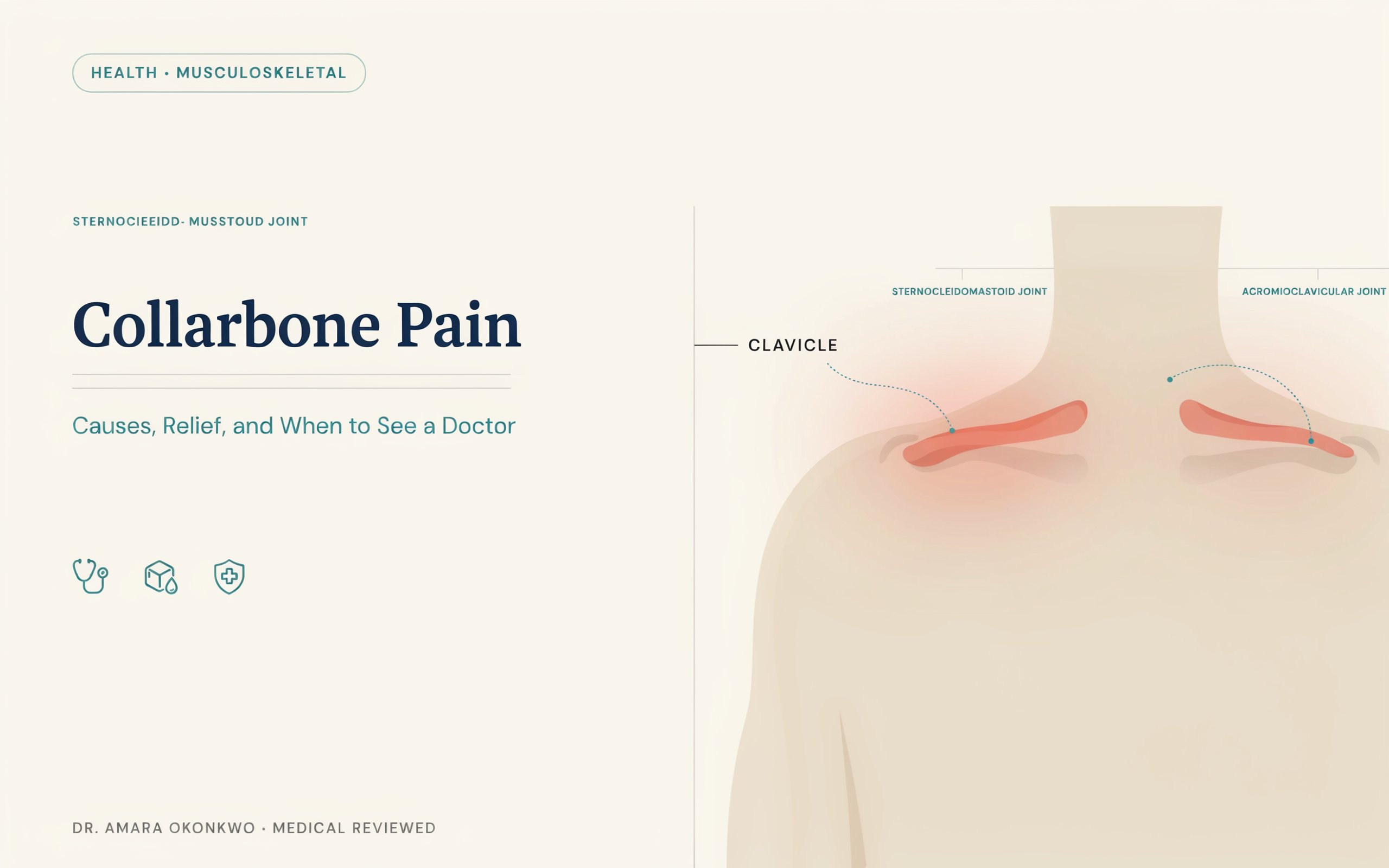
The collarbone, or clavicle, is a long, slender bone that runs horizontally from your breastbone (sternum) to your shoulder blade. It acts like a strut, holding your shoulder away from your chest and helping transfer force from your arm to the rest of your body. It has a joint at each end:
- The sternoclavicular (SC) joint, where it meets the breastbone
- The acromioclavicular (AC) joint, where it meets the shoulder blade
Pain can come from the bone itself, either of these joints, or the muscles and tissues around them.
Common Causes of Collarbone Pain
1. Fracture (Broken Collarbone)
A fall onto the shoulder or an outstretched arm, a direct blow in sports, or a car accident can break the collarbone. Mayo Clinic notes that falls, sports injuries, and traffic accidents are common causes. A fracture typically causes sharp pain that worsens with movement, along with swelling, bruising, and sometimes a visible bump or deformity.
2. AC Joint Sprain or Separation
When the ligaments at the top of the shoulder are stretched or torn, usually after a fall onto the shoulder, the AC joint can be sprained or separated. It causes pain at the outer end of the collarbone, with difficulty lifting the arm, especially overhead or across the body.
3. SC Joint Injury
Injury to the joint at the breastbone end can cause pain and swelling near the center of your chest. Sprains are the most common, while dislocations are less common.
4. Muscle Strain or Overuse
Heavy lifting, repetitive overhead movements, or poor posture can strain muscles around the collarbone and cause aching or soreness.
5. Arthritis
Wear and tear in the AC or SC joint can lead to a dull ache, stiffness, and swelling, especially with activity or in cold weather.
6. Weightlifter’s Shoulder (Osteolysis)
Repetitive stress from heavy lifting can irritate the end of the collarbone near the AC joint, causing pain at the top of the shoulder.
7. Sleeping Position
Lying on one side for hours or sleeping with an awkward arm position can leave the collarbone area tender. If neck and shoulder pain from sleep is a recurring problem, our guide on neck pain from sleeping offers tips to help.
8. Thoracic Outlet Syndrome
When nerves or blood vessels are compressed in the space between the collarbone and first rib, you may feel pain in the collarbone area, with tingling, numbness, or weakness in the arm or hand. Weak shoulder muscles and poor posture can contribute.
9. Posture Problems
Rounded shoulders and a forward head position, often from desk work, can put extra stress on the collarbone and surrounding muscles. Our article on rhomboid pain exercises covers stretches and strengthening moves that help.
10. Less Common Causes
Rarely, collarbone pain can come from infection of the bone, swollen lymph nodes, or tumors. Healthline notes that some causes of collarbone pain are serious and need prompt attention. Pain on the left side of the chest and shoulder can also sometimes be referred pain from the heart (see warning signs below).
Symptoms to Look For
- Sharp or aching pain along the collarbone
- Swelling, bruising, or tenderness
- A bump, or a change in the shape of the shoulder
- Pain with lifting or moving your arm
- A grinding or clicking sensation
- Tingling or numbness down the arm
Home Care for Mild Collarbone Pain
If there was no significant injury, you can move your arm reasonably, and there are no warning signs, these steps may help:
- Rest the area. Avoid heavy lifting, overhead activity, and anything that worsens pain
- Apply ice wrapped in cloth for short periods in the first couple of days to ease swelling and soreness
- Try gentle warmth later on if muscles feel tight
- Support your arm in a comfortable position, using a pillow when resting
- Adjust your sleep position to avoid lying on the painful side
- Improve your posture and take breaks from desk work
- Over-the-counter pain relief. Some people use these for short-term comfort. Follow the label and check with a pharmacist or doctor if you have other conditions or take other medicines
- Do gentle range-of-motion movements once pain eases, if your doctor agrees
What About Broken Collarbones?
If you suspect a fracture, don’t try to treat it at home. Support the arm in a comfortable position, apply a cold pack wrapped in cloth, and get medical care. Most broken collarbones heal without surgery, using a sling and time, though some displaced or complex fractures need surgery. As Cleveland Clinic explains, the most common causes of collarbone pain are injuries and arthritis, and sudden pain after an accident needs prompt evaluation.
When to See a Doctor
See a doctor if:
- The pain began after a fall, accident, or hit
- You can’t move your arm normally
- There is visible swelling, a bump, bruising, or deformity
- The pain is severe or getting worse
- Pain lasts more than a few days without improvement
- You have numbness, tingling, or weakness in your arm or hand
- You develop fever, redness, or warmth over the area
Seek emergency care immediately if collarbone, shoulder, or chest pain comes with chest pressure or tightness, shortness of breath, sweating, nausea, pain spreading to the jaw or arm, or fainting. These can be signs of a heart problem. Also seek emergency care if a bone is pushing through the skin or you have severe pain after major trauma.
How to Prevent Collarbone Pain and Injury
- Strengthen shoulder and upper back muscles with guidance
- Use protective gear in contact sports and cycling
- Warm up before lifting or sport
- Avoid sudden heavy loads and use good lifting form
- Take care on stairs and slippery surfaces to prevent falls
- Keep good posture, especially at a desk or on your phone
- Wear a bag with balanced straps rather than carrying heavy loads on one shoulder
Frequently Asked Questions
Why does my collarbone hurt?
Common causes include injuries like fractures and joint sprains, muscle strain, arthritis, posture problems, and nerve compression. Rarely, other conditions are responsible.
How do I know if my collarbone is broken?
Signs include sharp pain, swelling, bruising, a bump or deformity, and difficulty moving your arm, usually after a fall or impact. Only an X-ray can confirm a fracture.
Can collarbone pain be caused by sleeping wrong?
Yes. Awkward sleeping positions or lying on one side for long periods can irritate the area. The pain is usually mild and improves with changing position.
Is collarbone pain a sign of a heart attack?
Rarely, but chest, shoulder, or arm pain with pressure, shortness of breath, or sweating can be heart-related and needs emergency care.
How long does a broken collarbone take to heal?
Healing often takes several weeks to a few months, depending on the type of break, your age, and your treatment.
Should I wear a sling for collarbone pain?
A sling is often used for fractures and some joint injuries, but it’s best to follow a doctor’s advice, as wearing one unnecessarily can lead to stiffness.
Final Thoughts
Collarbone pain can come from many sources, from a tight muscle after a long day at a desk to a broken bone after a fall. Mild pain without injury often improves with rest, gentle care, and better posture, but pain after trauma, visible deformity, trouble moving your arm, or any chest symptoms should be checked promptly. When in doubt, get it examined, because early diagnosis helps your collarbone heal properly.