

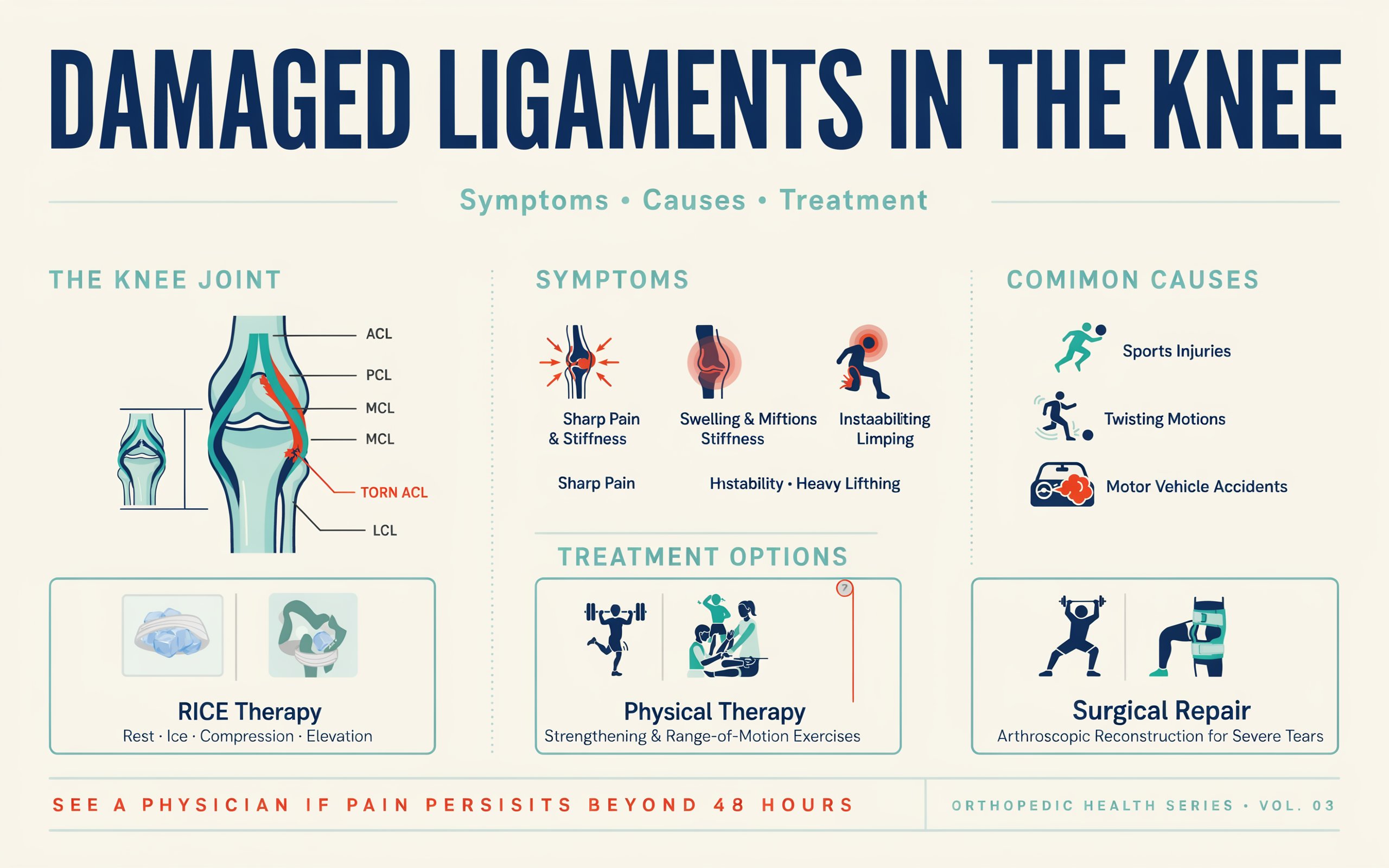
Damaged ligaments in the knee can cause pain, swelling, stiffness, and difficulty walking. Knee ligament injuries can occur during sports, physical activity, falls, or sudden twists of the joint. While mild injuries may heal with appropriate care, severe ligament tears may require a knee brace, physiotherapy, or surgery
Knowing the warning signs and available treatment approaches can help you recognize when professional care is needed. This article covers the causes, symptoms, diagnosis, treatment methods, and recovery process for knee ligament injuries.
What Are Knee Ligaments?
Ligaments are strong bands of connective tissue that connect bones and help stabilize joints. The knee has four major ligaments:
- ACL: Helps stabilize the knee by limiting excessive forward movement and controlling rotation of the shinbone.
- PCL: Helps prevent the shinbone from moving too far backward.
- MCL: Provides stability to the inner part of the knee and helps prevent excessive side-to-side movement.
- LCL: Helps stabilize the outer part of the knee and protects it against excessive sideways movement.
When a ligament is stretched too far or torn, the knee may become painful or unstable. For a closer look at ACL injuries, their common symptoms, and possible causes, explore the Mayo Clinic’s detailed guide.
Common Symptoms of Damaged Ligaments in the Knee
The symptoms can vary depending on which knee ligament is injured and how extensive the damage They may begin immediately or become more noticeable over several hours.
1. Knee Pain
Pain can develop on either side of the knee or deep within the joint, often becoming more noticeable during activities such as walking, bending, twisting, or bearing weight on the affected leg.
2. Swelling and Bruising
Swelling may develop quickly after an injury or appear gradually. Bruising and increased sensitivity to touch may develop around the injured knee.
3. A Popping Sensation
Some people feel or hear a pop when a ligament is injured, particularly with certain ACL injuries. However, a popping sound alone cannot confirm a tear.
4. Knee Instability
The affected knee may feel unstable or buckle unexpectedly while standing, walking, or putting weight on the leg.This can happen when a ligament cannot provide normal joint support.
5. Stiffness and Limited Movement
Pain and swelling may make it difficult to bend or straighten the knee. Climbing stairs, walking, and getting up from a chair may also become uncomfortable.
What Causes Knee Ligament Damage?
Knee ligament injuries often happen when the joint twists, bends awkwardly, or experiences a sudden impact.
Common causes include:
- Sudden changes in direction: Turning quickly while the foot stays planted can strain the ligaments.
- Awkward Landings: Coming down improperly after a jump can place excessive stress on the knee and cause the joint to twist unnaturally.
- Direct impact: A collision during sports or an accident can damage the ligaments.
- Falls and slips: Losing balance may force the knee beyond its normal range of movement.
- Sports activities: Football, basketball, and other activities involving pivoting, jumping, or sudden stops can increase injury risk.
How Are Damaged Knee Ligaments Diagnosed?
A medical professional will review how the injury happened and assess the knee for swelling, tenderness, range of motion, and joint stability.
Depending on the suspected injury, tests may include:
- X-ray: Checks for broken bones but does not directly show ligament tears.
- MRI scan: Provides detailed images of ligaments and other soft tissues.
- Physical Examination: A clinician checks how well the knee moves and evaluates its stability to identify signs of ligament damage.
The right assessment depends on your symptoms and the suspected severity of the injury.
Treatment Options for Damaged Knee Ligaments
Treatment depends on the injured ligament, the extent of damage, and how stable the knee remains.
1. Protect the Knee
Stop activities that worsen pain, such as running, jumping, or twisting. Avoid movements that increase knee pain, and seek medical evaluation if walking or putting weight on the injured leg becomes difficult
2. Apply a Cold Pack
Place a towel around an ice pack and hold it against the injured knee for up to 20 minutes per session. You can repeat this every two to three hours during the first few days as needed, but avoid applying ice directly to your skin.
3. Elevate the Leg
When resting, support your leg on pillows to raise it comfortably. This may help reduce swelling.
4. Consider a Knee Brace
A brace may help support the joint or limit certain movements. Ask a healthcare professional whether you need one and how to use it safely.
5. Follow a Physiotherapy Plan
Physiotherapy can help restore movement, strengthen the muscles around the knee, and improve balance. Follow an appropriate rehabilitation plan rather than starting demanding exercises too soon.
If you are exploring other musculoskeletal health topics, you can also read MHHubs’ guide to rhomboid pain exercises. These exercises target muscles in the upper back, not the knee, so they should not be used as treatment for a knee ligament injury.
6. Find Out Whether Surgery Is Needed
Some ligament injuries heal without surgery. A complete tear, persistent instability, or damage to multiple structures may require specialist assessment and sometimes surgery. Not every ligament tear needs an operation.
For general advice on early injury care, see the NHS guide to sprains and strains.
How Long Do Damaged Knee Ligaments Take to Heal?
Recovery time depends on the ligament involved and whether it has been mildly stretched, partially torn, or completely torn.
Cover the cold pack with a soft towel and apply it to the affected knee for about 15–20 minutes at a time. Repeat every few hours during the first couple of days if needed, making sure the ice never touches your skin directly.
Before resuming workouts or sports, make sure you follow your healthcare provider’s recommendations to ensure your knee has recovered sufficiently. Less pain does not always mean the knee has regained full strength and stability.
When Should You Seek Medical Help?
Get urgent medical assessment if:
- You cannot put weight on the leg or walk more than a few steps.
- The knee has intense pain, significant swelling, or an unusual shape following the injury.
- The knee locks or repeatedly gives way.
- Your foot becomes numb, unusually cold, pale, blue, or grey.
Seek prompt care if the knee becomes hot and red and you also develop a fever. Do not try to diagnose a serious ligament injury yourself.
For related information about managing muscle discomfort, visit MHHubs’ article on lat muscle stretches. These stretches are for the back muscles and are not a treatment for damaged knee ligaments.
Frequently Asked Questions
Can damaged knee ligaments heal without surgery?
Yes. Some mild injuries and partial tears can improve with appropriate support and rehabilitation. More severe injuries may need specialist treatment, and some require surgery.
Can you walk with a damaged knee ligament?
Some people can walk with a mild injury, while others have too much pain or instability to bear weight safely. Being able to walk does not rule out a serious tear.
What does a torn knee ligament feel like?
Symptoms may include pain, swelling, stiffness, a popping sensation at the time of injury, or a feeling that the knee may give way. A medical assessment is needed to identify the injured ligament.
Should I exercise with a knee ligament injury?
Avoid sports and movements that worsen pain or instability until the injury has been assessed. A clinician or physiotherapist can recommend safe exercises and guide your return to normal activity.
Conclusion
Damaged ligaments in the knee can range from mild sprains to serious tears. Pain, swelling, stiffness, and instability are common symptoms, but a professional assessment is needed to determine the cause. Appropriate care and rehabilitation can support recovery. Seek urgent medical attention if you cannot bear weight, have severe swelling or deformity, or notice numbness or changes in foot colour or temperature.
Medical disclaimer: This article is for general educational purposes only and is not a substitute for professional medical advice, diagnosis, or treatment.