

Have you ever wondered how many ribs a woman has and whether the number differs from a man’s? It’s a common question, partly because of a long-standing misconception about male and female anatomy.
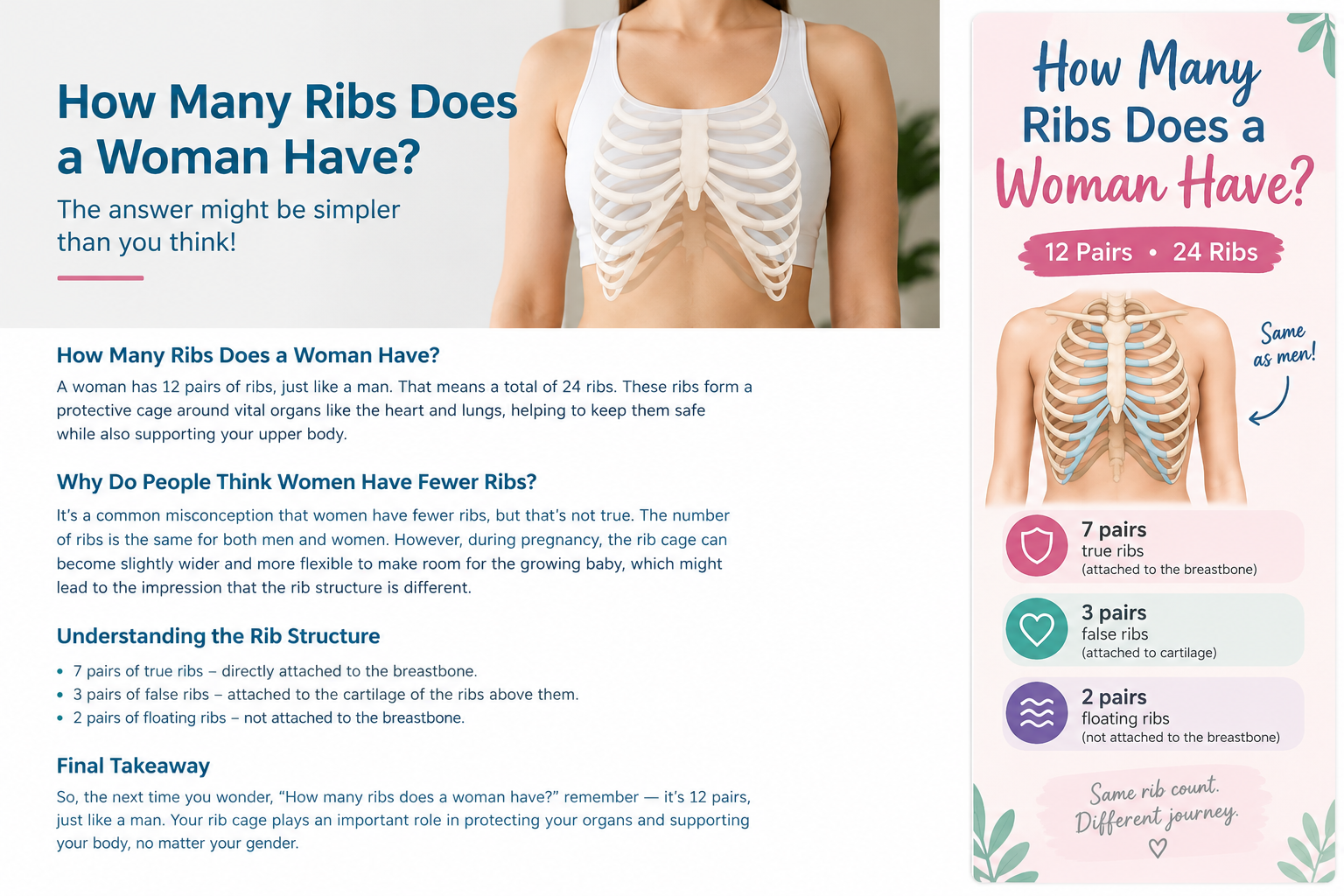
The answer is simple: most women have 12 pairs of ribs, making a total of 24 ribs. Men typically have the same number. These bones form the rib cage, which protects important organs and helps the chest expand during breathing.
In this article, we’ll explain how many ribs women have, how the ribs are arranged, what they do, and why some people may have more or fewer ribs than usual.
How Many Ribs Does a Woman Have?
Most women have 24 ribs arranged in 12 pairs, with one rib from each pair on either side of the chest. These bones connect to the spine at the back and curve around the chest to form a protective structure.
According to the National Library of Medicine’s overview of rib anatomy, the typical human rib cage contains 12 pairs of ribs. This arrangement is generally the same in women and men.
Although 24 ribs is the usual number, natural anatomical variations can occur. Some people are born with an additional rib or fewer ribs than usual.
Do Women Have More Ribs Than Men?
No. Women do not normally have more ribs than men. Both typically have 12 pairs, or 24 ribs in total.
The belief that women have more ribs than men is a common misconception. In reality, the number of ribs is generally determined by human anatomy rather than sex.
According to Medical News Today, there is no established difference in the typical number of ribs between males and females.
What Are the Three Types of Ribs?
The 12 pairs of ribs are classified into three groups according to how they connect to the breastbone, also called the sternum.
1. True Ribs
The first seven pairs are known as true ribs. Each pair connects directly to the sternum through its own strip of cartilage.
These ribs form the upper portion of the rib cage and help protect the heart and lungs.
2. False Ribs
The eighth, ninth, and tenth pairs are commonly called false ribs. They do not attach directly to the sternum. Instead, their cartilage connects to the cartilage of the rib above, providing an indirect connection.
3. Floating Ribs
The eleventh and twelfth pairs are known as floating ribs because they do not attach to the sternum at the front.
They are connected to the spine at the back and help form part of the lower rib cage.
You can learn more about these anatomical categories in the National Library of Medicine’s rib anatomy reference.
What Is the Function of the Rib Cage?
The rib cage does more than give the chest its shape. It plays several important roles in the body.
- Protects vital organs: The ribs help shield the heart, lungs, and other structures inside the chest.
- Supports breathing: The ribs and the muscles between them move as the chest expands and contracts during breathing.
- Provides structural support: The rib cage helps maintain the shape of the upper body.
- Provides muscle attachment points: Several muscles involved in breathing, posture, and upper-body movement attach to the ribs.
The rib cage is strong but not completely rigid. Its joints and cartilage allow enough movement for normal breathing.
Muscles around the back and upper body also help support movement and posture. Read our guide to lat muscle stretches to learn more about the large back muscles involved in upper-body movement.
Can a Woman Be Born With More or Fewer Than 24 Ribs?
Yes. Although most people have 12 pairs of ribs, some are born with a different number.
For example, a person may have an extra rib near the base of the neck, known as a cervical rib. Others may have fewer ribs because of a congenital variation.
Having an unusual number of ribs does not automatically mean a person has a health problem. Whether it causes symptoms depends on the specific variation and whether nearby nerves, blood vessels, or other structures are affected.
If a healthcare professional discovers an unusual rib structure on an X-ray or another imaging test, they can explain whether it requires any follow-up.
Does Pregnancy Change the Number of Ribs a Woman Has?
No. Pregnancy does not normally increase or decrease the number of ribs.
As pregnancy progresses, the growing uterus and changes in the body’s posture can affect how the chest, abdomen, and surrounding muscles feel. Some pregnant women may experience discomfort around the ribs, particularly later in pregnancy.
However, these changes do not mean that additional ribs have developed.
Severe, persistent, or unusual pain beneath the ribs during pregnancy should be discussed promptly with a healthcare professional, especially if it occurs with other concerning symptoms.
When Should You Seek Medical Advice About Rib Pain?
Knowing how many ribs you have is useful, but pain in the rib area is a separate issue. Rib discomfort can result from muscle strain, an injury, inflammation, or other medical conditions.
Seek medical advice if rib pain persists, worsens, or interferes with normal activities.
Get emergency medical help if you experience chest or rib pain with difficulty breathing, severe chest pressure, fainting, or sudden severe symptoms. Do not assume that chest pain is caused by a rib or muscle problem without an appropriate assessment.
If your discomfort also affects the muscles around your shoulder blades or upper back, you may find our guide to rhomboid pain exercises helpful for understanding those muscles. These exercises are not a substitute for medical assessment when rib or chest pain is unexplained.
Frequently Asked Questions
How many ribs does a woman have on each side?
Most women have 12 ribs on the right side and 12 on the left, making 24 ribs altogether.
Do men and women have the same number of ribs?
Yes. Most men and women have 12 pairs of ribs. The common belief that men have one fewer rib is a misconception.
Are floating ribs different in women?
No. Floating ribs have the same basic anatomical arrangement in women and men. They are the eleventh and twelfth rib pairs and do not connect to the sternum at the front.
Can a person live with an extra rib?
Yes. Many people with an extra rib have no symptoms and may not know it is present. In some cases, an extra rib can affect nearby nerves or blood vessels, so medical assessment may be appropriate if symptoms occur.
Do ribs protect the heart and lungs?
Yes. The rib cage helps protect the heart and lungs while allowing the chest to move during breathing.
Final Thoughts
Most women have 12 pairs of ribs, or 24 ribs in total, just like men. These bones form a protective cage around important chest organs and help support normal breathing and upper-body structure.
Although some people are born with more or fewer ribs, these variations do not always cause health problems. If you have persistent rib pain or symptoms such as difficulty breathing, seek appropriate medical advice instead of assuming the discomfort is harmless.