

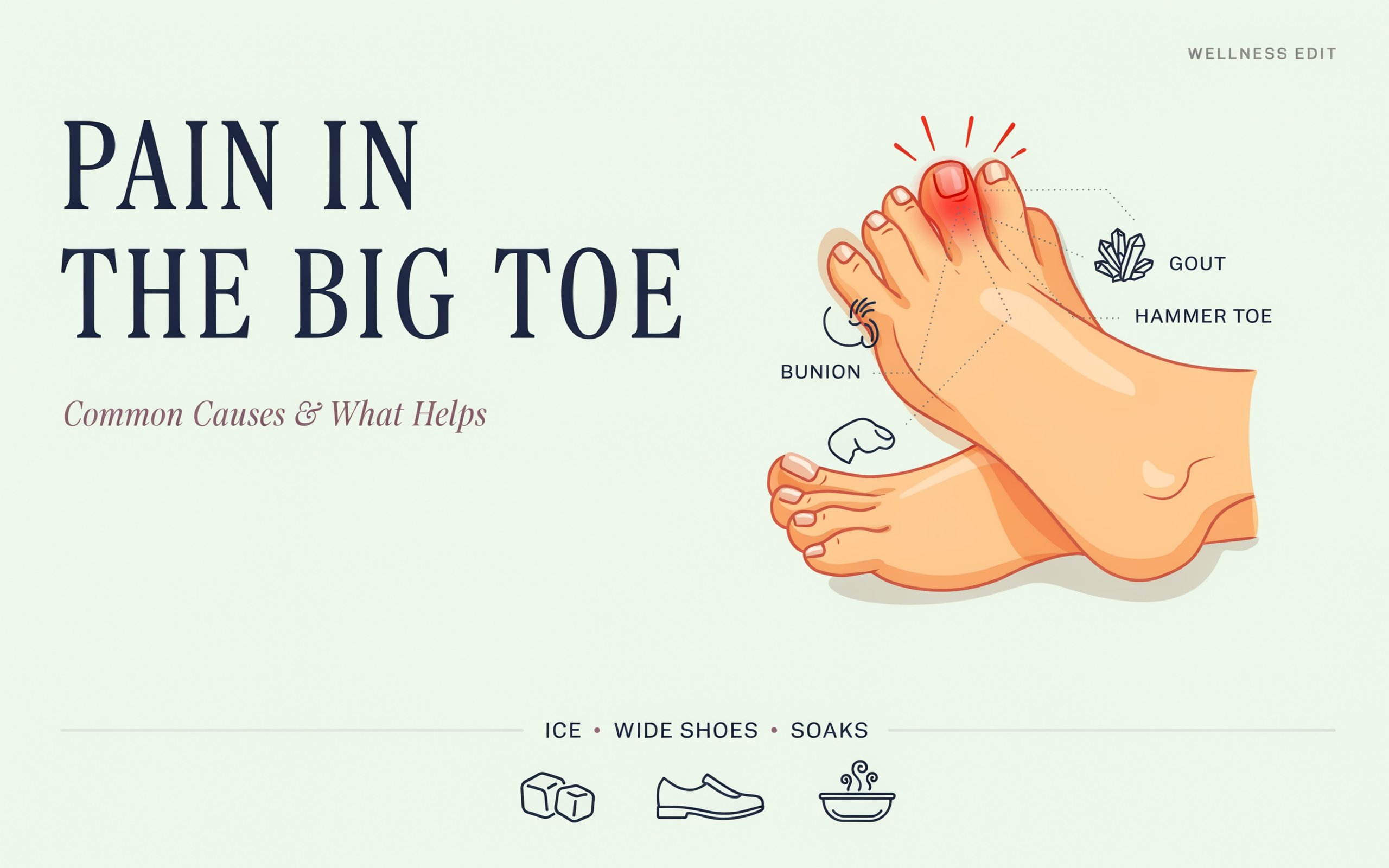
You don’t realize how much you depend on your big toe until it hurts. Every step, every push-off, and every pair of shoes suddenly becomes a reminder. Pain in the big toe can come on slowly after weeks of discomfort, or it can strike overnight and make even a bedsheet feel unbearable.
The big toe carries a large share of your body weight with each step, which is why it’s prone to a surprising range of problems. In this guide, we’ll walk through the most common causes of big toe pain, what you can do at home, and the signs that mean it’s time to get checked.
Why Is the Big Toe So Prone to Pain?
The big toe has a joint at its base that bends with every step you take, and it absorbs significant force when you walk, run, or climb stairs. Add tight shoes, old injuries, or underlying health conditions, and that joint and the tissues around it can become irritated, inflamed, or damaged.
Common Causes of Pain in the Big Toe
1. Gout
Gout is a type of arthritis caused by a buildup of uric acid crystals in a joint, and the base of the big toe is the classic target. A gout flare often comes on suddenly, sometimes at night, with intense pain, swelling, warmth, and redness. Even light pressure, like a blanket, can feel painful.
2. Bunions
A bunion is a bony bump that forms at the base of the big toe when the toe gradually drifts toward the others. It can cause soreness, redness, and swelling, and shoes that press on the bump often make it worse.
3. Osteoarthritis of the Big Toe (Hallux Rigidus)
Wear and tear on the joint can cause stiffness and aching, especially when you push off to walk. Over time, the toe may become harder to bend, and a bony bump can develop on top of the joint.
4. Ingrown Toenail
When the edge of the nail grows into the surrounding skin, it can cause pain, redness, and swelling along the side of the toe. If it gets infected, you may notice pus or increasing tenderness.
5. Turf Toe or Sprain
Bending the big toe too far upward, common in sports or sudden pushing-off movements, can sprain the ligaments around the joint, causing pain, swelling, and stiffness.
6. Fracture
A dropped object, a stubbed toe, or repetitive stress can break a bone in the toe. Fractures typically cause sharp pain, swelling, bruising, and trouble putting weight on the foot.
7. Sesamoiditis
Two tiny bones sit under the big toe joint, embedded in a tendon. Overuse, especially in runners, dancers, or people who wear high heels, can inflame this area and cause a dull ache under the ball of the foot, near the big toe.
8. Tight or Poorly Fitting Shoes
Narrow toe boxes and high heels squeeze the toes together and put extra pressure on the big toe joint. Over time, this can contribute to bunions and chronic soreness.
9. Infection
Skin or nail infections, including fungal infections or infected cuts, can cause pain, redness, and swelling. Infections need prompt attention, especially in people with diabetes.
10. Nerve Problems
Nerve irritation or damage, including from diabetes, can cause burning, tingling, or shooting pain in the toes.
How to Tell What May Be Causing Your Pain
A few telltale signs can help narrow down what’s going on:
- Sudden, severe pain with redness, swelling, and warmth may suggest gout or infection
- A bump at the base of the toe with gradual soreness often points to a bunion
- Stiffness and pain that worsens when you push off may suggest arthritis of the joint
- Pain along the nail edge usually points to an ingrown toenail
- Pain after a clear injury could mean a sprain or fracture
- Pain under the ball of the foot near the big toe may suggest sesamoiditis
These are only clues, not a diagnosis. Only a medical exam, and sometimes imaging or lab tests, can confirm the cause.
Home Care for Mild Big Toe Pain
If your pain is mild, you haven’t had a significant injury, and you don’t have warning signs of infection or gout, these steps may help:
1. Rest the Toe
Reduce activities that aggravate the pain, such as running, jumping, or long walks, and give the joint time to calm down.
2. Apply Ice
Wrap an ice pack in a thin cloth and apply it to the sore area for short periods to help reduce swelling and ease pain. Never place ice directly on bare skin.
3. Elevate Your Foot
Raising your foot above heart level when resting can help reduce swelling.
4. Switch to Better Footwear
Choose shoes with a wide toe box, good cushioning, and proper support. Avoid tight, pointed, or high-heeled shoes until the pain settles.
5. Use Cushioning or Toe Spacers
Soft pads can reduce pressure on a bunion or sore joint, and toe spacers may help in some cases. Look for products made for bunion or toe support.
6. Over-the-Counter Pain Relief
Some people use over-the-counter pain relievers to manage discomfort. Follow the label instructions, and check with a pharmacist or doctor if you have other health conditions or take other medications.
7. Gentle Movement and Stretching
Once the initial pain settles, gentle toe and foot stretches may help maintain flexibility. Stop if anything increases your pain.
8. Warm Soaks for Ingrown Nails (With Caution)
For a mild ingrown toenail, soaking the foot in warm water may soften the skin and ease discomfort. If you have diabetes or reduced feeling in your feet, skip home treatment and see a doctor instead.
If your lower legs and feet feel tight from activity as well, our guide on soleus muscle pain and recovery offers calf care tips that may complement these steps.
Ways to Prevent Big Toe Pain
- Wear well-fitting shoes with enough room for your toes
- Limit time in high heels or narrow shoes
- Maintain a healthy weight to reduce stress on your feet
- Trim toenails straight across, rather than curving them down at the edges
- Warm up before exercise and increase activity gradually
- If you’re prone to gout, discuss diet and prevention with your doctor
When to See a Doctor
Some big toe pain should be checked sooner rather than later. See a doctor if you have:
- Sudden, severe pain with redness, swelling, and warmth, especially at night
- Pain after an injury, particularly if you can’t put weight on your foot or the toe looks misshapen
- Fever or chills along with toe pain
- Pus, spreading redness, or a wound that isn’t healing
- Numbness, tingling, or burning that keeps returning
- Pain that lasts more than a couple of weeks despite home care
- Pain that keeps you from walking normally or sleeping
If you have diabetes, poor circulation, or reduced sensation in your feet, don’t wait on any foot wound, infection sign, or new toe pain. See a healthcare provider promptly, since small problems can become serious quickly.
The American Academy of Orthopaedic Surgeons’ OrthoInfo is a reliable source for patient-friendly information on foot and toe conditions, including bunions, arthritis, and sprains.
Frequently Asked Questions
Why does my big toe hurt for no reason?
Pain with no obvious injury is often related to joint conditions like gout or arthritis, a developing bunion, or pressure from footwear. If it keeps coming back or is severe, it’s worth getting evaluated.
How can I tell if big toe pain is gout?
Gout typically causes sudden, intense pain with swelling, redness, and warmth, often in the middle of the night. Only a doctor can confirm it, sometimes using a joint fluid test or blood work.
Is big toe pain a sign of arthritis?
It can be. Stiffness, aching, and pain when pushing off to walk are common with arthritis in the big toe joint, particularly as people get older or after past injuries.
Can tight shoes cause big toe pain?
Yes. Shoes that squeeze the toes can irritate the joint, contribute to bunions, and worsen existing problems. Switching to roomier footwear often helps.
Should I see a doctor for big toe pain?
If the pain is mild and improves in a few days with rest and better shoes, home care may be enough. See a doctor if it’s severe, follows an injury, comes with redness, warmth, or fever, or doesn’t improve.
Final Thoughts
Pain in the big toe has many possible causes, from everyday shoe problems to conditions like gout and arthritis. Mild cases often improve with rest, ice, and roomier shoes, but sudden severe pain, signs of infection, or pain after an injury shouldn’t be brushed off. Paying attention to the pattern of your symptoms and getting checked when something seems off is the fastest way back to walking comfortably.