

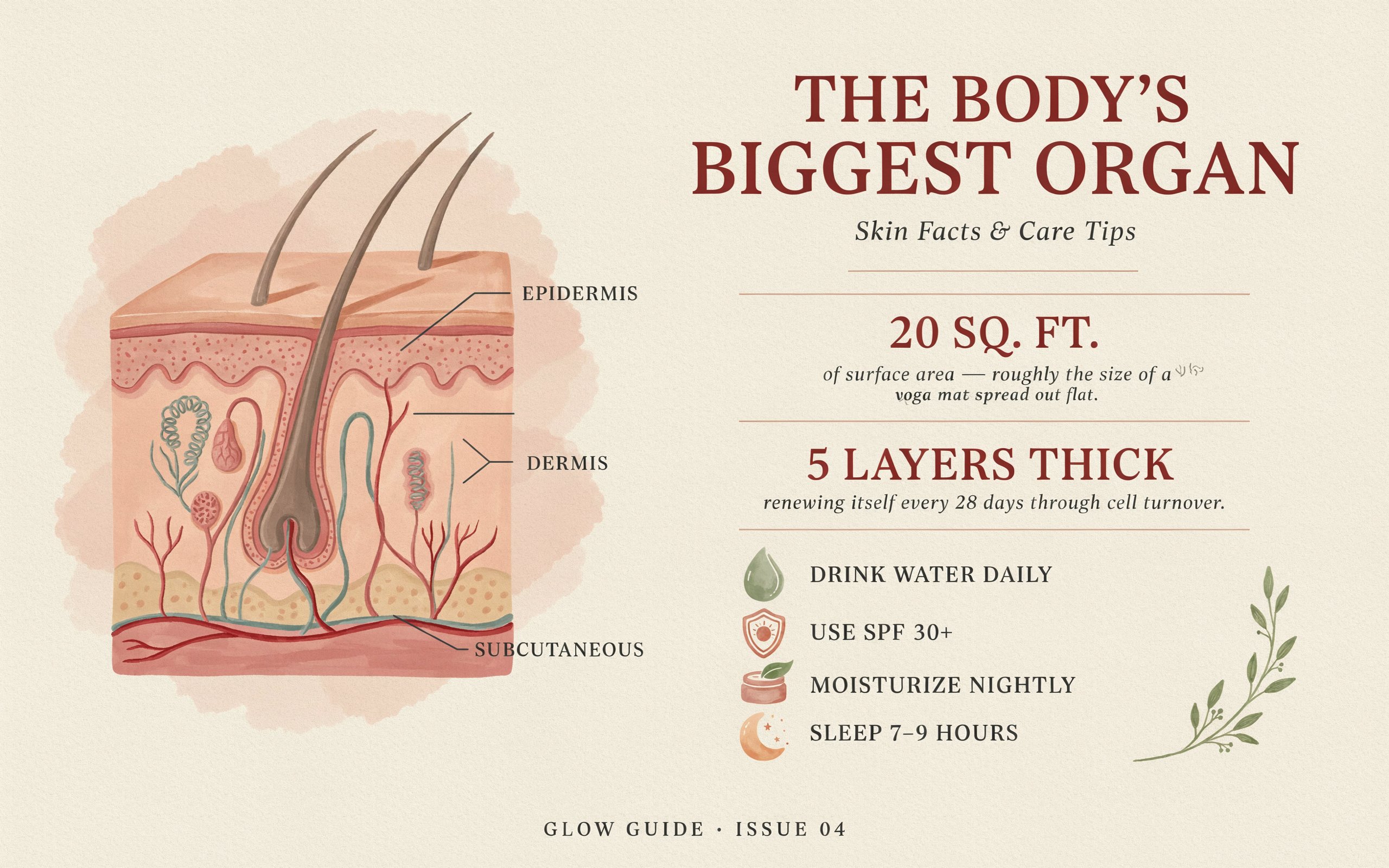
Quick quiz: what’s the biggest organ in your body? Many people guess the liver, the lungs, or the intestines. The real answer is something you see, touch, and wear every day: your skin.
Your skin is the body’s largest organ, covering you from head to toe and quietly doing dozens of jobs at once. In this guide, we’ll look at just how big it is, what it does, how it’s built, and simple habits to keep it healthy.
So, What Is the Body’s Biggest Organ?
Skin is the biggest organ in the human body by both surface area and weight. The liver is the largest organ inside the body, but it is far smaller than skin.
How Big Is Your Skin?
Estimates vary a little depending on body size and what’s included, but commonly cited figures for adults are:
- Surface area: about 1.5 to 2 square meters, roughly 22 square feet
- Weight: often around 3.5 kilograms (about 8 pounds) or more, depending on body size
- Share of body weight: commonly estimated at around 15 percent when the fatty layer beneath is included, though some estimates are lower
According to Live Science, skin covers a surface area of approximately 2 square meters in an average adult, and different sources count its weight slightly differently depending on which layers they include.
Skin also varies in thickness, thinnest on the eyelids and thickest on the soles of the feet and palms.
Why Is Skin Considered an Organ?
An organ is a team of tissues that work together to carry out particular tasks. Skin fits perfectly: it’s made of several types of tissue, including epithelial cells, connective tissue, nerves, and blood vessels, and it performs many vital functions.
The Three Layers of Skin
1. Epidermis (Outer Layer)
This is the part you can see. It’s a tough, waterproof barrier that protects you from germs, UV rays, and the environment. It also contains melanin-producing cells that give skin its color and help shield it from the sun. New cells are made at the bottom of the epidermis and gradually move to the surface, a process that takes around a month, while old cells shed away.
2. Dermis (Middle Layer)
The dermis is the thicker layer, packed with collagen and elastin that give skin its strength and stretch, along with blood vessels, nerve endings, sweat and oil glands, and hair folliclesIt’s where you feel touch, pain, and temperature.
3. Hypodermis (Deepest Layer)
Also called the subcutaneous layer, it’s made mostly of fat and connective tissue.It acts as cushioning and insulation for the body, and it anchors the skin to the muscle and bone underneath.
The NCBI InformedHealth guide to how skin works explains that skin consists of these three layers, and that it also acts as a storage area for water, fat, and metabolic products.
What Does Your Skin Do?
Your skin works around the clock. Its main jobs include:
- Protection. It blocks bacteria, chemicals, and injury, and holds in moisture
- Temperature control. Sweating cools you down, and blood vessels widen or narrow to release or hold heat
- Sensation. Nerve endings let you feel touch, pressure, pain, heat, and cold
- Vitamin D production. Sunlight helps your skin make vitamin D
- Immune defense. Specialized skin cells help spot and respond to invaders
- Water balance. It helps prevent too much water loss
- Healing. It repairs cuts, scrapes, and burns, though deeper wounds can scar
Fun Facts About Your Skin
- You shed hundreds of millions of skin cells every day
- The outer layer of the epidermis is made up of many layers of dead cells that act as a shield
- Fingerprints are formed by ridges in the skin and are unique to each person
- Even a small patch of skin is home to plenty of sweat glands, blood vessels, and nerve endings
- Your skin hosts trillions of microorganisms, a community called the skin microbiome, most of which are harmless or helpful
What About the Biggest Internal Organ?
If you’re asking about organs inside the body, the liver is the largest, performing hundreds of functions, including filtering blood and processing nutrients. Other commonly mentioned “largest” organs and glands:
- Largest internal organ: liver
- Largest gland: liver
- Largest endocrine gland: thyroid
- Largest lymphatic organ: spleen
How to Take Care of Your Biggest Organ
1. Protect It From the Sun
Use a broad-spectrum sunscreen with SPF 30 or higher on exposed skin, reapply as directed, wear a hat and sunglasses, and seek shade during peak sun hours.
2. Keep It Moisturized
Moisturizing helps maintain the skin barrier, especially in dry or cold weather. Choose gentle, fragrance-free products if your skin is sensitive. Ingredients like centella are popular in skincare, and you can read more in our guide to gotu kola (Centella asiatica) benefits.
3. Drink Enough Water and Eat Well
A balanced diet with fruits, vegetables, healthy fats, and adequate protein supports skin health from the inside.
4. Cleanse Gently
Cleanse with lukewarm water and a gentle cleanser.Very hot water and harsh scrubbing can strip natural oils and irritate skin.
5. Don’t Smoke
Smoking is associated with premature skin aging and poorer skin health
6. Get Enough Sleep
Skin repairs itself while you sleep, and poor sleep can leave it looking dull and tired.
7. Manage Stress
Stress can worsen conditions like acne, eczema, and psoriasis in some people.
8. Be Gentle With Babies’ Skin
Infant skin is thinner and more sensitive. For common baby skin concerns, see our article on teething and face rash.
9. Check Your Skin Regularly
Get to know your moles and spots, and look for changes. See a doctor promptly if a mole or spot changes in shape, color, or size, or is asymmetrical, has irregular borders, multiple colors, or is larger than a pencil eraser, which are signs doctors use to screen for melanoma.
Common Skin Problems
Because skin is exposed to the outside world, it can develop many problems, including:
- Acne
- Eczema (atopic dermatitis)
- Psoriasis
- Fungal and bacterial infections
- Sunburn and sun damage
- Rashes and allergic reactions
- Skin cancer
Many are manageable, and early treatment makes a big difference.
When to See a Doctor
See a doctor or dermatologist if you notice:
- A new or changing mole or spot
- A sore that doesn’t heal
- A rash that is spreading, painful, or won’t go away
- Signs of infection, such as pus, warmth, increasing redness, or fever
- Severe itching that disrupts sleep
- Sudden widespread skin changes or blistering
Seek emergency care for a rash with trouble breathing, swelling of the face or lips, high fever, or a rapidly spreading, painful rash.
Frequently Asked Questions
What is the body’s biggest organ?
The skin is the largest organ of the human body.
What is the largest internal organ?
The liver is the largest internal organ.
How much does human skin weigh?
Estimates vary, but for an average adult, skin is often cited as weighing roughly 3.5 to 5 kilograms (about 8 to 11 pounds), depending on body size and which layers are included.
How big is the skin of an adult?
Around 1.5 to 2 square meters, or roughly 22 square feet.
Is the skin really an organ?
Yes. It’s made of multiple tissue types working together to perform vital functions, which is what defines an organ.
How often does skin renew itself?
The outer layer of skin renews roughly every month, as new cells rise to the surface and old ones shed.
Final Thoughts
The body’s biggest organ isn’t hidden away inside you. It’s the skin you live in every day, protecting you, regulating your temperature, letting you feel the world, and healing when you’re hurt. A few simple habits, like sun protection, moisturizing, a balanced diet, and checking for changes, go a long way toward keeping it healthy for life.
Did you know the skin was the largest organ? Share your favorite skin fact in the comments, and pass this along to a friend who loves trivia.
This article is for informational purposes only and is not a substitute for professional medical advice. If you notice skin changes or have concerns, please consult a doctor or dermatologist.