

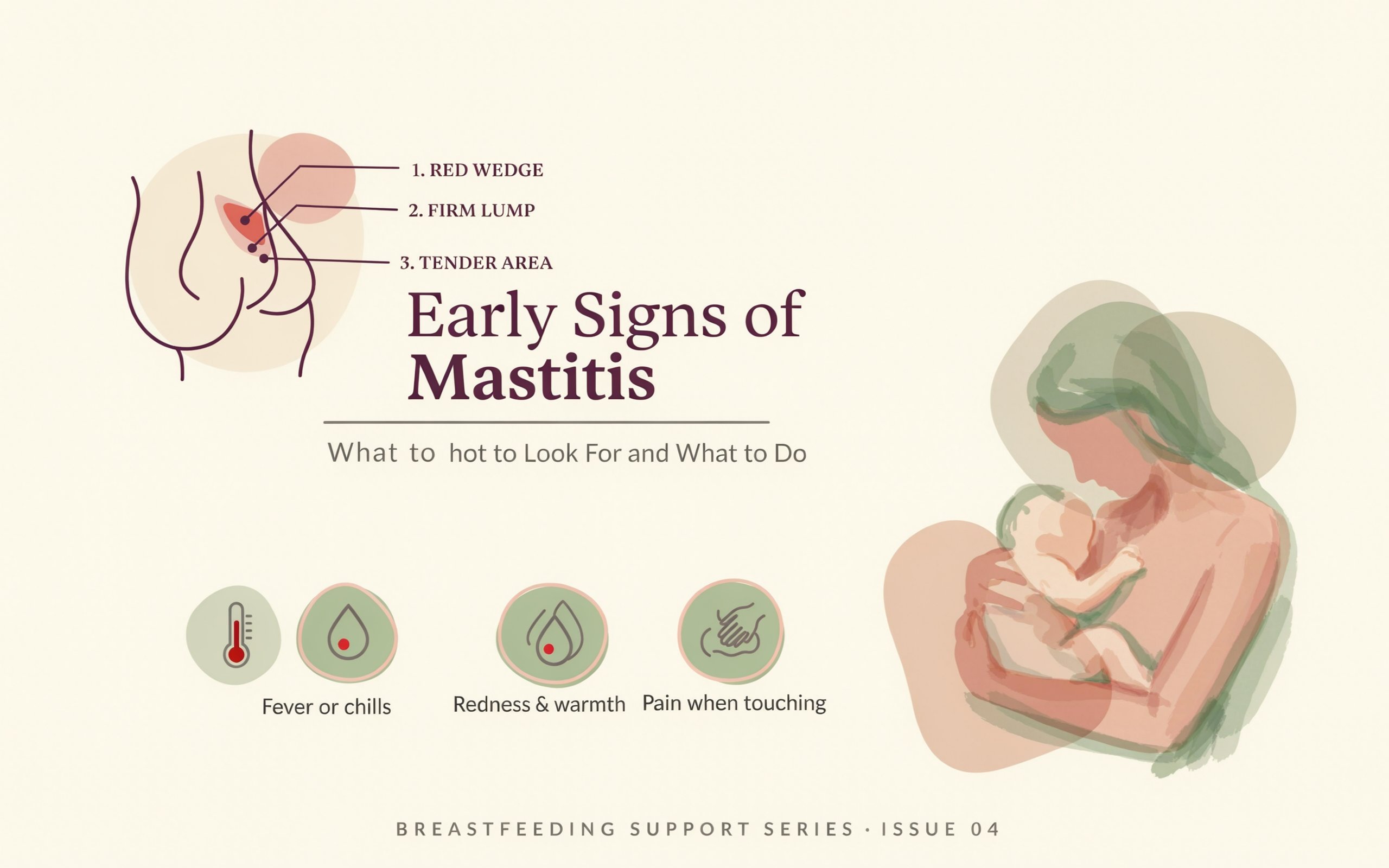
You’re nursing your baby, and one breast suddenly feels sore, tender, and a little firm. You feel tired and achy, maybe even a bit feverish. Is it just normal breastfeeding discomfort, or is something more going on? For many new mothers, this is how mastitis begins, and because the early signs can look like ordinary engorgement or a clogged duct, they’re easy to miss.
The good news is that mastitis is common, treatable, and usually easy to manage when caught early. In this guide, we’ll go through the early signs to watch for, what causes mastitis, how to care for yourself at home, and when to call your doctor.
What Is Mastitis?
Mastitis means the breast tissue has become inflamed, and sometimes an infection is involved too. It most often affects women who are breastfeeding, especially in the first weeks and months, but it can happen at any point while nursing. According to Mayo Clinic, mastitis mainly affects people who are breastfeeding and causes redness, swelling, and pain in one or both breasts, though the redness may be harder to see on Black or brown skin.
It’s also possible, though less common, for people who aren’t breastfeeding to develop mastitis.
Early Signs of Mastitis
Mastitis can come on quickly, sometimes within hours. Watch for:
- A tender, painful spot in one breast, often a wedge-shaped area
- A firm or swollen area or a hard lump
- Redness or a pink patch, which may feel warm to the touch
- Burning or sharp pain, either constant or during feeding
- Breast swelling or heaviness
- Feeling run-down, achy, or tired
- Chills or a low-grade fever
One thing that surprises many mothers: flu-like symptoms can show up before you notice much breast pain. If you feel suddenly unwell, with aches, chills, or fatigue, and one breast feels tender, mastitis is worth considering.
Clogged Duct vs. Mastitis
A blocked milk duct and mastitis can feel a lot alike, and an untreated blockage can turn into mastitis.
- Clogged duct: a small, tender lump, usually without fever or flu-like symptoms, that may ease after nursing
- Mastitis: a larger, red, warm, painful area, often with fever, chills, and feeling unwell
If a clogged duct doesn’t clear within a day or so, or you start to feel sick, it may be turning into mastitis.
What Causes Mastitis?
Mastitis often develops when milk isn’t draining well from part of the breast, or when bacteria enter through a cracked nipple. Common contributors include:
- Milk stasis, which means milk sits in the breast instead of draining properly
- Missed or skipped feeds, or long gaps between feeding or pumping
- A poor latch or ineffective milk removal
- Engorgement, especially when milk first comes in
- Cracked or damaged nipples, which let bacteria in
- Tight bras or clothing that press on the breast
- Sudden weaning or a sudden change in feeding routine
- Fatigue, stress, and illness, which can lower your defenses
- Smoking
It’s not your fault. Mastitis is common, and many mothers who do everything right still get it.
What to Do at the First Signs
Starting self-care early often helps, and it should go hand in hand with watching your symptoms.
1. Keep Feeding or Pumping
Continuing to breastfeed or pump is usually part of the treatment, because regular milk removal helps the breast recover. In most cases your baby can safely keep nursing from the affected breast, but check with your doctor if you’re unsure.
2. Offer the Affected Breast Often
Let your baby feed on demand and make sure the latch is good. If nursing hurts too much at first, a lactation consultant can help you find a more comfortable position.
3. Try Gentle Care for Comfort
Some mothers find a warm compress or warm shower before feeding helps milk flow, and a cold pack after feeding eases swelling and pain. Use a cloth barrier. Gentle, light massage toward the nipple may help, but avoid deep, hard massage, which can worsen inflammation.
4. Avoid Over-Pumping
Pumping much more than needed can increase milk supply and make engorgement worse. Aim to remove milk comfortably rather than emptying the breast completely, unless advised otherwise.
5. Rest and Drink Fluids
Sleep, hydration, and food matter. Your body is fighting inflammation, so rest where you can and ask for help with household tasks.
6. Wear a Comfortable Bra
Choose a supportive but loose-fitting bra, and avoid anything with tight underwires or pressure points.
7. Pain Relief
Ask your doctor or pharmacist which pain and fever relievers are suitable while breastfeeding, and follow the label directions.
When to See a Doctor
Don’t wait too long. See a doctor if:
- Symptoms don’t improve within about 12 to 24 hours of self-care, or they get worse
- You develop a fever, chills, or flu-like aches
- The red area is spreading or has red streaks
- You see pus or blood in your breast milk
- A nipple is cracked and looks infected
- You find a hard, painful lump that won’t go away
- You’ve had mastitis several times
The NCT (UK) advises continuing with self-help measures, and seeing your doctor if the inflammation hasn’t cleared within 12 to 24 hours or symptoms worsen, such as a fever with flu-like symptoms.
Seek urgent care if you have a high or persistent fever, severe pain, feel very unwell, confused, or faint, or a lump becomes hard, hot, and very painful. These may point to a more serious infection or a breast abscess.
How Is Mastitis Treated?
Treatment depends on severity:
- Mild, early mastitis may improve with frequent milk removal, rest, and supportive care
- Bacterial mastitis usually needs antibiotics, and your doctor will choose ones that are compatible with breastfeeding. Finish the entire course, even once you start feeling better
- Breast abscess, a pocket of pus that can form if mastitis isn’t treated, may need drainage by a doctor
- Persistent or unusual cases may need further tests to rule out other causes
With treatment, many women feel better within a day or two, and full recovery often takes around one to two weeks.
Rarely, Something Else
Most breast redness and soreness during nursing turns out to be mastitis or a blocked milk duct. But if you have persistent redness, swelling, or skin changes, such as dimpling like an orange peel, that don’t improve with treatment, or you’re not breastfeeding, see your doctor to rule out other causes. It’s rare, but it’s worth checking.
How to Help Prevent Mastitis
- Nurse or pump on a regular schedule, and try not to leave long gaps in between.
- Check the latch with a lactation consultant if you have pain or damaged nipples
- Wean gradually when you decide to stop breastfeeding
- Treat cracked nipples early
- Avoid tight bras and clothing
- Rotate feeding positions to drain different areas of the breast
- Look after yourself: rest, fluids, and balanced meals
- Don’t smoke
- Ask for help early with feeding problems
For more on life after baby, you might like our guides on the first period after baby and phantom kicks after pregnancy.
Frequently Asked Questions
What are the first signs of mastitis?
A tender, red, warm, or firm area on one breast, often with burning pain, swelling, and sometimes chills, aches, or a low fever.
Can mastitis start with flu-like symptoms?
Yes. Some women feel achy, chilled, and tired before they notice any breast pain.
Can I keep breastfeeding with mastitis?
In most cases yes. Frequent milk removal helps recovery, and it’s usually safe for your baby, but ask your doctor if you’re unsure.
Does mastitis always need antibiotics?
Not always. Mild early cases may improve with self-care, but if you have a fever, feel unwell, or don’t improve within a day or so, see a doctor, as bacterial mastitis needs antibiotics.
How long does mastitis last?
With early care and treatment, many women feel better within one to three days and recover fully in about one to two weeks.
Can mastitis go away on its own?
Very mild cases may settle with frequent feeding and rest, but it can worsen quickly, so watch closely and get medical advice if symptoms continue.
How are mastitis and a clogged duct different?
A clogged duct is usually a small, tender lump with no fever, while mastitis spreads over a wider area with redness, warmth, pain, and often flu-like symptoms.
Final Thoughts
Mastitis can hit suddenly and feel miserable, especially when you’re already worn out from caring for a newborn. But catching the early signs, like a tender, warm, red patch with chills or aches, and acting quickly with frequent feeding, rest, and medical advice when needed, usually leads to a quick recovery. Trust your instincts: if something feels off or isn’t improving, reach out to your doctor or a lactation consultant. You don’t have to push through it alone.
Have you dealt with mastitis? Share what helped in the comments, and pass this along to a new mom who might need it.
This article is for general information only and isn’t a replacement for professional medical advice.. If you have breast pain, fever, or other symptoms while breastfeeding, please contact your doctor.