

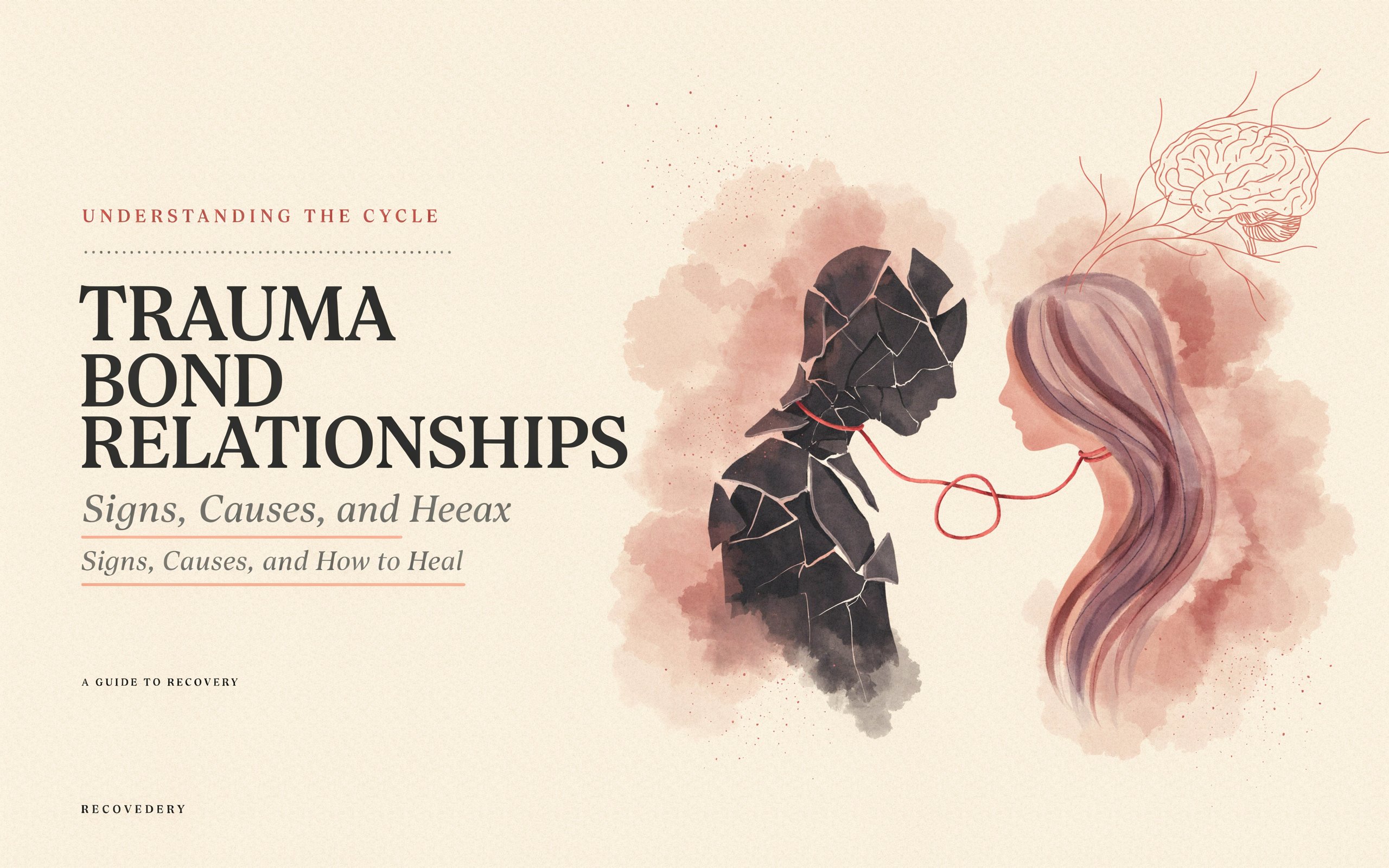
“Why can’t I just leave?” It’s a question many people ask themselves in a painful relationship, and one that loved ones ask from the outside. If you’ve ever felt strongly attached to someone who also hurts you, you may have wondered whether something is wrong with you. Nothing is. What you’re describing has a name: a trauma bond.
In this guide, we’ll explain what a trauma bond is, how to recognize one, why it forms, and the steps that can help you move toward safety and healing. This is a heavy topic, so please read at your own pace, and know that you are not alone.
If You Are in Danger
If you or someone else is in immediate danger, contact your local emergency number right away. If you are being harmed or afraid of your partner, a local domestic violence helpline or support organization can talk through your options confidentially. You can search an international directory of helplines at findahelpline.com to find support in your country.
What Is a Trauma Bond?
A trauma bond is a strong emotional attachment that develops between a person and someone who repeatedly hurts, controls, or manipulates them. It grows out of a cycle in which harmful behavior is followed by moments of affection, apology, or relief. Those good moments, mixed in with the bad, create powerful hope and make the relationship very hard to leave.
It’s worth being clear about the term. “Trauma bond” is widely used by therapists and in everyday conversation, but it isn’t a formal medical diagnosis. It describes a pattern of attachment in harmful relationships, not a condition on a checklist. And contrary to what the name might suggest, it isn’t two people bonding over shared trauma.
Trauma bonds are most often discussed in romantic relationships, but they can form in families, friendships, workplaces, and controlling groups too.
The Cycle Behind a Trauma Bond
Experts describe trauma bonds as following a repeating pattern, though it looks different for everyone:
- Idealization. Early on, the person may be intensely charming, attentive, and loving, sometimes called “love bombing”
- Building dependence. You may become more emotionally, socially, or financially reliant on them
- Criticism or control. Behavior shifts toward put-downs, jealousy, blame, silent treatment, or control
- Harm. This can be emotional, verbal, financial, or physical
- Apology and affection. The person expresses regret, promises to change, or becomes warm again
- Hope and relief. You feel closer than ever and believe things will improve
- Repeat. The cycle starts again
This unpredictable mix of pain and comfort is a powerful form of reinforcement. Because you never know when the kindness will come back, you stay emotionally tied to the possibility of it.
Signs of a Trauma Bond
Not everyone will experience all of these, but common signs include:
- You feel intense attachment to someone who regularly hurts or belittles you
- You make excuses for their behavior, or defend them to others
- You feel like you’re walking on eggshells
- Moments of kindness feel like proof they’re “really” a good person
- You feel responsible for their moods or for fixing the relationship
- You’ve been pulled away from friends or family, or feel cut off
- You’ve tried to leave before but felt pulled back
- You feel anxious, guilty, or empty when apart from them
- Your self-esteem has dropped, and you doubt your own judgment
- You feel stuck, even when part of you knows the relationship is hurting you
If this sounds familiar, it doesn’t mean you’re weak. It means your mind and body are responding to a hard situation the way human beings often do.
Why Do Trauma Bonds Form?
Several factors work together:
- Intermittent reinforcement. Unpredictable rewards, like occasional affection after cruelty, can create very strong attachment, the same principle that makes gambling hard to quit
- Hope. You remember the person at their best and keep waiting for that version to return
- Stress chemistry. Fear and relief trigger powerful stress and bonding hormones, which can make the attachment feel intense
- Isolation. When you’re cut off from outside support, the relationship becomes your main source of connection
- Manipulation. Tactics like gaslighting make you doubt your own perception of what’s happening
- Past experiences. People who grew up around instability, neglect, or abuse may be more likely to find harmful patterns feel familiar
- Practical ties. Money, housing, children, immigration status, family pressure, or fear of retaliation can make leaving genuinely difficult
Trauma Bond vs. Healthy Love
A healthy relationship has conflict too, but there are important differences:
- Safety. In a healthy relationship, you feel generally safe and respected. In a trauma bond, fear or anxiety is a regular part of the picture
- Consistency. Healthy partners show care consistently. Trauma bonds swing between extremes
- Accountability. Healthy partners apologize and change their behavior. In trauma bonds, apologies are followed by repeated harm
- Freedom. In a healthy relationship, you have room to keep friendships and your own identity. Trauma bonds often shrink your world
- Self-worth. Healthy love supports your self-esteem. Trauma bonds often wear it down
Psychology Today’s piece on signs you are trauma bonded to someone offers more on spotting the pattern.
How Trauma Bonds Affect Your Health
Living in constant stress can take a toll on both mind and body. People in harmful relationships often report anxiety, low mood, trouble sleeping, exhaustion, headaches, and difficulty concentrating. Long-term stress can also leave you feeling drained and run-down, which we explore in our guide on adrenal fatigue and energy support, and it can contribute to symptoms like head pain and dizziness. These are real effects of a hard situation, not signs of weakness.
How to Begin Breaking a Trauma Bond
Breaking free is possible, but it’s rarely quick or simple. Go at a pace that keeps you safe.
1. Name What’s Happening
Simply recognizing the pattern can be powerful. Reading about trauma bonds, or talking it through with someone, can help you see the cycle more clearly.
2. Prioritize Your Safety
If there is any physical danger, leaving can be the riskiest time. Safety planning with a trained advocate or helpline is a wise step before making big moves. If you’re unsure whether you’re at risk, a helpline can help you think it through.
3. Reach Out to People You Trust
Reconnecting with a friend, relative, or support group can break the isolation that keeps the bond strong.
4. Consider a Trauma-Informed Therapist
A therapist who understands trauma and abusive relationships can help you make sense of what you’ve experienced, build coping tools, and plan next steps. Talking to a licensed mental health professional is widely recommended for healing.
5. Limit or End Contact, If and When It’s Safe
Many people find that reducing or cutting contact helps the bond loosen. Psychology Today’s overview of ways to break the cycle of trauma bonding highlights self-care, self-compassion, and understanding the stages. Ending contact is hard, and it’s normal to feel grief, longing, and urges to go back. Those feelings don’t mean you’re making the wrong choice.
6. Keep a Record
If safe, writing down what happens, with dates, can help you see the pattern when your mind starts to second-guess it. Keep notes somewhere private and secure.
7. Look After Your Body and Mind
Regular meals, sleep, movement, and time in nature won’t fix everything, but they support your resilience while you heal.
8. Be Gentle With Yourself
Healing is rarely a straight line. Setbacks are common and don’t erase your progress. Self-blame is one of the heaviest parts of a trauma bond, and it’s not deserved.
Supporting Someone in a Trauma Bond
If someone you love is in this situation:
- Listen without judgment. Avoid ultimatums or “why don’t you just leave”
- Remind them it isn’t their fault
- Stay connected, even if they pull away or return to the relationship
- Offer practical help, like a safe place to talk, information on resources, or a ride to appointments
- Respect their pace. Pressure can push people away, while patience keeps the door open
- Look after yourself too. Supporting someone is draining, and it’s okay to seek your own support
When to Seek Professional Help
Reach out to a mental health professional or support service if:
- You feel unsafe, afraid, or controlled in your relationship
- You’re having thoughts of harming yourself
- Anxiety, low mood, or flashbacks are affecting daily life
- You feel unable to leave despite wanting to
- You’ve left but are struggling with grief, fear, or the urge to return
If you are having thoughts of suicide or self-harm, please contact your local emergency number or a crisis line right away. You deserve support, and you don’t have to carry this alone.
Frequently Asked Questions
What is a trauma bond in a relationship?
It’s a strong emotional attachment to someone who repeatedly hurts you, formed through a cycle of harm followed by affection or apology.
Is a trauma bond the same as love?
No. While it can feel intense and real, a trauma bond is driven by fear, hope, and an unpredictable cycle rather than consistent safety and respect.
Why is it so hard to leave a trauma-bonded relationship?
Because of the emotional pull of the cycle, isolation, hope for change, practical ties, and sometimes fear for your safety. It is not a sign of weakness.
Is “trauma bond” a medical diagnosis?
No. It’s a widely used term that describes a pattern in harmful relationships, rather than a formal diagnosis.
Can a trauma bond happen outside romantic relationships?
Yes. They can form in families, friendships, workplaces, and controlling groups.
Can you heal from a trauma bond?
Yes. With support, time, and often therapy, many people recover, rebuild their self-esteem, and form healthier relationships.
Final Thoughts
A trauma bond can make you stay attached to someone who hurts you, not because you’re foolish or weak, but because of how powerfully a cycle of pain and relief can bind us. Understanding the pattern is the first step. From there, prioritizing your safety, leaning on trusted people, and getting support from a trauma-informed professional can help you find your way out and begin to heal. You deserve relationships that feel safe, respectful, and kind.
Has this article helped you see your situation more clearly? If you feel comfortable, share your thoughts in the comments, and pass this along to someone who may need it.
This article is for informational purposes only and is not a substitute for professional mental health or medical advice. If you are in danger, contact your local emergency services. If you are experiencing abuse or thinking about harming yourself, please reach out to a crisis service or qualified professional.