

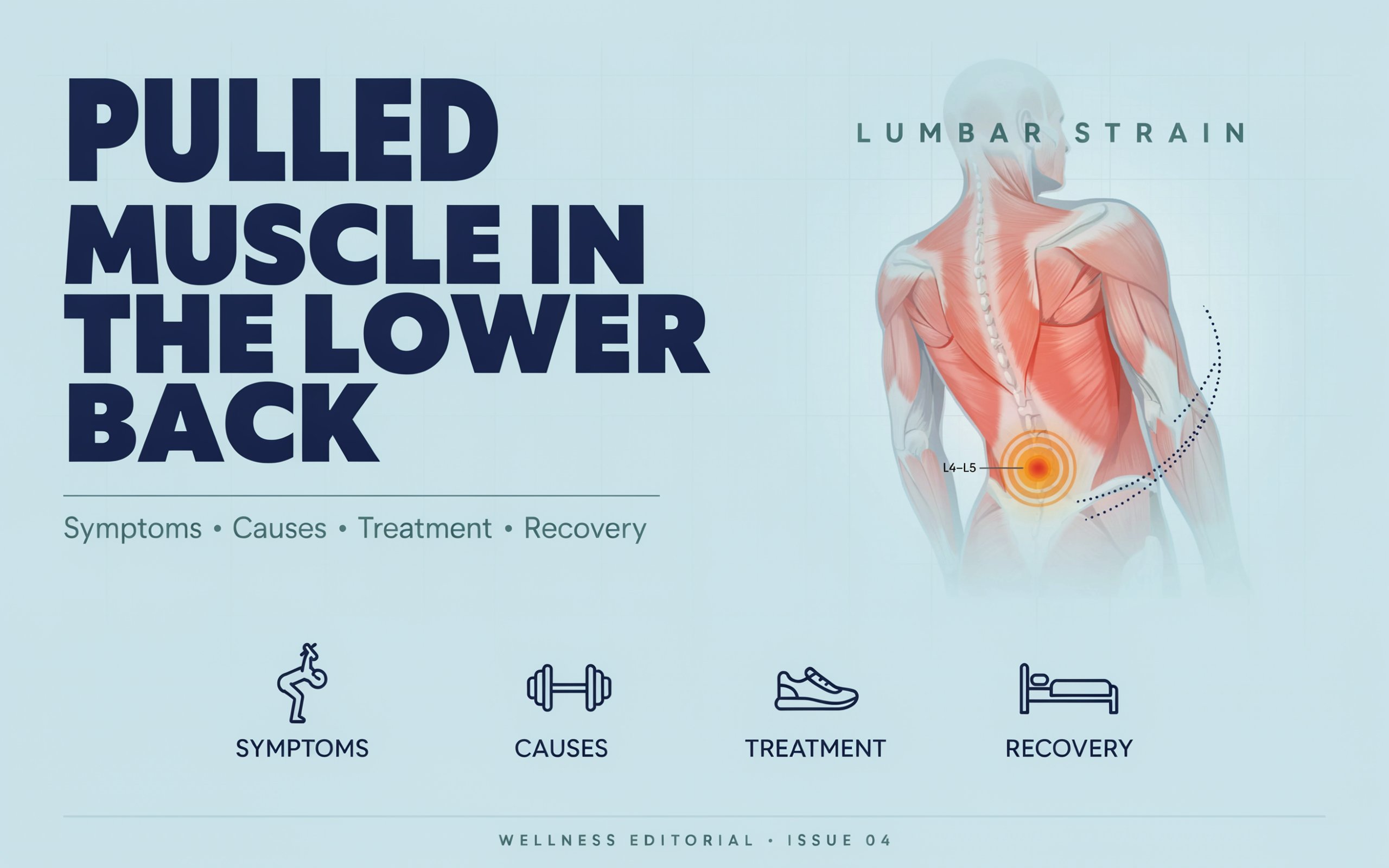
A pulled muscle in the lower back can make everyday activities like bending, walking, standing, or getting out of bed uncomfortable. It often happens after lifting something heavy, twisting suddenly, exercising too intensely, or putting repeated stress on the back muscles.
The good news is that many mild lower back muscle strains improve with simple home care and time. According to the NHS guide to back pain, a pulled muscle is one possible cause of lower back pain, although other conditions can produce similar symptoms.
In this guide, you’ll learn what a lower back muscle strain feels like, what causes it, how to manage discomfort, and what recovery may look like.
What Does a Pulled Lower Back Muscle Mean?
A pulled muscle in the lower back, also called a lumbar muscle strain, occurs when a muscle or its attached tendon is overstretched or damaged. Damage to the muscle fibers can cause soreness, stiffness, and discomfort that makes everyday movements more difficult.
A muscle strain can vary in severity, from minor overstretching to a more serious tear in the muscle tissue. The Mayo Clinic’s overview of muscle strains explains common symptoms, causes, and differences in injury severity.
Although muscle strains are a common cause of back pain, you should not automatically assume that every episode of lower back discomfort is muscular.
Common Symptoms of a Pulled Lower Back Muscle
Symptoms can vary depending on the severity of the strain. Common signs include:
- Localized pain: An aching or sharp discomfort around the lower back.
- Stiffness: Difficulty bending, straightening up, or changing positions.
- Muscle spasms: Tightening or sudden contractions in the affected muscles.
- Tenderness: Discomfort when the area is touched or pressure is applied.
- Reduced movement: Trouble performing normal tasks, such as lifting, twisting, or standing for long periods.
Pain may become more noticeable when you move in certain ways or put pressure on the injured area. Some people notice symptoms immediately, while others develop discomfort gradually.
Pain that travels down the leg, particularly with numbness, tingling, or weakness, may indicate a nerve-related problem rather than an isolated muscle strain. For more details on symptoms that may require medical attention, consult the NHS’s comprehensive guide to back pain.
Common Causes of a Pulled Muscle in the Lower Back
The muscles in your lower back help stabilize your spine and allow you to bend, twist, and move comfortably.. They can become strained when the demands placed on them exceed what they can comfortably handle.
1. Lifting Heavy Objects Incorrectly
Lifting a heavy box, moving furniture, or picking something up while twisting can place extra stress on the lower back. Sudden, awkward movements may strain the muscles and tendons.
2. Sudden Twisting or Bending
A quick turn, unexpected movement, or deep bend can overstretch the back muscles. This may happen during sports, household chores, or routine activities.
3. Intense Exercise or Overuse
Increasing workout intensity too quickly, repeating the same movement, or exercising without adequate preparation can contribute to muscle strain.
4. Poor Movement Habits
Frequent bending, reaching, or lifting with awkward body positioning can put extra strain on the lower back muscles. A single movement is not always the cause; sometimes symptoms develop after repeated stress.
5. Reduced Strength or Flexibility
Muscle conditioning, endurance, and flexibility can affect how well your body handles physical activity. However, a strain can happen to people at any fitness level.
Effective Ways to Relieve a Pulled Muscle in the Lower Back
Treatment depends on the severity of the injury and whether another condition is causing the pain. Most mild lower back muscle strains can be treated at home with proper self-care and adequate recovery time.
Use Ice or Heat for Comfort
During the early stage of an injury, a cold pack wrapped in a towel may help ease pain and swelling. Apply it for around 15–20 minutes at a time, and never put ice directly on your skin.
Heat may feel more helpful for stiffness or muscle tightness. Use a comfortably warm pack and protect your skin from burns. The NHS back pain self-care recommendations provide further guidance on using heat or ice and managing symptoms at home.
Keep Moving Gently
Avoid activities that clearly aggravate the pain, such as heavy lifting or forceful twisting. However, prolonged bed rest is generally not recommended for uncomplicated lower back pain.
Short walks and gentle everyday movement, as tolerated, can help prevent stiffness. Increase activity gradually rather than pushing through significant pain.
Be Careful With Stretching
Strong stretches or intense exercise immediately after an injury may make symptoms worse. Wait until movement feels more comfortable, then consider gentle mobility exercises if they do not increase your pain.
You can also read our guide to lat muscle stretches for information about the muscles involved in back and shoulder movement. Remember that these stretches are not a treatment for an acute lower back strain, and you should avoid any movement that increases your pain.
Stop any movement that causes sharp pain, worsening symptoms, or new tingling or numbness. A healthcare professional or physical therapist can help you choose appropriate exercises.
Consider Pain Relief Safely
Some people may benefit from over-the-counter pain medication, but not every medicine is suitable for everyone. Ask a pharmacist or healthcare professional which option is appropriate for you, particularly if you have other medical conditions, take other medicines, or are pregnant.
How Quickly Can a Pulled Lower Back Muscle Recover?
Recovery depends on the extent of the strain, your general health, and how much the injury affects daily movement.
- Mild strain: May begin improving within several days and often settles over one to two weeks.
- Moderate strain: May need several weeks to recover.
- More severe injury: Can take considerably longer and may require professional assessment or rehabilitation.
These timeframes are estimates, not guarantees. If the pain is getting worse, significantly limits your normal activities, or is not improving over the following few weeks, arrange a medical assessment.
For more information about recovery and when to seek help, consult the NHS guide to sprains and strains.
How to Prevent Another Lower Back Muscle Strain
You cannot prevent every back injury, but a few practical habits may reduce unnecessary strain.
- Warm up before strenuous exercise.
- Increase workout intensity and lifting loads gradually.
- Keep objects close to your body when lifting.
- Turn your feet instead of twisting your back while carrying a heavy object.
- Build core and hip strength with exercises suited to your ability.
- Take movement breaks if you spend long periods sitting.
- Avoid pushing through pain during exercise or daily activities.
Good technique and gradual progression are generally more useful than relying on one perfect posture or a single stretching routine. Our article on neck pain from sleeping also discusses muscle discomfort and sleeping positions, although neck pain and lower back strain are different problems.
When Should You See a Doctor?
Seek medical advice if your lower back pain is severe, keeps getting worse, repeatedly returns, or does not improve with home care. You should also get checked if you have fever, unexplained weight loss, significant pain after an injury, or pain that regularly travels down your leg.
Get emergency medical care if back pain occurs with new difficulty controlling your bladder or bowels, inability to urinate, numbness around the groin or saddle area, or new or worsening leg weakness. These symptoms can signal a serious problem that needs immediate assessment. Review the NHS back pain warning signs for further guidance.
Frequently Asked Questions
Can a pulled muscle cause sharp lower back pain?
Yes. A muscle strain can cause sharp or aching pain, particularly during bending, twisting, lifting, or other movements that involve the injured muscle. Sharp pain alone, however, cannot confirm that a muscle is the cause.
Should I rest or walk with a pulled lower back muscle?
Briefly reducing painful activities may help, but prolonged bed rest is usually not recommended for uncomplicated back pain. Gentle walking and normal movement, as tolerated, can help you avoid stiffness. The NHS back pain guide offers additional self-care advice.
Is heat or ice better for a pulled muscle in the lower back?
Either may help. Cold packs can be useful early after an injury, while heat may ease muscle tightness. Apply both carefully and avoid direct contact with the skin.
Can I exercise with a pulled lower back muscle?
Avoid heavy lifting and movements that worsen your symptoms while the injury settles. Return to exercise gradually when movement becomes more comfortable. Seek professional advice if you are unsure which activities are safe.
Final Thoughts
A pulled muscle in the lower back can cause pain, stiffness, and difficulty with everyday movement. Many mild strains improve with appropriate self-care, gentle activity, and time. Avoid rushing back into strenuous exercise, and pay attention to symptoms that suggest something more serious.
If pain is severe, worsening, persistent, or accompanied by warning signs such as new leg weakness or bladder or bowel changes, seek medical care rather than assuming it is a simple muscle strain.