

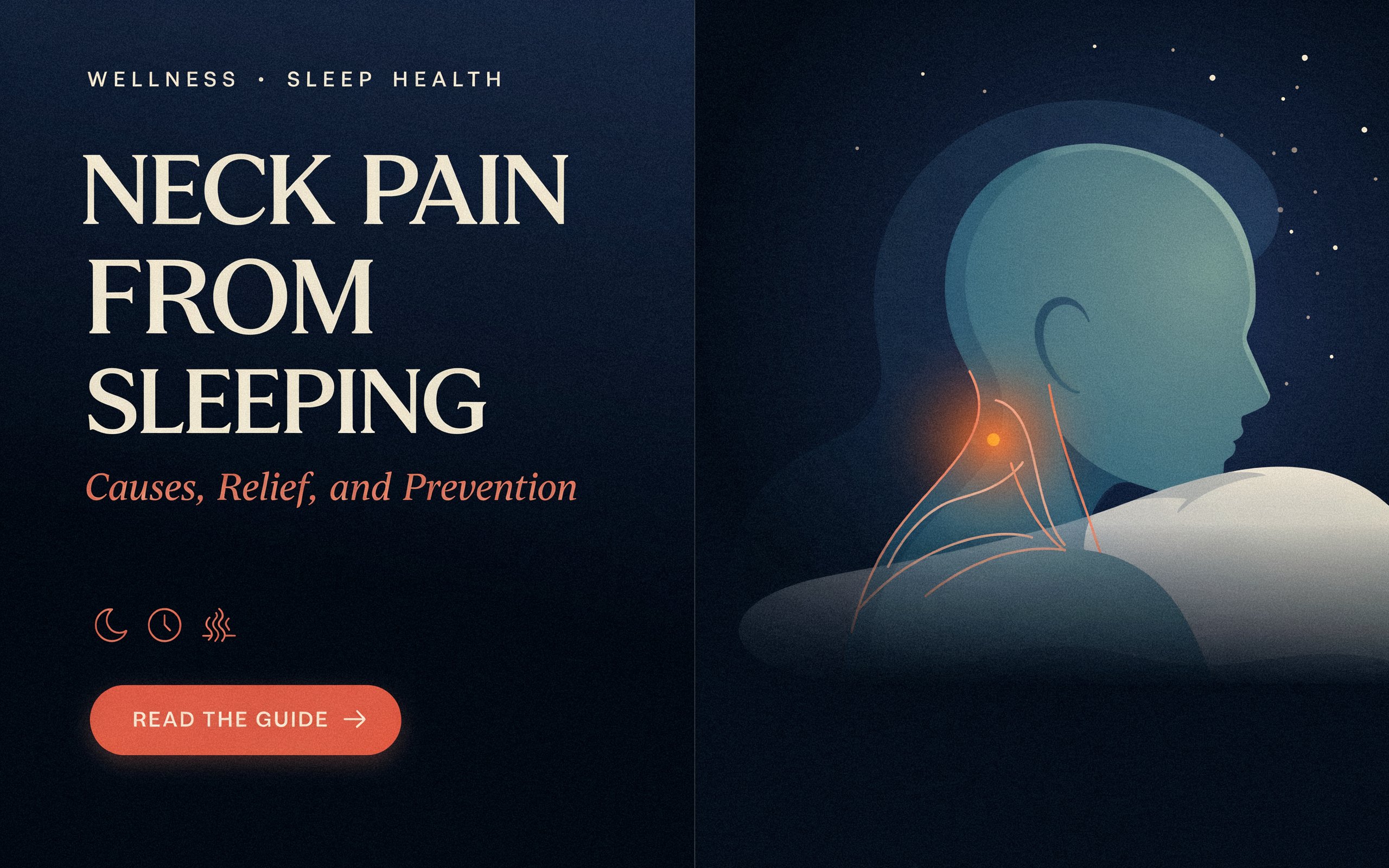
You go to bed feeling fine and wake up unable to turn your head without wincing. Checking your blind spot while driving becomes a full-body effort, and even looking down at your phone hurts. Neck pain from sleeping is one of the most common reasons people wake up feeling worse than when they went to bed.
The good news is that most of the time, a sore neck from sleeping isn’t serious and improves within a few days. Here’s what we’ll cover: why it happens, how to ease the pain, how to set up your sleep to prevent it, and the warning signs that mean you should get it checked should get checked.
Why Does Sleeping Cause Neck Pain?
Your neck holds up a head that weighs roughly as much as a bowling ball, and it has to stay supported for hours while you sleep. If your neck sits in an awkward position for too long, the muscles and joints can become strained or stiff, and you feel it when you wake up.
Common Causes of Neck Pain After Sleeping
1. The Wrong Pillow
A pillow that’s too high pushes your neck forward, while one that’s too flat lets your head drop, and both can strain the muscles. good pillow holds your head and neck in a straight, neutral line with your spine.
2. Sleeping on Your Stomach
Stomach sleeping forces you to keep your head turned to one side for hours, twisting the neck and putting stress on the joints and muscles. It’s among the biggest reasons people wake up with a sore neck.
3. An Unsupportive Mattress
A mattress that’s too soft or too worn can let your body sag and throw your spine out of alignment, which can affect your neck as well.
4. Sleeping in an Awkward Place
Dozing off on a couch, in a car, on a plane, or in a chair often leaves your neck bent at odd angles with little support.
5. Muscle Strain or Spasm
Holding one position for too long can cause the neck muscles to tighten or spasm, which is what many people call “waking up with a crick in the neck.”
6. Stress and Muscle Tension
Clenching your jaw or tensing your shoulders during the day, or even during sleep, can leave your neck and upper back sore by morning.
7. Poor Daytime Posture
Long hours hunched over a laptop or phone can leave the neck muscles tight and more prone to strain overnight. If that sounds familiar, our guide to rhomboid pain exercises covers upper back stretches that can help.
8. An Underlying Condition
Sometimes a sore neck isn’t just about sleep. Arthritis, a pinched nerve, or a disc problem can make the neck more sensitive to the way you sleep.
How to Relieve Neck Pain From Sleeping Wrong
Most cases of a stiff neck after sleeping ease with simple self-care.
1. Keep Gently Moving
Rest for a short time if you need to, but avoid keeping your neck completely still for long, since stiffness can worsen. Gentle, pain-free movement helps the muscles loosen up.
2. Use Heat or Cold
Many people find a warm compress or warm shower relaxes tight muscles, while others prefer a cold pack wrapped in cloth for the first day to ease soreness. Try each and see which feels better. Keep sessions short and protect your skin from direct contact.
3. Try Gentle Neck Stretches
Slow, easy stretches can help restore movement:
- Side tilt: Slowly lower one ear toward your shoulder and hold for a few seconds, then switch sides
- Chin tuck: Gently draw your chin straight back, as if making a double chin, and hold briefly
- Shoulder rolls: Roll your shoulders backward in slow circles to release tension
Move only within a comfortable range. Stretching should never cause sharp pain.
4. Gentle Self-Massage
Lightly massaging the sore muscles at the side and back of your neck and the tops of your shoulders can help ease tightness. Use gentle pressure rather than digging in hard.
5. Support Your Posture During the Day
Keep your screen at eye level, take breaks from sitting, and avoid cradling your phone between your ear and shoulder while you recover.
6. Over-the-Counter Pain Relief
Some people use over-the-counter pain relievers for short-term relief. Follow the label directions, and check with a pharmacist or doctor if you have other health conditions or take other medications.
How to Prevent Neck Pain From Sleeping
Choose the Right Pillow
Your pillow should keep your head level with your spine, not tilted up or down. Side sleepers usually need a firmer, taller pillow that fills the gap between the ear and shoulder, while back sleepers often do better with a thinner one.
Pick a Neck-Friendly Sleep Position
- Back sleeping generally keeps the head, neck, and spine well aligned
- Side sleeping works well with a supportive pillow that keeps the neck level
- Stomach sleeping tends to be hardest on the neck, so try switching if you can
If switching feels impossible, a thin pillow, or none at all, under your head may reduce the strain while you gradually adjust.
Check Your Mattress
If your mattress is old, sagging, or lumpy, it may be time to replace it. A supportive surface helps keep your whole spine aligned.
Wind Down Before Bed
Gentle neck and shoulder stretches in the evening can reduce tension before you sleep. Limiting phone use right before bed also keeps your neck out of a forward-bent position.
Travel Smart
If you need to sleep upright in a car or plane, a supportive neck pillow can help keep your head from dropping to one side.
When to See a Doctor
Neck pain after sleeping usually fades within a few days, but get medical advice if:
- The pain lasts more than a week or two, or keeps coming back
- It’s severe or getting worse
- Numbness, tingling, or weakness in your arms or hands
- The pain follows an injury, such as a fall or accident
- Pain spreads down your arm
Seek urgent medical care if neck pain comes with fever, a severe headache, or a very stiff neck that makes it hard to bring your chin toward your chest, or if you have chest pain, trouble breathing, or loss of bladder or bowel control. These can signal a serious problem that needs immediate attention.
For further reading, the Cleveland Clinic Health Library has clear, doctor-reviewed information on neck pain and related conditions.
Frequently Asked Questions
EHow long does neck pain from sleeping wrong last?
Most cases improve within a few days, though some stiffness can linger up to a week. If it lasts longer or worsens, check with a doctor.
Is heat or ice better for a stiff neck from sleeping?
Both can help. Heat relaxes tight muscles, while cold can ease soreness in the first day. Choose whichever feels better for you, and protect your skin.
What is the best sleeping position for neck pain?
Sleeping on your back or side with a pillow that keeps your neck level with your spine is generally best. Stomach sleeping tends to strain the neck the most.
Can a bad pillow cause neck pain?
Yes. A pillow that’s too high, too flat, or unsupportive can leave your neck bent for hours and cause stiffness and pain.
Should I keep my neck still if it hurts?
Short rests are fine, but staying completely still can make stiffness worse. Gentle, pain-free movement usually helps recovery.
When is neck pain after sleeping serious?
Be cautious if you have numbness, weakness, fever, a severe headache, or pain after an injury. In those cases, get medical care promptly.
Final Thoughts
A sore neck after sleeping is common, uncomfortable, and usually harmless. A supportive pillow, a neck-friendly sleep position, and a few gentle stretches go a long way toward relief and prevention. Pay attention to the warning signs, though, and don’t hesitate to see a doctor if the pain is severe, lingers, or comes with numbness, fever, or other unusual symptoms.