

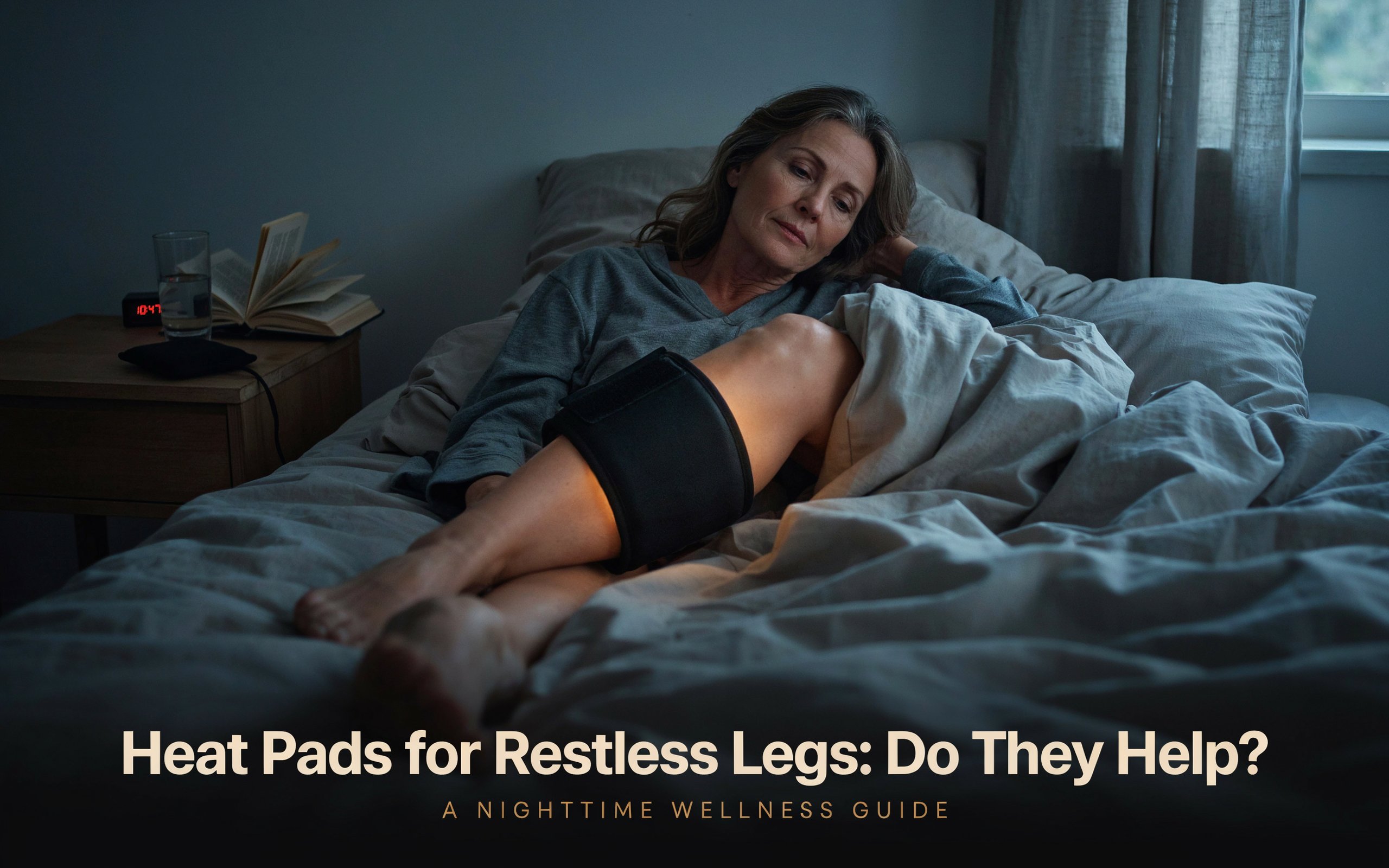
It’s late, you’re finally settled in bed, and then it starts: that creeping, tingling, can’t-keep-still feeling in your legs that makes relaxing feel impossible. If you live with restless legs, you’ve probably tried everything from stretching to shaking your legs out just to get a few minutes of comfort. Among the simplest home options people reach for is a heat pad.
So do heat pads actually help restless legs? The honest answer is that many people find warmth soothing, but it’s a comfort measure rather than a cure, and the research behind it is limited. In this guide, we’ll look at why heat may help, how to use it safely, and what else is worth trying alongside it.
What Are Restless Legs?
Restless legs syndrome (RLS) is a condition that causes an almost irresistible urge to move your legs, usually along with uncomfortable sensations that people describe as crawling, tingling, aching, pulling, or itching deep in the legs. Symptoms typically:
- Start or get worse when you’re resting, especially in the evening or at night
- Ease temporarily when you move, stretch, or walk around
- Interfere with falling asleep or staying asleep
Because it often disrupts sleep, RLS can leave people tired, irritable, and struggling to focus during the day.
Can Heat Pads Help Restless Legs?
Many people with RLS report that warmth makes their legs feel calmer. While large clinical studies specifically on heating pads are limited, there are sensible reasons heat may offer relief:
- Muscle relaxation. Warmth can help loosen tight muscles, which may ease the achy, tense feeling that comes with RLS
- Improved comfort and distraction. A soothing sensation can compete with uncomfortable leg sensations and make it easier to settle down
- Better circulation to the area. Heat can temporarily increase blood flow to the skin and muscles
- Relaxation before sleep. A warm, calming routine can help prepare your body and mind for rest
It’s important to keep expectations realistic. Heat may take the edge off for some people and do very little for others, and it doesn’t treat the underlying cause of RLS.
How to Use a Heat Pad for Restless Legs Safely
Heat is gentle when used correctly, but burns can happen, particularly if you’re drowsy or have reduced sensation in your legs. A handful of simple safety habits can make all the difference:
- Start on a low setting. Warm is the goal, not hot
- Place a layer of cloth between the pad and your skin, such as a thin towel or your clothing
- Limit sessions. Around 15 to 20 minutes at a time is a commonly suggested guideline, then give your skin a break
- Don’t fall asleep on a heating pad. Choose one with an automatic shut-off feature if you plan to use it in the evening
- Check your skin regularly. If you notice redness, blisters, or pain, stop right away
- Never use heat on broken, inflamed, or numb skin
Take extra care or check with your doctor first if you have diabetes, nerve damage (neuropathy), poor circulation, or any condition that reduces feeling in your legs, since you may not notice a burn developing.
Types of Heat Therapy to Try
1. Electric Heating Pads
Convenient and adjustable, these are easy to place on your calves or thighs while you sit or lie down. Choose one with adjustable heat levels and an automatic shut-off.
2. Microwavable Heat Wraps
Filled with grains or gel, these give you soft, moldable, moist warmth with no cord to deal with. Always test the temperature before applying, and follow the manufacturer’s heating instructions.
3. Warm Baths
A warm (not scalding) bath before bed can relax the whole body, and many people find it helps wind down leg discomfort before sleep. Adding Epsom salts is popular, though evidence for added benefit is limited.
4. Warm Compresses
A warm, damp towel wrapped around the calves is a simple, low-cost option when you don’t have a heat pad handy.
5. Heated Blankets or Foot Warmers
Gentle, ambient warmth can help in cooler rooms, though they should be used with the same safety awareness as any heating product.
What About Cold?
Interestingly, not everyone responds to heat. Some people with RLS find that cool packs, cool showers, or cooler bedroom temperatures work better for them. It’s worth experimenting with both warm and cool to see what your legs prefer, since responses vary from person to person.
Other Home Strategies That May Help Restless Legs
Heat works best as one piece of a broader routine:
- Gentle stretching and calf stretches in the evening
- Light massage of the legs, using your hands or a foam roller
- Regular moderate exercise, ideally earlier in the day, since intense exercise close to bedtime can sometimes make symptoms worse
- A consistent sleep schedule and a calming wind-down routine
- Limiting caffeine, alcohol, and nicotine, which can trigger or worsen symptoms for some people
- Reviewing medications with your doctor, since certain drugs, including some antihistamines, antidepressants, and anti-nausea medications, may aggravate RLS
If your legs also ache from overuse or tightness, our guide on soleus muscle pain and recovery covers calf care that may complement these strategies.
Possible Underlying Causes Worth Checking
RLS can sometimes be linked to other health factors, which is why a medical check-in is valuable:
- Low iron levels or iron deficiency, one of the more commonly identified contributors
- Pregnancy, particularly in the later months
- Kidney disease
- Peripheral neuropathy or diabetes
- Certain medications, as mentioned above
Identifying and treating an underlying cause can sometimes improve symptoms significantly, which is something heat alone can’t do.
When to See a Doctor
Home comfort measures are reasonable for mild symptoms, but it’s worth seeing a doctor if:
- Symptoms disrupt your sleep regularly
- They’re getting worse or happening more often
- Daytime tiredness is affecting work, mood, or safety
- You’re pregnant and symptoms are bothering you
- You suspect an underlying issue such as low iron
- Home remedies like heat aren’t giving enough relief
A doctor can check for contributing causes, such as iron levels, and discuss treatment options if needed. The Restless Legs Syndrome Foundation offers helpful, patient-focused information and resources for anyone managing the condition.
Frequently Asked Questions
Does heat help restless legs?
Some people find warmth soothing and relaxing for their legs, while others prefer cool temperatures. Research is limited, so it’s best viewed as a comfort measure to try rather than a proven treatment.
Is it safe to use a heating pad on your legs every night?
Generally yes, if you use a low setting, place a cloth barrier between the pad and your skin, limit the time, and avoid sleeping on it. If you have diabetes or reduced sensation in your legs, check with your doctor first.
What’s better for restless legs, heat or cold?
It varies. Some people respond better to heat, some to cold. Trying both and noticing which one calms your symptoms is a practical way to find out.
Can a warm bath help restless legs?
Many people find a warm bath before bed relaxing and helpful for easing leg discomfort, although it may not eliminate symptoms entirely.
Can restless legs go away on their own?
Sometimes, especially when symptoms are linked to a temporary cause like pregnancy or a deficiency that gets corrected. For ongoing symptoms, a doctor can help identify and address contributing factors.
Final Thoughts
A heat pad won’t cure restless legs, but for many people it’s a simple, low-risk way to make evenings more comfortable and ease the transition into sleep. Use it thoughtfully, keep the heat gentle, and pair it with good sleep habits, light stretching, and attention to triggers like caffeine. If symptoms keep disrupting your nights or you suspect something deeper is going on, a conversation with your doctor is the best next step.