

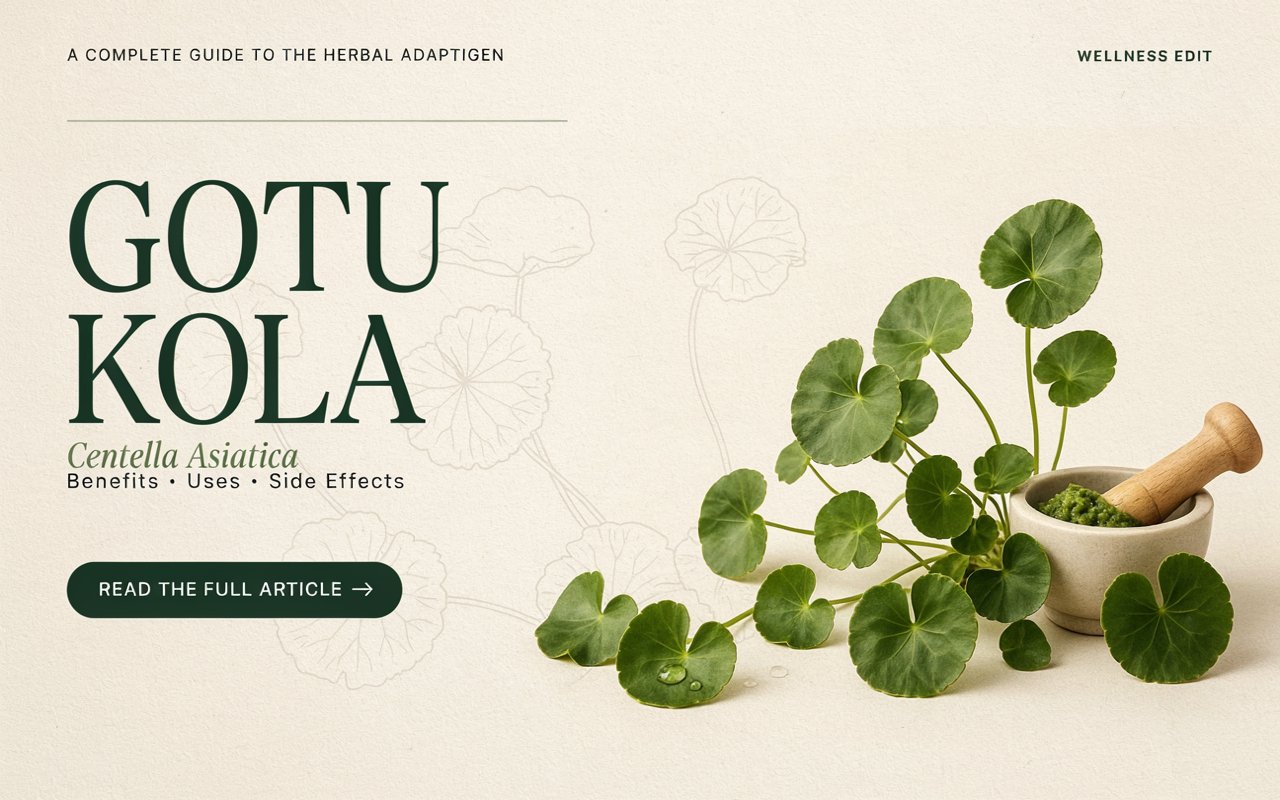
If you’ve spent any time browsing skincare shelves or herbal supplement aisles lately, you’ve probably come across an ingredient with a curious name: Gotu Kola, also known scientifically as Centella asiatica. Once a staple of traditional Ayurvedic and Chinese medicine, this small, leafy plant has found a second life in modern wellness — showing up in everything from anti-aging serums to memory-support supplements.
But does it actually live up to the hype? In this guide, we’ll break down what Gotu Kola is, the benefits backed by research, how people commonly use it, and the side effects worth knowing about before adding it to your routine.
What Is Gotu Kola?
Gotu Kola is a small, herbaceous plant native to the wetlands of Asia, where it has been used for centuries in traditional medicine systems across India, China, and Southeast Asia. It’s traditionally associated with wound healing, skin health, and mental clarity, earning it nicknames like “the herb of longevity” in some cultures.
Today, it’s available in several forms:
- Dried leaf for tea
- Capsules or tablets as a dietary supplement
- Topical creams, serums, and ointments
- Tinctures and liquid extracts
Its active compounds, known as triterpenoids, are believed to be responsible for most of its reported benefits.
Benefits of Gotu Kola (Centella Asiatica)
1. Supports Skin Healing
Gotu Kola is widely used in skincare for its potential to support collagen production and speed up wound healing. It’s a common ingredient in products aimed at reducing the appearance of scars, stretch marks, and minor cuts, thanks to its role in strengthening skin tissue.
2. May Improve Circulation
Some research suggests Gotu Kola can help support healthy blood flow and strengthen blood vessel walls, which is why it’s sometimes used for conditions involving poor circulation, such as varicose veins or mild swelling in the legs.
3. Anti-Inflammatory Properties
The plant’s triterpenoid compounds have shown anti-inflammatory effects in early studies, which may help calm irritated or inflamed skin when used topically.
4. Potential Cognitive and Mood Support
In traditional use, Gotu Kola has long been associated with mental clarity and calm. Some modern studies suggest it may support memory and reduce feelings of anxiety, though more robust human research is still needed to confirm these effects at a clinical level.
5. Antioxidant Effects
Gotu Kola contains antioxidant compounds that may help protect skin and cells from oxidative stress, one of the contributing factors in visible skin aging.
6. May Support Collagen Production
Because of its role in supporting connective tissue, Gotu Kola is often included in anti-aging skincare formulations aimed at improving skin elasticity and firmness over time.
How to Use Gotu Kola
For Skin (Topical Use)
- Look for creams, serums, or gels containing Centella asiatica extract, often listed on ingredient labels as “Centella Asiatica Extract” or by its common Korean skincare name, “Cica”
- Apply as directed on the product, typically once or twice daily after cleansing
- Patch test on a small area of skin first, especially if you have sensitive skin
As a Supplement
- Available in capsule, tablet, or tincture form
- Always follow the dosage guidance on the product label, since concentrations vary between brands
- Some people also drink Gotu Kola as a tea made from dried leaves
General Usage Tips
- Start with a lower dose or frequency to see how your body responds
- Choose products from reputable brands that specify standardized extract concentrations
- Give it consistent use over several weeks, since herbal remedies often take time to show visible effects
Potential Side Effects of Gotu Kola
While generally considered well-tolerated, Gotu Kola isn’t completely risk-free. Possible side effects include:
- Mild stomach upset when taken orally
- Headache or drowsiness in some individuals
- Skin irritation or allergic reaction when used topically, especially in people with sensitive skin
- Potential interaction with medications, including sedatives, blood thinners, and certain liver-metabolized drugs
Who Should Avoid Gotu Kola
- Pregnant or breastfeeding individuals, due to limited safety research in these groups
- People with liver disease, since some reports suggest it may affect liver function with prolonged high-dose use
- Anyone scheduled for surgery, as it may interact with anesthesia or affect bleeding risk
- Those currently taking sedative medications, blood thinners, or diabetes medications, without first consulting a doctor
Is Gotu Kola Safe for Everyone?
For most healthy adults, occasional or moderate use — especially topical use — is considered low-risk. However, because it’s classified as a supplement rather than a regulated medication, quality and concentration can vary significantly between brands, and interactions with existing health conditions or medications are possible.
If you’re currently taking prescription medication, managing a chronic health condition, or pregnant or breastfeeding, it’s important to talk to a doctor before adding Gotu Kola to your routine, whether topically or as a supplement.
Frequently Asked Questions
What is Gotu Kola good for?
Gotu Kola is most commonly used to support skin healing, improve circulation, and provide antioxidant and anti-inflammatory benefits. It’s also traditionally used to support mental clarity and reduce mild anxiety.
Is Gotu Kola the same as Cica in skincare?
Yes. “Cica,” a term popularized by Korean skincare, refers to Centella asiatica, the same plant known as Gotu Kola.
Can Gotu Kola help with anxiety?
Some early research and traditional use suggest it may have calming effects, but scientific evidence in humans is still limited. It shouldn’t replace prescribed anxiety treatment without a doctor’s guidance.
How long does it take for Gotu Kola to work on skin?
Most people using topical Gotu Kola products report noticing changes in skin texture or healing over several weeks of consistent use, rather than overnight results.
Is it safe to take Gotu Kola every day?
Short-term daily use is generally considered safe for most healthy adults, but long-term or high-dose use should be discussed with a doctor, especially if you have liver concerns or take other medications.
Final Thoughts
Gotu Kola, or Centella asiatica, has earned its place in both traditional medicine and modern skincare for good reason — its wound-healing, circulation-supporting, and antioxidant properties are backed by a growing body of research. That said, like any herbal supplement, it’s not entirely without risk, particularly for those on medication or managing existing health conditions. Used thoughtfully and in appropriate doses, it can be a worthwhile addition to a skincare or wellness routine.