

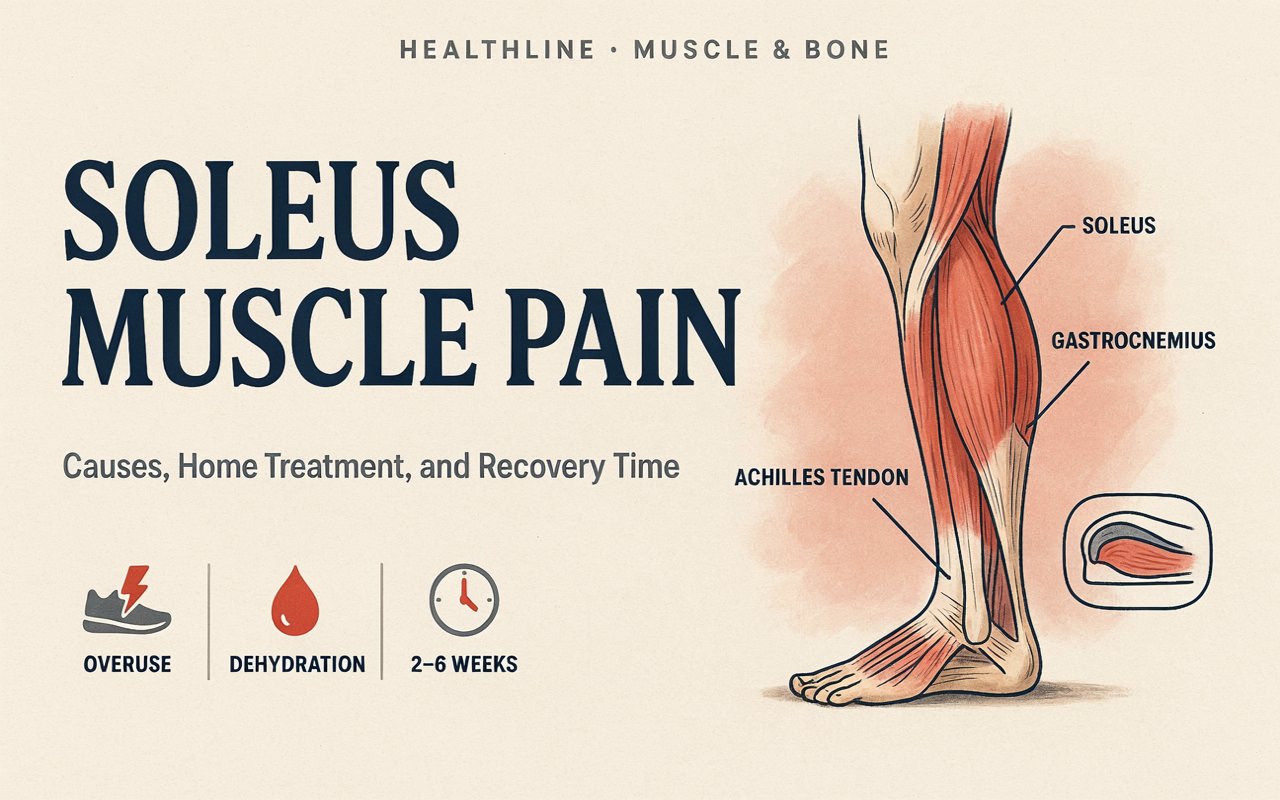
If you’ve ever felt a deep, nagging ache in your lower calf that doesn’t quite match the usual “calf cramp” you’re used to, there’s a good chance your soleus muscle is the culprit. Tucked beneath the more visible gastrocnemius (the muscle that gives your calf its shape), the soleus often gets overlooked — until it’s injured, and suddenly every step reminds you it’s there.
Soleus muscle pain is especially common among runners, hikers, and anyone who’s recently ramped up their activity level. In this guide, we’ll break down what causes it, how to treat it safely at home, and how long recovery typically takes before you’re back to full activity.
What Is the Soleus Muscle and Why Does It Matter?
The soleus is a flat, deep muscle located underneath the gastrocnemius in your lower leg. Together, they form your calf and connect to your Achilles tendon. While the gastrocnemius handles quick, powerful movements like sprinting or jumping, the soleus does the quieter, endurance-heavy work — stabilizing your ankle, supporting posture, and powering longer, steady efforts like distance running or walking uphill.
Because it’s a workhorse muscle involved in almost every step you take, soleus pain can affect walking, running, and even standing comfortably for long periods.
Common Causes of Soleus Muscle Pain
1. Overuse or Sudden Increase in Activity
Ramping up mileage, intensity, or hill training too quickly is one of the most common triggers, especially for runners who ignore the “10% rule” of gradual training increases.
2. Muscle Strain
A soleus strain happens when the muscle fibers are stretched beyond their capacity, often during activities involving repetitive push-off motion, like running or jumping.
3. Tightness or Poor Flexibility
A chronically tight soleus, often from prolonged sitting or inadequate stretching, is more prone to injury under load.
4. Inadequate Warm-Up
Jumping straight into intense activity without properly warming up the calf muscles increases strain risk, particularly in cold weather.
5. Footwear Issues
Worn-out shoes or footwear that doesn’t properly support your foot mechanics can shift extra load onto the soleus over time.
6. Dehydration or Electrolyte Imbalance
Low levels of potassium, magnesium, or calcium can contribute to muscle cramping and tightness in the calf area, including the soleus.
Symptoms of Soleus Muscle Pain
- A deep, dull ache lower in the calf, below the more prominent gastrocnemius muscle
- Pain that worsens when pushing off during walking or running
- Stiffness, especially first thing in the morning or after sitting for a while
- Mild swelling or tenderness when pressing into the lower calf
- Discomfort that increases with activities like climbing stairs or standing on tiptoes
Unlike a gastrocnemius strain, which often causes a sudden, sharp pain (sometimes described as feeling like being kicked), soleus pain tends to build up more gradually and feel deeper, duller, and harder to pinpoint.
Home Treatment for Soleus Muscle Pain
1. Rest and Activity Modification
Reduce or pause activities that aggravate the pain, particularly running, jumping, or hill work, while allowing lower-impact movement like walking if it’s tolerable.
2. Ice Therapy
Applying ice for 15–20 minutes several times a day during the first 48–72 hours can help reduce inflammation and pain, especially after a recent strain.
3. Compression
A compression sleeve or wrap can help minimize swelling and provide support to the muscle as it heals.
4. Elevation
Elevating your leg when resting helps reduce swelling, particularly if the strain is more significant.
5. Gentle Stretching
Once acute pain has eased, gentle calf stretches — particularly with a bent knee, which targets the soleus specifically more than a straight-leg stretch — can help restore flexibility.
6. Gradual Return to Activity
Ease back into your normal activity level gradually rather than jumping straight back to your previous training intensity, which reduces the risk of re-injury.
7. Foam Rolling
Lightly foam rolling the calf area, once acute pain has subsided, can help release tightness and improve blood flow to support recovery.
8. Proper Footwear
Make sure your shoes offer adequate support, especially if you’re returning to running or walking regularly, since worn-out footwear can prolong recovery or contribute to repeat strain.
Soleus Strain Recovery Time
Recovery time depends largely on the severity of the strain:
- Mild strain (Grade 1): Typically heals within 1–2 weeks with rest and basic home care
- Moderate strain (Grade 2): Can take 3–6 weeks, often requiring a more gradual return to activity
- Severe strain (Grade 3), involving a significant tear: May take several months and often requires professional rehabilitation
Rushing back into full activity before the muscle has properly healed is one of the most common reasons for repeat or prolonged soleus injuries, so patience during recovery matters more than most people expect.
When to See a Doctor
Most soleus muscle pain responds well to rest and home care, but you should see a doctor or physical therapist if you experience:
- Severe pain that makes walking difficult
- Significant swelling, bruising, or a visible deformity in the calf
- A popping sensation at the time of injury
- Pain that doesn’t improve after two weeks of consistent home care
- Signs of a blood clot, such as warmth, redness, and swelling in one leg (this requires urgent medical attention)
A healthcare provider can rule out more serious issues, such as a complete muscle tear or deep vein thrombosis, and guide you toward appropriate rehabilitation if needed.
Frequently Asked Questions
What does soleus muscle pain feel like compared to a regular calf cramp?
Soleus pain tends to be a deeper, duller ache that builds gradually and worsens with push-off movements, while a typical calf cramp is usually sudden, sharp, and short-lived.
Can I still run with soleus muscle pain?
It’s best to reduce or pause running until pain subsides, since continuing to run on a strained soleus can worsen the injury and extend recovery time significantly.
How long does it take to recover from a soleus strain?
Mild strains often heal within 1–2 weeks, while more significant strains can take 4–6 weeks or longer, depending on severity and how well you manage the recovery period.
What’s the best stretch for soleus muscle pain?
A bent-knee calf stretch against a wall specifically targets the soleus, unlike the straight-leg version, which mainly stretches the gastrocnemius.
Is heat or ice better for soleus muscle pain?
Ice is generally recommended in the first 48–72 hours to reduce inflammation. After the acute phase, heat can help relax tight muscles and improve blood flow during the later stages of recovery.
Final Thoughts
Soleus muscle pain is common among runners and active individuals, and in most cases, it responds well to simple home care — rest, ice, gentle stretching, and a gradual return to activity. The key to a full recovery is patience: pushing back into intense training too soon is one of the most common reasons soleus injuries linger or recur. If pain is severe, doesn’t improve, or comes with unusual swelling, it’s worth getting evaluated by a doctor or physical therapist rather than pushing through it.