

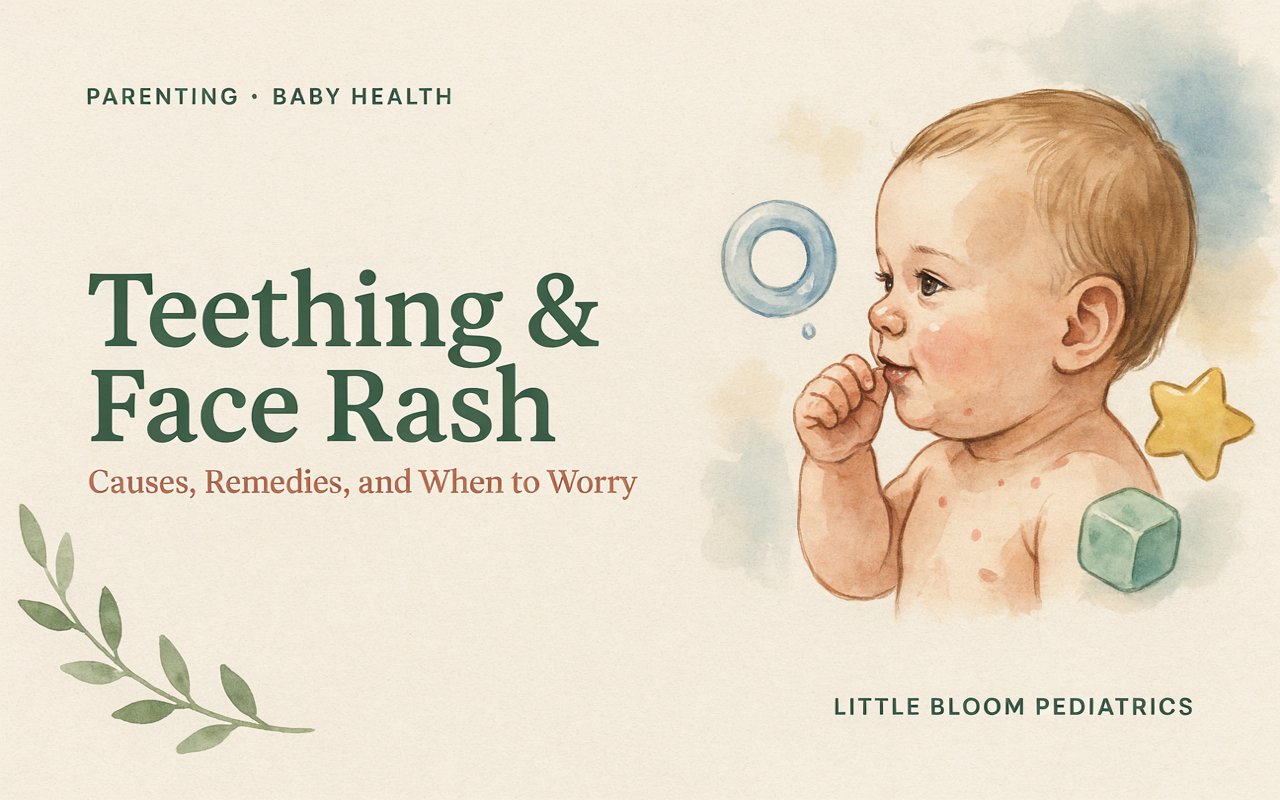
If your baby has suddenly developed red, irritated patches around their mouth, chin, or cheeks right around the time their first teeth are coming in, you’re not imagining a connection — teething and face rash genuinely do go hand in hand. It’s one of the most common (and most googled) concerns among new parents, usually showing up alongside fussiness, chewing on everything in sight, and a noticeably wetter shirt collar.
The good news is that teething-related rashes are almost always harmless and easy to manage at home. In this guide, we’ll walk through exactly why it happens, the best ways to soothe your baby’s skin, and the handful of signs that mean it’s time to call the pediatrician instead.
Why Does Teething Cause a Face Rash?
The short answer is drool — a lot of it. When teeth start pushing through the gums, babies produce significantly more saliva than usual. Combined with frequent face-touching, chewing, and rubbing, that extra moisture sits on delicate skin for long stretches of the day, leading to irritation. This is often called “drool rash” and is the most common cause of teething-related skin issues.
A few specific factors make it worse:
- Constant moisture on the chin, cheeks, and neck breaks down the skin’s natural barrier over time
- Friction from rubbing against bibs, clothing, or hands
- Food particles mixing with drool once solids are introduced, which can be mildly irritating
- Sensitive skin, since baby skin is thinner and more reactive than adult skin
What Does a Teething Rash Look Like?
Typical signs of a drool or teething rash include:
- Redness around the mouth, chin, cheeks, or neck
- Small bumps or slightly raised, irritated patches
- Skin that looks chapped, dry, or slightly flaky
- Mild discomfort, though it’s usually not painful enough to disrupt sleep or feeding
- Rash that tends to worsen with prolonged drooling and improve when skin is kept dry
It typically stays confined to areas the drool actually touches, which helps distinguish it from other skin conditions.
Home Remedies for Teething Rash
1. Keep the Area Dry
This is the single most effective step. Gently pat (don’t rub) your baby’s chin and mouth area dry with a soft cloth throughout the day, especially after feeding or when you notice drooling.
2. Apply a Gentle Barrier Cream
A thin layer of fragrance-free petroleum jelly or a zinc oxide-based barrier cream can protect the skin from prolonged moisture exposure, much like a diaper rash cream works for the diaper area.
3. Use Soft, Absorbent Bibs
Switching to a soft cotton or bamboo bib and changing it frequently throughout the day helps keep wet fabric from sitting against your baby’s skin.
4. Choose Fragrance-Free, Gentle Products
Avoid scented wipes, soaps, or lotions on the affected area, as fragrances and harsh ingredients can further irritate already sensitive skin. Stick to fragrance-free, hypoallergenic options made for infants.
5. Cool Compress for Comfort
A clean, damp washcloth, cooled in the fridge for a few minutes, can be gently pressed against irritated skin to reduce redness and provide mild relief.
6. Wash Gently, Not Frequently
Over-washing the area can strip natural oils and worsen irritation. A quick, gentle rinse with lukewarm water once or twice a day, followed by patting dry and applying barrier cream, is usually enough.
7. Offer a Teething Toy to Redirect Chewing
Giving your baby a clean, chilled teething toy can help reduce excessive drooling triggered by gum discomfort, indirectly reducing rash exposure.
How to Prevent Teething Rash
- Keep a soft cloth handy to dab drool throughout the day
- Apply barrier cream proactively once you notice teething symptoms starting, rather than waiting for a rash to appear
- Change bibs and burp cloths often to avoid prolonged contact with damp fabric
- Avoid tight clothing around the neck and chin area that traps moisture
Teething Rash vs. Other Skin Conditions
It’s easy to confuse drool rash with other common infant skin issues. A few quick differences:
- Eczema tends to be itchier, appears in other body areas too (like elbows and knees), and often has a family history of allergies or asthma
- Heat rash usually appears in warm, covered areas like the neck folds or back, not specifically around the mouth
- Impetigo (a bacterial skin infection) often has honey-colored crusting and needs medical treatment, unlike a simple drool rash
If the rash doesn’t match the typical drool-rash pattern, it’s worth having a pediatrician take a look.
When to See a Doctor
Most teething rashes clear up within a few days to a couple of weeks with basic home care. See a pediatrician if you notice:
- The rash spreading beyond the drool-contact area
- Signs of infection, such as pus, warmth, or increasing swelling
- The rash isn’t improving after a week of consistent home care
- Your baby seems to be in significant pain or discomfort
- Fever alongside the rash
- Blistering, honey-colored crusting, or open sores
Frequently Asked Questions
How long does a teething rash usually last?
Most drool-related rashes improve within a few days once you start keeping the area dry and protected, though some redness can linger as long as active teething and drooling continue.
Is teething rash the same as drool rash?
Yes, in most cases. Teething causes increased drooling, and it’s the constant moisture on the skin — not the teething process itself — that actually causes the rash.
Can teething cause a rash on the whole face, not just around the mouth?
It’s less common, but excess drool can spread to the cheeks and neck depending on how your baby sleeps or feeds. A rash confined to those areas is usually still drool-related.
What’s the best cream for teething rash?
A simple, fragrance-free barrier cream — like plain petroleum jelly or a zinc oxide-based ointment — is usually enough. Avoid scented or heavily processed baby lotions on irritated skin.
Should I stop using a pacifier if my baby has a teething rash?
Not necessarily, but wipe the area dry after pacifier use since it can trap moisture against the skin. If the rash is centered right where the pacifier sits, cutting back temporarily may help it heal faster.
Final Thoughts
A face rash during teething is one of the most common — and most manageable — parts of this stage of your baby’s development. In almost every case, it comes down to excess drool sitting on delicate skin, and a simple routine of keeping the area dry, using a gentle barrier cream, and switching to soft, absorbent bibs is enough to clear it up. Keep an eye out for signs of infection or a rash that doesn’t fit the typical pattern, and don’t hesitate to check in with your pediatrician if anything feels off.