

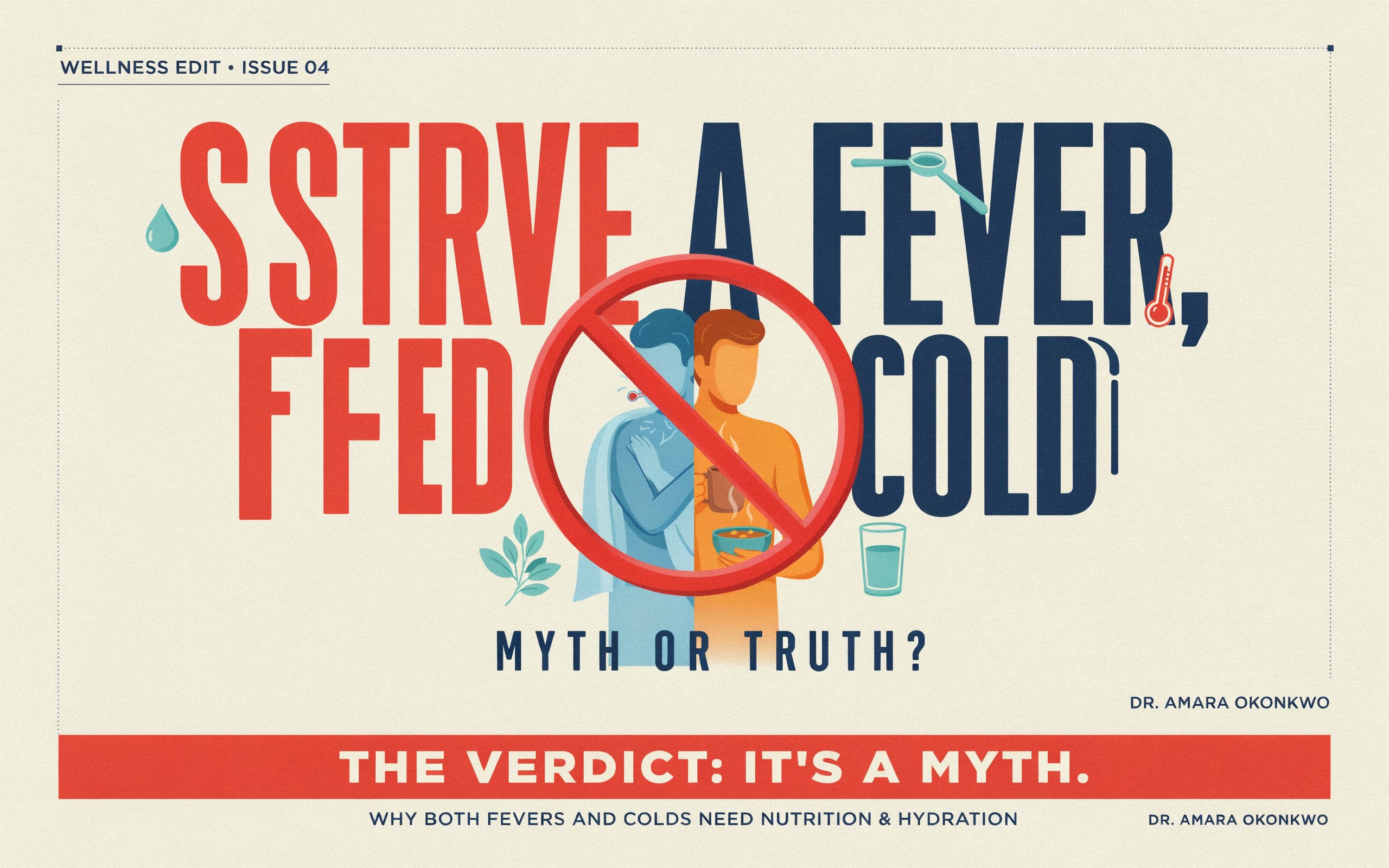
You wake up feverish, achy, and nowhere near hungry, and someone in the family says the line you’ve heard your whole life: “Starve a fever, feed a cold.” Or was it the other way around? Few bits of health advice are as widely repeated, and as widely confused, as this one.
So is there any truth to it? The short answer: not really, at least not as a rule you should follow. In this guide, we’ll look at where the saying came from, what the research actually shows, and what to eat and drink when you’re sick, so you can ignore the folklore and focus on what helps.
Where Did the Saying Come From?
This piece of advice is centuries old. It’s often traced to the 1500s, to a dictionary writer who noted that fasting was a good remedy for fever. The idea seems to have been that a feverish body is already “heated,” so adding food would only fuel the fire, while a cold, which makes you feel chilled, needed food to warm you up.
That thinking comes from old ideas about the body, long before we understood infections, immune cells, or how the body uses energy. Over time the saying got repeated so often that many people treat it as fact, and plenty of people can’t remember whether it’s “feed a cold, starve a fever” or the reverse.
What Does the Research Say?
Here’s the honest picture: the science is thin, and it doesn’t support the saying as a rule.
- Medical experts generally say not to starve. Whether it’s a cold, the flu, or a fever, your immune system runs on energy and nutrients to get its work done. Major medical centers advise there’s no need to eat dramatically more or less than usual when you’re sick
- A small human study from the early 2000s suggested the body’s immune signals might differ after eating versus fasting, which led to speculation that food could help with viral infections and fasting with bacterial ones. But it involved only a handful of healthy young men, and its authors called for more research
- A later mouse study found different effects of fasting in bacterial versus viral infections, but results in mice don’t automatically carry over to people
- There isn’t enough human research to say that you should fast for one type of illness and eat for another
On top of that, a fever isn’t one thing. It can come from a virus, bacteria, inflammation, medications, dehydration, or heat illness. You can’t pick a diet based on a symptom alone.
So Should You Starve a Fever?
No. You don’t need to force yourself to eat when you have no appetite, and you don’t need to fast either. A fever raises your body’s energy needs, and going without food or fluids for long can leave you weaker and more dehydrated.
A sensible approach is simple:
- Make fluids your first priority, since they matter even more than food.
- Eat when you’re hungry, and choose light, easy options when your stomach is unsettled
- Don’t force big meals if you feel nauseated
- Listen to your body, but don’t treat loss of appetite as a reason to skip fluids
Why Hydration Matters Most
When you have a fever, you lose more fluid through sweat and faster breathing. If you also have a runny nose, vomiting, or diarrhea, you lose even more. Dehydration can make headaches, dizziness, weakness, and fatigue worse, and it can slow recovery.
Good options include:
- Water
- Clear soups and broths
- Warm herbal tea with honey and ginger
- Oral rehydration solutions, especially if you’ve had vomiting or diarrhea
- Diluted fruit juice or coconut water
Avoid excess caffeine and alcohol, which can dehydrate you further. For more on soothing a sore throat and staying hydrated through illness, our guide on home remedies for diarrhea and throat pain covers simple, gentle options.
Best Foods to Eat With a Cold
Colds usually bring congestion, sore throat, and fatigue, but not a lot of nausea, so you can generally eat normally. Helpful choices include:
- arm soups and broths, like chicken soup or yakhni, which hydrate you and are easy on the stomach
- Khichdi or plain rice with yogurt, gentle and comforting
- Fruits like oranges, kiwi, and berries
- Honey and ginger tea, which can soothe a scratchy throat
- Eggs, lentils, and lean protein, to give your body building blocks for recovery
What to Eat When a Fever Hits
With a fever, your appetite may drop. Focus on small amounts of easy foods:
- Broth or soup
- Plain toast or crackers
- Daliya (porridge) or oatmeal
- Bananas and applesauce
- Yogurt, if it sits well
- Fluids at regular intervals, even if you only manage small sips
If you’re feeling nauseated, stay with clear fluids and dry foods until it settles, then slowly bring other foods back.
Foods and Habits to Go Easy On
- Greasy, fried, or very spicy foods, which can upset a sensitive stomach
- Alcohol, which dehydrates and interferes with recovery
- Large amounts of sugary drinks, which may not hydrate as well as water or broth
- Over-bundling, since too many layers can push body temperature up even when you feel chilled
Other Ways to Feel Better
- Rest up. Good sleep gives your body its best shot at recovering.
- Keep the room comfortable, not too hot or too cold
- Use a humidifier if your nose and throat feel dry
- Pain and fever relievers may help comfort when used as directed on the label. Ask a pharmacist or doctor first if you have other health conditions or take other medicines.
For children, follow the label and your pediatrician’s advice, and never give aspirin to children or teenagers with a viral illness. If your child has a fever and isn’t drinking well, our guide on Pedialyte for babies explains the signs of dehydration and why a call to the pediatrician comes first.
When to See a Doctor
Most colds and mild fevers pass on their own, but get medical advice if:
- A fever lasts more than a few days
- Your temperature reaches about 103°F (39.4°C) or higher
- You have a severe headache, a stiff neck, or sensitivity to light
- You have trouble breathing or chest pain
- You develop a new or worsening rash
- You have confusion, seizures, or extreme drowsiness
- You can’t keep fluids down, or you notice signs of dehydration
- Your symptoms are getting worse after a week
- You have a weakened immune system, or a chronic condition such as asthma, diabetes, or heart disease
Babies under three months with any fever, and anyone who seems seriously unwell, need prompt medical care.
For a closer look at the research behind the saying, see Healthline’s article on feeding a cold and starving a fever and Scientific American’s piece, Fact or Fiction: Feed a Cold, Starve a Fever.
Frequently Asked Questions
Is “starve a fever, feed a cold” true?
No. Research hasn’t confirmed it, and medical experts generally advise against starving yourself. Your body needs fluids and nutrients to fight any infection.
Should I eat when I have a fever?
Eat when you’re hungry and your stomach can handle it. Choose light foods and keep drinking fluids. Skipping food for a short time won’t harm you if you stay hydrated, but there’s no benefit to fasting on purpose.
Is it okay to not eat when sick?
A reduced appetite is common when you’re ill. What matters most is staying hydrated. If you go a long time without eating or drinking, or you feel weak or dizzy, see a doctor.
What’s the best thing to drink with a fever?
Water, broth, herbal tea, and oral rehydration solutions are good choices, especially if you’ve had vomiting or diarrhea.
Does eating help you recover faster from a cold?
Good nutrition and hydration support your immune system, so eating balanced meals when you can is helpful. There’s no single food that cures a cold.
What does the saying actually mean?
It’s commonly given as “feed a cold, starve a fever,” but many people say it the other way around. Either way, it’s an old folk belief rather than medical advice.
Final Thoughts
“Feed a cold, starve a fever” is one of those sayings that sounds wise but doesn’t hold up. Your body needs fluids and nourishment to recover from any illness, so you don’t need to starve a fever or force down meals for a cold. Drink plenty, eat light when you can, rest well, and pay attention to warning signs. When in doubt, check with a doctor.