

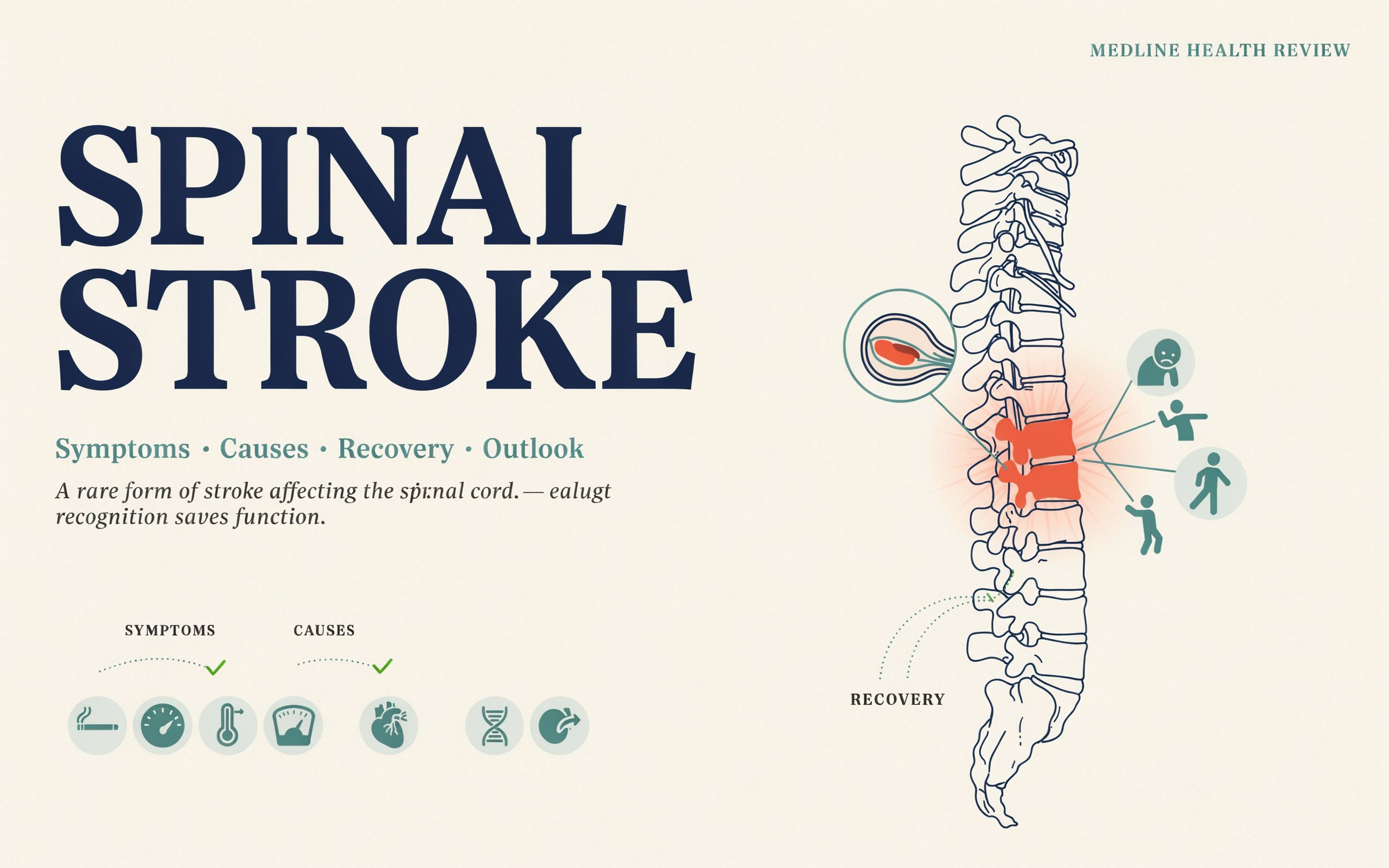
Most people know what a stroke in the brain looks like: a drooping face, slurred speech, weakness on one side. Far fewer have heard of a stroke that happens in the spine. A spinal stroke is rare, but it’s serious, and because its signs can look like ordinary back pain at first, it’s easy to overlook.
In this guide, we’ll explain what a spinal stroke is, the warning signs, what causes it, how it’s treated, and what recovery can look like. If you take only one thing from this article, let it be this: sudden, severe back or neck pain together with weakness, numbness, or loss of bladder or bowel control is a medical emergency.
When to Get Emergency Help
Call your local emergency number or go to the nearest emergency room right away if you or someone else has:
- Sudden, severe neck or back pain that comes on abruptly
- Weakness or heaviness in the legs (or arms), or being unable to move them
- Numbness or tingling in the legs, trunk, or arms
- Loss of control of the bladder or bowels
- Inability to feel heat or cold in parts of the body
Don’t wait to see whether it passes. With any kind of stroke, faster treatment gives the best chance of limiting damage.
What Is a Spinal Stroke?
A spinal stroke, also called a spinal cord stroke or spinal cord infarction, happens when blood flow to part of the spinal cord is cut off or interrupted. Without a steady supply of oxygen and nutrients, the affected tissue can be damaged and stop sending nerve signals properly. Those signals control movement, sensation, bladder and bowel function, and more.
It helps to compare it with a brain stroke. In a brain stroke, the blood supply to part of the brain is disrupted. In a spinal stroke, the problem is in the spinal cord itself. Spinal strokes are much less common, making up only a small fraction, roughly 1 percent or less, of all strokes.
Types of Spinal Stroke
- Ischemic spinal stroke. This is the most common type. A blockage, often from a clot or narrowed artery, reduces blood flow to the spinal cord
- Hemorrhagic spinal stroke. This is less common. A blood vessel in or around the spinal cord bleeds, for example from a ruptured vessel or aneurysm
The type matters because treatment differs, which is why doctors work quickly to find out which one is happening.
Symptoms of a Spinal Stroke
Symptoms depend on which part of the spinal cord is affected and how much damage occurs. They often start suddenly, though in some cases they develop over minutes to hours. Common signs include:
- Abrupt onset of intense pain in the neck or back.
- Weakness in the legs, which can range from mild to complete paralysis
- Numbness or tingling
- Trouble controlling the bladder or bowels
- Loss of the ability to sense heat or cold
- Difficulty walking or standing
Spinal Stroke vs. Brain Stroke
The two can seem alike, but there are useful differences. A brain stroke more commonly causes trouble speaking, vision problems, confusion, dizziness, or a sudden severe headache. A spinal stroke tends to produce back or neck pain with limb weakness, numbness, and bladder or bowel changes, without the speech and vision problems.
If you want to understand brain-related warning signs better, our guide on head pain and dizziness explains when those symptoms need emergency care.
What Causes a Spinal Stroke?
Most spinal strokes happen because the arteries supplying the spinal cord are blocked or narrowed. Contributing causes and risk factors include:
- Atherosclerosis, the buildup of plaque that narrows arteries
- Blood clots that travel and lodge in a vessel supplying the spinal cord
- High blood pressure, which can strain or rupture blood vessels
- High cholesterol, diabetes, heart disease, and obesity
- Smoking, heavy alcohol use, and physical inactivity
- Aneurysms that burst
- Tumors or vascular malformations affecting the spinal cord
- Spinal injury or compression
- Infections near the spinal cord, such as an abscess
- Certain surgeries, including major heart or abdominal procedures
In some cases, doctors can’t identify a clear cause.
Spinal Stroke in Children
Spinal strokes in children are extremely rare. When they occur, the causes tend to differ from those in adults and may include spinal cord injury, abnormal blood vessel conditions present from birth, clotting disorders, or certain infections.
How Is a Spinal Stroke Diagnosed?
Diagnosis can be challenging because the early symptoms resemble several other conditions, such as a slipped disc, a spinal infection, inflammation, or spinal cord compression. At the hospital, doctors typically:
- Take a medical history and perform a neurological examination
- Order an MRI of the spine to look at the spinal cord
- Run blood tests and sometimes heart tests to look for causes
- Exclude other medical conditions that may be causing the symptoms.
An MRI doesn’t always show the stroke right away, especially in the early hours, which is one reason diagnosis is sometimes delayed.
How Is a Spinal Stroke Treated?
Treatment depends on the type, cause, and severity. It generally aims to protect the spinal cord, address the underlying cause, and manage symptoms:
- Treating the cause, such as medications to reduce clotting risk in ischemic strokes, or addressing a bleed, tumor, or compression
- Blood pressure management, keeping it in a safe range
- Rehabilitation, including physical and occupational therapy to rebuild strength and function
- Bladder and bowel care, which may include a catheter in some cases
- Medicines for symptoms such as muscle stiffness, nerve pain, or spasms
- Long-term risk reduction, including managing blood pressure, cholesterol, and diabetes
Possible Complications
Depending on how much of the spinal cord is affected, complications may include:
- Partial or permanent paralysis
- Bladder and bowel problems
- Breathing difficulties, if the injury is high in the spine
- Nerve (neuropathic) pain
- Muscle spasticity or weakness
- Pressure sores from reduced sensation or mobility
- Sexual dysfunction
- Depression and emotional strain
Recovery and Outlook
Recovery varies widely. It depends on which part of the spinal cord was affected, how severe the damage is, how quickly treatment started, and a person’s overall health. Some people see meaningful improvement over time, while others live with lasting effects. Rehabilitation, started early and continued consistently, plays a major role.
Because the picture differs so much from person to person, a rehabilitation team can set realistic goals and adjust the plan as recovery progresses. Support for mental health matters as well, since coping with sudden changes in movement and independence is hard.
Can a Spinal Stroke Be Prevented?
You can’t remove every risk, but you can lower many of them by looking after your blood vessels:
- Keep blood pressure under control and have it checked regularly
- Manage cholesterol and blood sugar
- Don’t smoke, and limit alcohol
- Stay physically active
- Eat a balanced diet rich in fruits, vegetables, and whole grains
- Maintain a healthy weight
- Take prescribed medications as directed and keep up with check-ups
Spinal Stroke or Ordinary Back Pain?
Most back pain is not a stroke. Muscle strain and posture problems are far more common causes, as our articles on chiropractic care for low back pain and everyday strain describe. What sets a spinal stroke apart is the sudden onset of severe pain together with neurological symptoms: weakness, numbness, or bladder and bowel changes. If you notice that combination, treat it as an emergency rather than trying home remedies.
For more reliable medical detail, see Healthline’s guide to spinal stroke and the National Institute of Neurological Disorders and Stroke’s page on spinal cord infarction.
Frequently Asked Questions
What is a spinal stroke?
It’s a stroke in the spinal cord, caused by a blocked or ruptured blood vessel that cuts off blood supply to part of the cord. It’s also called spinal cord infarction.
What are the first signs of a spinal stroke?
Often sudden, severe back or neck pain, followed by leg weakness, numbness or tingling, and sometimes bladder or bowel problems.
How rare is a spinal stroke?
Very rare. Spinal strokes account for roughly one percent or less of all strokes.
Can you recover from a spinal stroke?
Many people improve, and some recover substantially, but outcomes vary widely depending on the severity and location of the damage and how quickly treatment starts. Rehabilitation is an important part of recovery.
What’s the difference between a spinal stroke and a brain stroke?
A brain stroke affects blood supply to the brain and often causes speech, vision, and balance problems or confusion. A spinal stroke affects the spinal cord and tends to cause back or neck pain with limb weakness, numbness, and bladder or bowel changes.
Is a spinal stroke an emergency?
Yes. Sudden severe back or neck pain with weakness, numbness, or loss of bladder or bowel control requires emergency medical care right away.
Final Thoughts
A spinal stroke is uncommon, but knowing about it could make a real difference, because its early signs can be mistaken for routine back pain. The key is the combination: sudden, severe pain with weakness, numbness, or changes in bladder or bowel control. If that happens, don’t wait and don’t try to treat it yourself. Get emergency help, and look after your long-term vascular health through blood pressure control, a healthy lifestyle, and regular check-ups.