

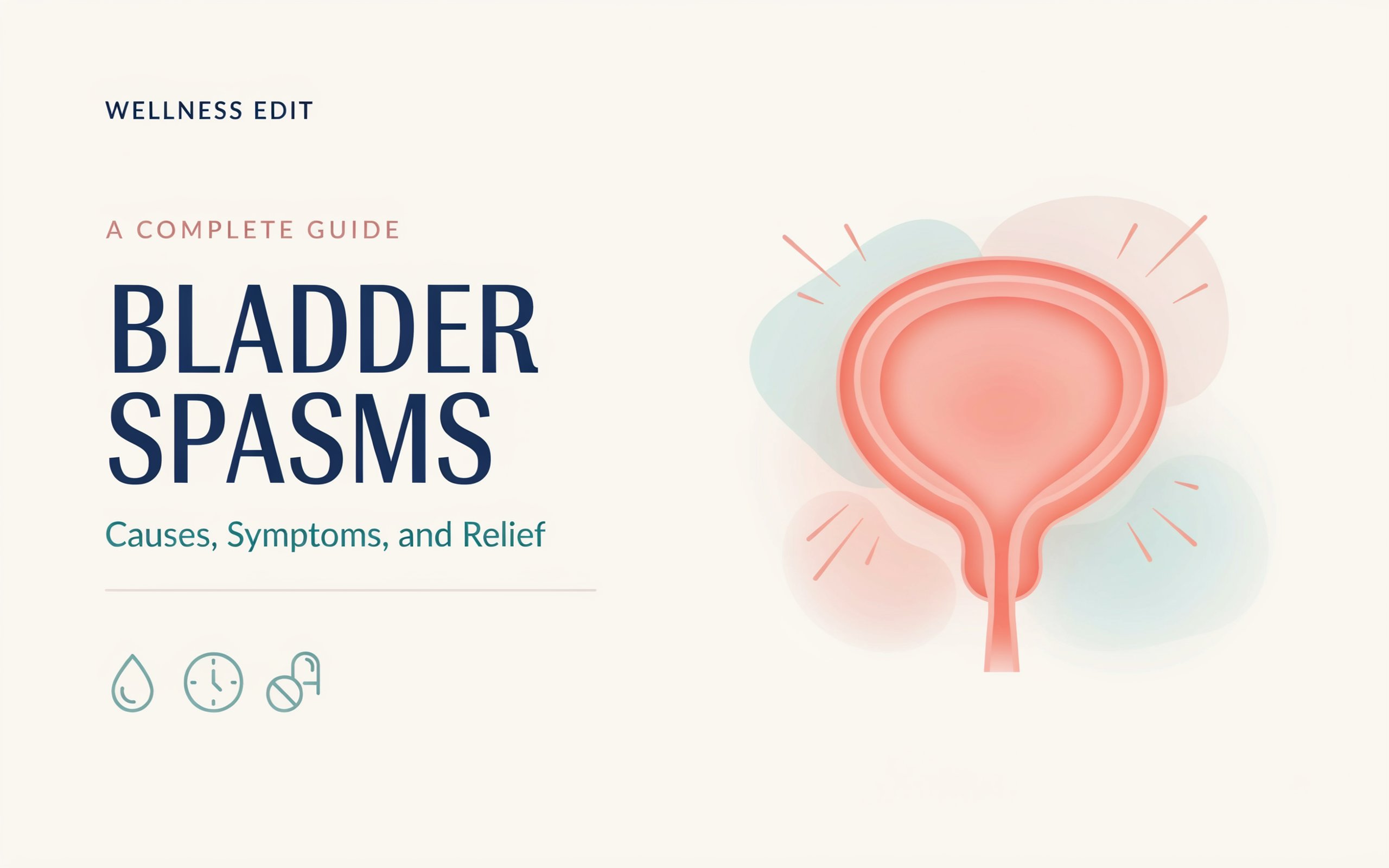
A sudden, tight cramp low in your abdomen, followed by an urgent need to rush to the bathroom, is a feeling many people know all too well. Bladder spasms can be uncomfortable, unpredictable, and sometimes downright alarming, especially when they strike without warning or keep coming back.
The good news is that bladder spasms are common, and in many cases they have a clear, manageable cause. In this guide, we’ll explain what bladder spasms are, what commonly triggers them, what you can do at home to feel more comfortable, and the signs that mean it’s time to see a doctor.
What Are Bladder Spasms?
Your bladder is a muscular organ that stores urine and then contracts to release it. A bladder spasm happens when the bladder muscle contracts suddenly and involuntarily, even when it isn’t full or you haven’t decided to urinate. These contractions can cause a sharp or cramping pain in the lower abdomen or pelvis, a strong urge to urinate, and sometimes leakage of urine.
Bladder spasms can be occasional, or they can be a recurring symptom of an underlying issue. Understanding what’s behind them is the key to finding relief.
Common Symptoms of Bladder Spasms
- Sudden cramping or squeezing pain in the lower abdomen or pelvic area
- A strong, urgent need to urinate
- Frequent urination, including during the night
- Leaking urine, particularly with a sudden urge
- Pressure or discomfort in the pelvic region
- Pain that comes in waves and then eases
Common Causes of Bladder Spasms
1. Urinary Tract Infection (UTI)
Infection ranks among the most frequent culprits. Bacteria irritate the bladder lining, triggering the muscle to contract more frequently. UTI-related spasms often come with burning during urination, cloudy or strong-smelling urine, and a constant urge to go. If you’re pregnant, changes in urine can be an early clue, which we cover in our article on the smell of urine when pregnant.
2. Overactive Bladder (OAB)
In overactive bladder, the bladder muscle contracts at the wrong times, causing sudden urgency and frequent urination, often with spasms.
3. Bladder Irritants in Your Diet
Certain foods and drinks can irritate the bladder lining and trigger spasms in sensitive people, including:
- Caffeine (coffee, tea, energy drinks)
- Alcohol
- Carbonated drinks
- Artificial sweeteners
- Very spicy or acidic foods
4. Interstitial Cystitis (Painful Bladder Syndrome)
This chronic condition causes ongoing bladder pressure, pain, and urgency, often with spasm-like discomfort that comes and goes.
5. Bladder Stones or Kidney Stones
Stones can irritate the bladder or the urinary tract and cause cramping, spasms, and sometimes blood in the urine.
6. Catheter Use or Recent Urinary Procedures
A urinary catheter, or surgery involving the bladder or pelvic area, can irritate the bladder and commonly causes temporary spasms during healing.
7. Pelvic Floor Tension
Tight or overworked pelvic floor muscles can contribute to bladder discomfort and spasm-like sensations.
8. Nerve-Related Conditions
Conditions that affect the nerves controlling the bladder, such as diabetes-related nerve damage or certain neurological disorders, can lead to involuntary bladder contractions.
9. Constipation
A full bowel can press on the bladder and make it more irritable, increasing urgency and spasms for some people.
Bladder Spasm Relief at Home
If your symptoms are mild and you don’t have warning signs of infection or another serious issue, these measures may help you feel more comfortable:
1. Stay Hydrated, But Sensibly
Drinking too little can make urine more concentrated and irritating, while drinking huge amounts at once can overstimulate the bladder. Sip fluids steadily through the day.
2. Limit Common Irritants
Try cutting back on caffeine, alcohol, carbonated drinks, and artificial sweeteners to see whether your symptoms ease. A simple food and symptom diary can help you spot your personal triggers.
3. Apply Gentle Heat
A warm compress or heating pad placed on your lower abdomen can help relax the muscles and ease cramping.
4. Try Bladder Training
Gradually extending the time between bathroom trips can help retrain the bladder over time. This works best with guidance from a doctor or pelvic health specialist.
5. Practice Relaxation and Deep Breathing
Stress and tension can make the pelvic muscles tighter. Slow, deep breathing may help calm both the muscles and the urgency that often accompanies a spasm.
6. Support Your Pelvic Floor
Gentle pelvic floor exercises, ideally taught by a pelvic floor physical therapist, can strengthen and relax the muscles that support the bladder. Doing them incorrectly can sometimes worsen symptoms, so professional guidance helps.
7. Prevent Constipation
Eating enough fiber, staying hydrated, and moving regularly can reduce pressure on the bladder from a full bowel.
Medical Treatment Options
If home measures don’t provide enough relief, a doctor may recommend:
- Antibiotics, if a UTI is the cause
- Bladder-calming medications, which help relax the bladder muscle in cases like overactive bladder
- Pelvic floor physical therapy to help with muscle tightness or weakness
- Treatment of an underlying condition, such as stones or interstitial cystitis
- Other procedures, in more persistent cases, as determined by a specialist
The right approach depends on what’s causing your spasms, which is why getting a proper diagnosis matters.
When to See a Doctor
Occasional mild discomfort may settle on its own, but see a doctor if you notice:
- Burning or pain when you urinate
- Blood in your urine
- Fever or chills
- Pain in your back or side
- Cloudy or foul-smelling urine
- Spasms that keep coming back or are getting worse
- Symptoms that interfere with sleep or daily life
Seek urgent medical care if you’re unable to urinate at all, have severe pain, or have a high fever along with back or side pain, as these can signal a serious problem such as a kidney infection or urinary blockage.
According to the Urology Care Foundation, bladder symptoms that persist or recur are worth evaluating rather than ignoring, since many causes are very treatable once identified.
Frequently Asked Questions
What does a bladder spasm feel like?
Most people describe a sudden cramping or squeezing pain in the lower abdomen or pelvis, often with a strong urge to urinate. It may come in waves and ease between episodes.
What triggers bladder spasms?
Common triggers include UTIs, overactive bladder, irritating foods and drinks like caffeine or alcohol, bladder stones, catheter use, pelvic floor tension, and certain medical conditions.
Can dehydration cause bladder spasms?
It can contribute. Concentrated urine can irritate the bladder lining, which may make spasms and urgency worse in some people.
Are bladder spasms a sign of a UTI?
They can be, especially if they come with burning, cloudy or strong-smelling urine, or frequent urges to go. A urine test can confirm whether an infection is present.
How long do bladder spasms last?
Individual spasms usually last seconds to minutes. How long the problem continues depends on the cause, from a few days with a treated infection to longer-term with chronic conditions.
Can stress make bladder spasms worse?
Yes. Stress and anxiety can tighten pelvic muscles and heighten bladder sensitivity, which may make urgency and spasms feel stronger.
Final Thoughts
Bladder spasms are uncomfortable and can be disruptive, but they’re also very common, and most causes are treatable once you know what’s behind them. Paying attention to triggers, staying sensibly hydrated, and using gentle self-care like heat and relaxation can help day to day. If your symptoms are persistent, painful, or come with fever, blood in the urine, or trouble urinating, don’t wait it out — a doctor can pinpoint the cause and get you real relief.